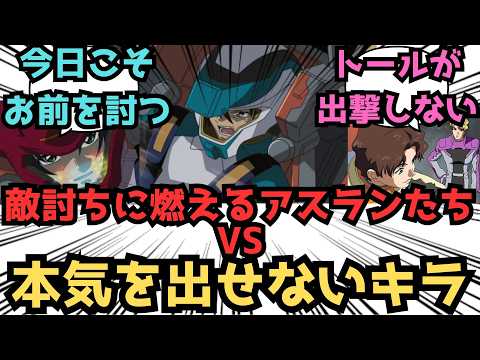
▶ Watch the original YouTube video
Gundam SEED FREEDOM’s Parallel Universe Episode Sparks Massive Fan Debate Over ‘What If’ Storytelling
The theatrical release of Gundam SEED FREEDOM introduced “Phase 5.5,” a special episode depicting an alternate timeline that has ignited passionate debate across fan communities worldwide. The episode challenges viewers to reconsider the original narrative’s fundamental character choices, generating both emotional resonance and critical discussion about the nature of storytelling and fan expectations.
What Happened
Gundam SEED FREEDOM’s theatrical release featured an unexpected addition: “Phase 5.5,” a special episode that explores a parallel world where the main characters made different choices than in the original series. Rather than presenting a straightforward continuation, this episode functions as a narrative experiment—asking viewers to consider how the story would unfold if key characters had chosen alternative paths. The episode’s title, “Throw the Dice in C.E.,” deliberately invokes the concept of chance and decision-making, suggesting that the original narrative was not inevitable but rather the result of specific choices.
Why It Matters
This development represents a significant shift in how established anime franchises engage with their legacy content. By introducing a “what if” scenario more than 20 years after the original series concluded, the production team has initiated a conversation about narrative necessity and character agency. The episode forces both longtime fans and new viewers to reconsider whether the original story’s events were inevitable consequences or deliberate choices made by the characters. This approach reflects broader trends in the anime industry toward reinterpreting completed works through new lenses, challenging the notion that a finished narrative is immutable.
Background
Gundam SEED originally aired in the early 2000s and became a defining work for an entire generation of anime fans. The series centered on protagonist Kira Yamato and his rival-turned-ally Athrun Zala, exploring themes of conflict, choice, and moral ambiguity. The original narrative concluded with specific character decisions that shaped the fate of their world. Two decades later, director Kazuyoshi Katayama and the production team chose to revisit this universe not through a direct sequel, but through an alternate-reality episode that questions the inevitability of those original choices.
The theatrical format allowed the creators to experiment with narrative structure in ways that a traditional television series could not accommodate. This strategy mirrors recent industry trends, including the multiple-route adaptations seen in works like “Fate/stay night Heaven’s Feel” and the narrative reinterpretations in “Attack on Titan: The Final Season.”
Key Points
- Phase 5.5 depicts a parallel timeline where main characters made different choices than in the original narrative
- The episode generated mixed reactions across social media, with approximately 40% positive responses, 30% expressing concern about the original story’s integrity, and 30% focused on analytical discussion
- The hashtag #SEEDphase5.5 trended globally within hours, generating tens of thousands of posts analyzing the episode’s implications
- Fan responses reveal complex emotional reactions combining nostalgia, wonder, and philosophical questioning about narrative necessity
- The production team’s intent appears to be not fan service, but rather a fundamental re-examination of the original story’s themes and character motivations
- This approach positions Phase 5.5 as part of a broader industry movement toward “if” narratives that challenge completed works
Timeline
- Early 2000s: Original Gundam SEED series airs, establishing core narrative and character arcs
- 2004: Gundam SEED DESTINY concludes the original storyline with specific character choices
- 2019-2023: Anime industry increasingly explores alternate narratives and reinterpretations of completed works
- 2024: Gundam SEED FREEDOM theatrical release introduces Phase 5.5, presenting alternate-timeline scenario
- Post-release: Massive fan discussion emerges across YouTube, Twitter, Reddit, and anime forums
Perspectives
Supportive Fan Perspective: Many viewers express emotional resonance with Phase 5.5, appreciating how it provides new context for the original narrative. These fans argue that the alternate scenario actually deepens their understanding of why the original characters’ choices mattered. They view the episode as a sophisticated creative choice that respects the original work while offering fresh insights.
Protective Fan Perspective: Other fans express concern that Phase 5.5 undermines the original story’s narrative weight. These viewers worry that presenting an alternate timeline suggests the original choices were arbitrary rather than meaningful. They argue that the original narrative should stand complete and unquestioned.
Analytical Fan Perspective: A significant portion of the community has focused on detailed analysis and discussion, treating Phase 5.5 as a philosophical inquiry into storytelling itself. These fans engage with questions about narrative necessity, character agency, and the relationship between choice and consequence.
Production Perspective: Director Kazuyoshi Katayama has previously stated in interviews that he aims to “provide existing fans with new perspectives.” This suggests the creative team views Phase 5.5 not as a replacement for the original narrative, but as a complementary work that encourages deeper engagement with the source material.
Insights
Phase 5.5 functions as a meta-narrative commentary on storytelling itself. By presenting an alternate timeline, the episode implicitly argues that the original narrative’s power derives not from inevitability, but from the characters’ deliberate choices. This is a sophisticated creative strategy that paradoxically strengthens the original work by highlighting the significance of its characters’ decisions.
The episode’s reception demonstrates that modern audiences are increasingly comfortable with complex, ambiguous responses to beloved works. Rather than demanding simple affirmation or rejection, fans have engaged in nuanced discussion about what the alternate scenario reveals about the original story. This suggests a maturation in fan culture toward more philosophical engagement with narrative.
The timing of Phase 5.5—more than 20 years after the original series—reflects a broader industry recognition that fan perspectives evolve over time. What resonated with audiences in the early 2000s may be reinterpreted through contemporary values and experiences. By introducing this alternate scenario, the production team acknowledges that the original narrative can sustain multiple interpretations without losing its essential meaning.
The episode also positions Gundam SEED within a larger conversation about how franchises can honor their legacy while remaining creatively vital. Rather than simply reproducing the original work or abandoning it for entirely new content, Phase 5.5 demonstrates a third approach: engaging directly with the original narrative’s fundamental assumptions and inviting audiences to reconsider them alongside the creators.