▶ Watch the original YouTube video
Why Char Aznable Continues to Captivate Gundam Fans: Analyzing the “Zeon Axis Season 2” Phenomenon
A viral YouTube video exploring fan reactions to the concept of “Char Aznable launching Zeon Axis Season 2” has reignited discussions about one of anime’s most enduring characters. The phenomenon reveals how Gundam’s legendary antagonist continues to inspire creative fan theories and philosophical debates decades after the original series aired.
What Happened
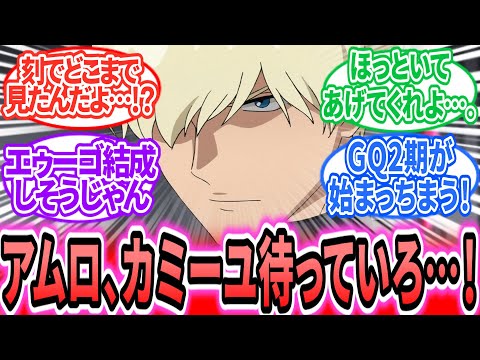
A YouTube video has circulated among the Gundam fan community featuring reactions and theories about a hypothetical scenario: Char Aznable attempting to “launch Zeon Axis Season 2.” The video compiles fan interpretations of how this character—known for his role as the “Red Comet” and perpetual revolutionary—might initiate a second major conflict or movement within the Gundam universe. The concept has sparked widespread creative engagement across social media platforms, with fans contributing their own analyses of how such an event might unfold and its implications for other key characters like Amuro Ray, Kamille Bidan, and Lalah Sune.
Why It Matters
This phenomenon demonstrates the remarkable longevity of character-driven storytelling in anime. More than four decades after the original Mobile Suit Gundam aired, fans continue to generate original theories and creative content around its characters. The “Season 2” concept specifically highlights how Gundam’s narrative structure—with its time gaps and unexplored periods—creates space for fan imagination. This type of engagement reveals how successful fictional universes remain culturally relevant through active fan participation and creative interpretation, rather than through new official content alone.
Background
Char Aznable is the primary antagonist of the original Mobile Suit Gundam series and a recurring character throughout the Gundam franchise. Known for his distinctive red mobile suit, his charismatic leadership, and his complex ideology regarding Newtype evolution and human progress, Char embodies the archetype of the tragic revolutionary. Unlike many anime antagonists who undergo character transformation, Char maintains philosophical consistency across multiple series—from the original Gundam through Zeta Gundam, Gundam ZZ, and Char’s Counterattack—while repeatedly experiencing defeat. This paradox of unwavering conviction paired with repeated failure has made him a uniquely compelling character for fan analysis.
The Gundam timeline contains significant gaps between major conflicts. Approximately seven years pass between the original Gundam and Zeta Gundam, during which Char’s activities remain largely unexplored. Similar temporal gaps exist in other periods of the franchise, creating narrative space that fans have long speculated about. The “Season 2” concept plays on this ambiguity, asking what Char might accomplish during these unexplored periods.
Key Points
- Fan reactions to the “Zeon Axis Season 2” concept demonstrate sophisticated understanding of Char’s character consistency and ideological motivations across multiple Gundam series
- The phenomenon reveals three distinct types of fan engagement: character behavior analysis, relationship dynamics speculation, and meta-narrative interpretation of the Gundam universe’s historical structure
- Char’s appeal differs fundamentally from other major anime antagonists—his defeats deepen rather than diminish his character, embodying an “aesthetics of defeat” that resonates with long-term fans
- The “Season 2” framing specifically references the narrative gap between the original Gundam and Zeta Gundam, suggesting fans view these as distinct “seasons” of a larger historical arc
- Fan theories span from political-economic analysis of how Char might restructure systems to philosophical questions about human evolution and individual conviction versus collective benefit
- The video’s inclusion of Amuro Ray, Kamille Bidan, and Lalah Sune highlights how Char’s character is fundamentally defined through relationships with other characters rather than in isolation
Character Relationships and Ideological Conflicts
Amuro Ray and Char: Their relationship represents the most fundamental opposition in the Gundam series—a philosophical conflict over Newtype nature and human evolution. While Char believes Newtypes represent humanity’s evolutionary future, Amuro questions whether this evolution should come at the cost of human individuality and emotion.
Kamille Bidan and Char: In Zeta Gundam, Char serves as Kamille’s commanding officer within the AEUG, yet subtle ideological tensions emerge between them regarding the true nature of Newtype consciousness and its proper application.
Lalah Sune and Char: Lalah represents Char’s only genuine emotional connection—his sole “understanding” in his own perception. Her death profoundly impacts his trajectory, suggesting that Char’s ultimate defeats stem partly from his inability to transcend personal attachment to his ideological mission.
Fan Interpretation Patterns
Analysis of fan responses reveals three dominant interpretive frameworks:
Character Consistency Analysis: Fans imagine how Char would logically pursue a “Season 2” while maintaining his established behavioral patterns and ideological commitments. This demonstrates deep familiarity with his character arc across multiple series.
Relational Dynamics: Fans speculate about how other characters—particularly Amuro and Kamille—would respond to or participate in Char’s hypothetical new movement, revealing understanding of the Gundam universe’s complex political and personal relationships.
Meta-Narrative Interpretation: Some fans approach the concept from a universe-historical perspective, asking how Char’s actions would reshape the entire Gundam timeline and what his “Season 2” represents within the larger arc of human civilization in the Gundam universe.
Comparative Analysis: Char’s Unique Position
Char occupies a distinctive position within anime antagonist archetypes. Unlike characters such as Lelouch vi Britannia from Code Geass—whose rebellion is motivated by personal grievance—or Eren Yeager from Attack on Titan—whose convictions evolve significantly—Char maintains ideological consistency while experiencing repeated defeat. This combination creates what might be termed an “aesthetics of defeat”: each loss deepens rather than diminishes his character, making him philosophically richer with each failure.
Other Gundam series have introduced characters embodying aspects of Char’s legacy—Paptimus Scirocco in Zeta Gundam as an ideological successor, Haman Karn in Gundam ZZ as a power inheritor, and Full Frontal in Gundam Unicorn as a potential clone or spiritual continuation. This systematic inheritance of Char’s ideological mantle across the franchise suggests deliberate authorial design rather than coincidence, establishing what might be called the “Char Phenomenon”—the persistent influence of his revolutionary spirit across generations of Gundam narratives.
The Significance of “Season 2”
The specific choice of “Season 2” rather than “Season 3” or another designation carries narrative significance. Most Gundam viewers structure their experience around the original series as “Season 1” and Zeta Gundam as “Season 2,” creating a mental framework where these represent distinct historical eras. By invoking “Season 2,” fans reference the narrative gap between these two works—approximately seven years during which Char’s activities remain largely unexplored in official canon.
This framing transforms fan speculation from mere creative fantasy into what might be termed “canonical gap-filling”—an attempt to expand and deepen the Gundam universe’s history by imaginatively populating its narrative silences. Rather than simple fan fiction, this represents a collective intellectual exercise in universe-building, extending the official narrative’s scope and complexity.
Broader Implications for Fan Culture and Anime
The “Zeon Axis Season 2” phenomenon exemplifies how successful fictional universes achieve cultural longevity through active fan participation. The Gundam franchise, now spanning over four decades, remains vital not primarily through constant new official content but through the creative engagement of its fan community. Fans don’t passively consume Gundam; they actively theorize, imagine, and extend its narrative universe.
This represents an inversion of traditional media consumption. Rather than fans waiting for official creators to provide new stories, fans generate their own interpretations and theories that, in turn, influence how the official franchise develops. Recent Gundam productions, including Mobile Suit Gundam: The Witch from Mercury, demonstrate how new works engage with and build upon decades of fan interpretation and creative speculation.
The phenomenon also reveals the philosophical depth that anime fan communities can achieve. Discussions of Char’s “Season 2” frequently transcend simple plot speculation to address fundamental questions: What constitutes human progress? How do individual convictions relate to collective welfare? Can repeated defeat strengthen rather than weaken ideological commitment? These questions, mediated through character analysis, represent serious philosophical inquiry conducted within fan communities.
Insights
The “Zeon Axis Season 2” phenomenon demonstrates that character-driven storytelling creates enduring cultural artifacts capable of inspiring meaningful engagement across generations. Char Aznable’s appeal transcends typical antagonist archetypes through his combination of ideological consistency, repeated defeat, and complex relationships with other characters. His character remains philosophically generative—capable of inspiring new interpretations and creative theories decades after his original conception.
The fan community’s engagement with this concept reveals sophisticated understanding of narrative structure, character psychology, and universe-building. Rather than passive consumption, fans actively participate in extending and deepening the Gundam universe through creative speculation grounded in careful textual analysis.
Most significantly, this phenomenon illustrates how fictional universes achieve true cultural resonance not through authorial control but through the creative freedom they afford their audiences. The Gundam franchise’s narrative gaps—the unexplored periods and ambiguous motivations—function as generative spaces where fan imagination flourishes. In this sense, the “Zeon Axis Season 2” represents not fan deviation from official canon but rather the fulfillment of what successful science fiction universes enable: the collaborative expansion of imaginative possibility.
As the Gundam franchise continues to evolve with new series and interpretations, the question of how Char’s ideological legacy will be inherited and transformed by new characters and narratives remains central to the franchise’s future direction. The fan community’s sustained engagement with this question suggests that Char Aznable will continue to inspire creative and philosophical inquiry for decades to come.