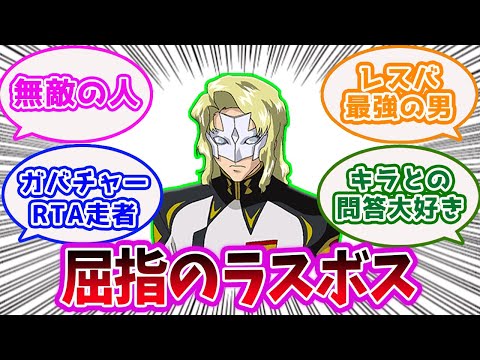
▶ Watch the original YouTube video
Rau Le Creuset: Why Mobile Suit Gundam SEED’s Final Boss Remains Gaming’s Most Philosophically Complex Villain
After nearly two decades, Rau Le Creuset from Mobile Suit Gundam SEED continues to spark debate among fans and critics. Unlike traditional antagonists seeking power or conquest, Rau embodies a nihilistic philosophy rooted in his tragic existence as a clone soldier, making him one of anime’s most intellectually challenging villains.
What Happened
Rau Le Creuset serves as the final antagonist in Mobile Suit Gundam SEED, a pivotal mecha anime that aired in 2004. Rather than pursuing traditional villainy, Rau advocates for humanity’s extinction based on a coherent, if deeply nihilistic, philosophical framework. His character arc directly parallels protagonist Kira Yamato, as both are genetically engineered beings who experienced identical suffering but made fundamentally different choices about how to respond to their existence.
Why It Matters
Rau Le Creuset represents a watershed moment in anime antagonist design. His introduction shifted how subsequent Gundam series and other anime franchises conceptualized final bosses—moving away from power-hungry despots toward psychologically complex characters whose ideologies, while destructive, possess internal logical consistency. This philosophical depth has influenced character writing across the medium for nearly two decades, making Rau a foundational figure in modern anime storytelling.
Background
Mobile Suit Gundam SEED premiered during the early 2000s anime boom, introducing audiences to a conflict between Naturals (unmodified humans) and Coordinators (genetically enhanced humans). Rau’s unique position—a clone soldier bearing Natural genetic material but created through Coordinator technology—creates an existential paradox that defines his character. This fundamental identity crisis drives his descent into nihilism and his belief that humanity’s suffering can only end through extinction.
Rau’s philosophy emerges from three interconnected traumas: the loss of personal identity inherent to his cloned existence, his experiences as a disposable soldier witnessing endless human conflict, and his encounter with Kira, whose choice to continue living despite identical suffering Rau interprets as escapism rather than courage.
Key Points
- Identity Crisis as Foundation: Rau’s nihilism stems from his existence as a clone—he possesses neither a true past nor authentic identity, creating a void that philosophical nihilism fills.
- Logical Consistency: Unlike typical villains driven by ambition, Rau’s argument follows coherent reasoning: if humanity inevitably suffers and dies, accelerating that process through continued warfare becomes a mercy.
- Thematic Opposition to Kira: Both characters endure identical genetic engineering and battlefield trauma, yet Kira chooses continued existence while Rau chooses termination—making their conflict one of competing philosophies rather than good versus evil.
- Influence on Subsequent Works: Rau’s character model influenced later Gundam antagonists like Gilbert Durandal and established a template for psychologically nuanced final bosses across anime.
- Voice Acting Excellence: Seiyuu Kenichi Suzumura’s performance conveyed Rau’s despair and logical rigor simultaneously, elevating the character beyond typical villain archetypes.
- Enduring Fan Debate: Nearly 20 years after broadcast, online communities continue discussing whether Rau’s logic can be refuted, indicating the character’s philosophical depth.
Timeline
- 2004: Mobile Suit Gundam SEED airs; Rau Le Creuset introduced mid-series as a mysterious antagonist.
- Series Progression: Rau’s philosophy gradually revealed through dialogue with Kira, culminating in final confrontation.
- 2005: Gundam SEED DESTINY continues exploring Rau’s ideological legacy through character Gilbert Durandal.
- 2004–Present: Continuous fan discussion and analysis across forums, social media, and video platforms.
Perspectives
The Philosophical Interpretation: Rau represents a coherent nihilistic worldview. His argument—that humanity inevitably suffers and dies, therefore accelerating that process reduces overall suffering—possesses internal logical consistency that cannot be entirely dismissed. This interpretation views Rau not as insane but as someone who reached a rational conclusion from a specific premise.
The Humanistic Counter-Argument: Kira’s response embodies a different philosophical stance: the future remains undetermined, and choosing to live and protect others despite uncertainty represents greater courage than accepting predetermined doom. This perspective emphasizes human agency and the value of hope without requiring certainty.
The Character Study Approach: Many analysts view Rau primarily through the lens of trauma and identity loss. From this perspective, his nihilism functions as a psychological defense mechanism rather than a genuine philosophical position—a conclusion reached not through pure logic but through untreated psychological damage.
The Narrative Function Perspective: Some scholars emphasize Rau’s role as a narrative foil that allows the series to explore themes of choice, identity, and the meaning of survival. His existence forces both characters and viewers to confront uncomfortable questions about human purpose.
Insights
Rau Le Creuset’s enduring significance lies in his demonstration that anime antagonists need not pursue traditional power or conquest to achieve philosophical depth. By grounding his nihilism in personal tragedy and logical argumentation, the character transcends the villain archetype and becomes a vehicle for exploring existential questions.
The continued fan debate surrounding Rau—whether his logic can be refuted, whether his actions are justified, whether his philosophy contains truth—indicates that Mobile Suit Gundam SEED succeeded in creating a character whose ideas remain intellectually challenging nearly two decades after broadcast. This stands in contrast to antagonists whose appeal fades once their immediate threat passes.
Rau’s influence on subsequent Gundam series and anime more broadly demonstrates how a single well-crafted character can reshape an entire medium’s approach to storytelling. His model—the psychologically complex, philosophically coherent antagonist—has become increasingly common, suggesting that audiences and creators alike recognize the narrative power of villains whose motivations demand serious intellectual engagement rather than simple moral rejection.
Ultimately, Rau embodies a universal human struggle: the choice between accepting despair as truth or embracing uncertainty as possibility. His tragedy lies not in his villainy but in his inability to recognize that the future, precisely because it remains undetermined, offers grounds for hope rather than hopelessness.