▶ Watch the original YouTube video
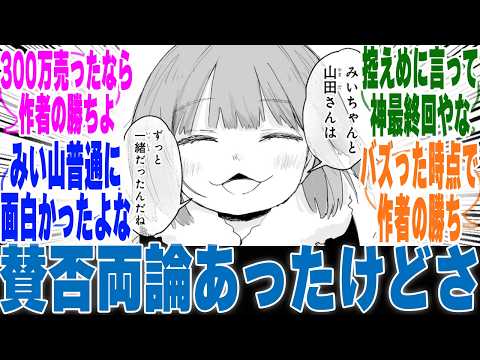
The Final Chapter of ‘Mee-chan and Yamada’ Sparks Heated Debate: A Deep Analysis of Fan Reactions
The conclusion of the eight-year manga series ‘Mee-chan and Yamada’ has divided its fanbase into opposing camps, with readers split between those moved by its emotional resolution and those disappointed by its execution. The controversy extends beyond the narrative itself, touching on broader questions about creator credibility, editorial transparency, and the relationship between an author’s personal background and their work’s social messaging.
What Happened
The manga series ‘Mee-chan and Yamada,’ which ran for eight years, concluded with a final chapter that has generated polarized reactions across social media and fan communities. Rather than offering a realistic resolution to the story’s central conflicts, the author chose to end the narrative with an idealized reunion between the main characters in an afterlife setting. This creative decision has sparked intense debate about whether the ending successfully delivered on the series’ promises or fundamentally betrayed reader expectations.
Complicating matters further, the announced anime adaptation was subsequently withdrawn, and reports emerged of critical comments being deleted from the official platform’s comment section. These developments have amplified fan concerns about editorial handling and raised questions about the author’s background and credibility.
Why It Matters
This case represents a significant moment in manga criticism and industry practice. The ‘Mee-chan and Yamada’ controversy illustrates the challenges facing contemporary manga creators who attempt to blend social commentary with entertainment, particularly when long serialization periods create escalating reader expectations. The situation also highlights emerging tensions between creator accountability, editorial responsibility, and the separation of artistic work from personal conduct.
For the broader manga and anime industry, this case raises critical questions about how platforms should handle negative feedback, how anime adaptations are greenlit and cancelled, and whether social-issue-focused works can maintain their integrity when creator credibility becomes compromised.
Background
Published in MagaPoke, ‘Mee-chan and Yamada’ emerged as part of a wave of “socially conscious comedy manga” that gained prominence between 2018 and 2020. The series combined comedic elements with serious themes including poverty, family breakdown, and social exclusion, told through the relationship between a poor girl and a delinquent from a rural background.
The eight-year serialization period is significant. In manga industry standards, this represents a lengthy commitment that typically results in escalating reader investment and expectations. The series achieved considerable popularity and was initially announced for anime adaptation—a major milestone that was later rescinded.
Key Points
- Divided Reception: Reader responses split almost evenly between those who found the ending emotionally satisfying and those who viewed it as poorly executed and narratively unsatisfying.
- Narrative Choice: The author selected an idealized afterlife reunion rather than a realistic resolution grounded in the story’s established world, creating a fundamental mismatch with reader expectations.
- Serialization Length Impact: The eight-year run created mounting reader expectations that the final chapter failed to meet, with many citing “pacing issues” and “rushed conclusion” in the latter story arc.
- Anime Adaptation Withdrawal: The announced anime adaptation was cancelled or postponed, with no official explanation provided, fueling speculation about underlying problems.
- Editorial Transparency Issues: Reports of deleted critical comments on the official platform have eroded reader trust and raised concerns about editorial suppression of legitimate criticism.
- Creator Credibility Questions: Unspecified issues regarding the author’s background have become entangled with critical assessment of the work itself, complicating objective evaluation.
Timeline
- 2018–2020: ‘Mee-chan and Yamada’ serializes during the peak of socially conscious comedy manga trend.
- Throughout Serialization: Series builds significant fanbase and critical acclaim, particularly for its middle chapters.
- Pre-Conclusion: Anime adaptation announced, signaling major industry confidence in the property.
- Final Chapter Release: Conclusion published with afterlife reunion ending, immediately generating polarized reactions.
- Post-Conclusion: Anime adaptation announcement withdrawn; critical comments reported deleted from official platform.
- Ongoing: Debate continues regarding creator background, editorial practices, and the work’s lasting legacy.
Perspectives
Positive Reception: Supporters of the ending emphasize its emotional resonance, particularly scenes depicting gratitude and spiritual reunion. These readers interpret the afterlife setting as a thematic culmination of the series’ exploration of idealism versus reality, viewing it as a poignant artistic choice that transcends literal narrative resolution.
Critical Reception: Detractors argue the ending represents narrative laziness and a betrayal of eight years of reader investment. They point to inconsistencies in character aging, rushed pacing in the final arc, and a fundamental disconnect between the series’ social realism and its fantastical conclusion. Many cite the “Miyagi arc” as the point where narrative quality declined.
Meta-Critical Perspective: A third group acknowledges the ending’s artistic intent while questioning whether creator credibility issues have compromised the work’s social messaging. These readers argue that a series explicitly addressing poverty and social marginalization cannot be fully separated from questions about whether its author authentically understands these experiences.
Commercial Perspective: Some commenters note the series’ commercial success regardless of critical reception, while others counter that even commercial success cannot insulate the work from legitimate criticism about its conclusion and creator conduct.
Comparative Analysis
Similar socially conscious manga offer instructive comparisons. ‘Taco Pie’s Original Sin,’ a three-year series with comparable themes, achieved higher reader satisfaction despite its unconventional ending, partly because its shorter serialization period created more manageable expectations. The key difference: while both works chose non-realistic resolutions, ‘Taco Pie’ grounded its conclusion in internal narrative logic, whereas ‘Mee-chan and Yamada’ introduced an entirely new metaphysical framework in its final chapter.
This pattern suggests that serialization length directly correlates with reader satisfaction in long-form manga. Extended runs create exponential expectation growth, making final chapters increasingly difficult to satisfy.
Editorial and Industry Implications
The withdrawal of the anime adaptation represents an unusual industry move. Anime cancellations typically occur due to poor sales performance or major creator misconduct—neither of which applied here. This suggests either undisclosed creator issues or editorial judgment that the work’s social messaging had become compromised.
The reported deletion of critical comments from the official platform constitutes a more serious concern. Rather than addressing criticism substantively, editorial suppression typically amplifies reader distrust and suggests institutional defensiveness rather than confidence in the work.
The Creator Credibility Question
A significant complication involves unspecified issues regarding the author’s background and current role (reportedly working in editorial capacity). Multiple readers have noted that creator credibility becomes inseparable from a work’s social messaging when that work explicitly addresses marginalized experiences. If the author’s personal background differs substantially from the experiences depicted, this raises legitimate questions about authenticity and perspective.
This mirrors historical precedent: when creator misconduct or credibility issues emerge, previously celebrated works undergo critical reevaluation. The question of whether art can be separated from artist becomes not merely theoretical but practically urgent for readers who invested in the work partly because of its social positioning.
Insights
‘Mee-chan and Yamada’ represents both the promise and peril of contemporary socially conscious manga. The series successfully demonstrated that comedy and serious social commentary can coexist, at least through its middle chapters. However, the conclusion reveals fundamental tensions in this approach.
First, extended serialization creates expectation escalation that becomes nearly impossible to satisfy. Eight years of reader investment generates demands that final chapters rarely meet, particularly when creators choose thematic or metaphysical resolutions over narrative closure.
Second, socially conscious works face unique challenges regarding creator accountability. A series addressing poverty and social exclusion cannot entirely escape questions about whether its creator authentically represents these experiences. This is not merely about “separating art from artist”—it is about the internal coherence of a work’s social claims.
Third, editorial transparency matters profoundly. The deletion of critical comments and unexplained anime cancellation have damaged reader trust more than the ending itself. Institutions that suppress criticism rather than engage with it signal that they lack confidence in their work’s merit.
Finally, ‘Mee-chan and Yamada’ will likely become a case study in manga industry practice—not because it is a perfect work, but because its problems are instructive. The series demonstrates both the possibilities of socially engaged manga and the structural difficulties that arise when commercial serialization, creator credibility, and social messaging intersect.
For readers encountering this work, the recommendation is to engage with it as a complete text: appreciate the genuine strengths of its middle chapters, understand the creative choices of its conclusion, and recognize the broader industry and credibility questions it raises. The work’s value lies not in being a “perfect masterpiece” but in being a “problematic work” that compels critical thinking—and critical thinking, ultimately, is how cultural understanding advances.