▶ Watch the original YouTube video
Why the Original PlayStation’s Masterpieces Defy Ranking: A 15-Year Gaming Analysis
A viral video attempting to rank the original PlayStation’s greatest games has sparked widespread debate among fans, revealing a fundamental truth: the console produced so many exceptional titles that no definitive “best nine” can exist. This phenomenon reflects both the console’s revolutionary impact on gaming and the impossibility of objective ranking when quality is this universally distributed.
- What Happened
- Why It Matters
- Background
- Key Points
- Timeline
- Perspectives
- Comparative Analysis: Why the PS1 Stands Alone
- Why This Matters: The Diversity Principle
- The Psychology of PS1 Attachment
- Evaluation Framework: Measuring Game Quality
- Practical Guidance: Experiencing PS1 Classics
- Fan Reactions: A Spectrum of Perspectives
- Broader Implications for Gaming
- Conclusion: The Masterpiece That Cannot Be Ranked
What Happened
A YouTube video presenting a “masterpiece lineup” of original PlayStation games—featuring titles like Astronoka, Arc the Lad, Armored Core, and Valkyrie Profile—has generated intense discussion across gaming communities. Rather than settling the debate, the video has amplified it, with fans arguing passionately for omitted classics like Metal Gear Solid, Crash Bandicoot, Resident Evil, and Panzer Dragoon.
The core issue: the original PlayStation’s library was so diverse and consistently excellent that assembling a definitive nine-game lineup proves mathematically and philosophically impossible. Fans have joked that you could create two complete leagues of masterpieces, with strong candidates still remaining.
Why It Matters
This debate transcends nostalgia. It reveals how the original PlayStation fundamentally changed gaming by democratizing development, enabling technical innovation, and fostering creative experimentation. Unlike earlier consoles where industry consensus typically identified clear “greatest hits,” the PS1 produced so many successful games across different genres and design philosophies that no objective ranking can satisfy the community.
The phenomenon also illustrates how personal gaming experience shapes perception of quality. A player’s “masterpiece” depends entirely on what they encountered first, what resonated emotionally, and what gameplay elements they prioritize—making universal agreement impossible.
Background
The original PlayStation launched in Japan in 1994 and revolutionized gaming through three key innovations: CD-ROM storage capacity (enabling expansive game worlds), an open development environment (attracting hundreds of publishers), and specialized 3D graphics hardware (making polygon-based games feasible).
Between 1994 and 2006, over 3,000 games were released for the original PlayStation worldwide, with more than 200 Japanese titles alone. Major publishers like Square, Enix, Konami, Capcom, and Bandai Namco competed alongside emerging studios, each pushing the hardware in different directions.
This period coincided with gaming’s transition from 2D to 3D—a paradigm shift where no established “correct” approach existed. Developers experimented freely, and remarkably, most experiments succeeded. This trial-and-error era produced an unprecedented concentration of genre-defining classics.
Key Points
- Abundance Problem: The original PlayStation generated so many acclaimed titles that a nine-game lineup inevitably omits worthy candidates, making any ranking feel incomplete.
- Genre Diversity: Unlike consoles with dominant genres, the PS1 excelled across RPGs, action games, fighting games, stealth titles, survival horror, and experimental indie-style projects—each with multiple masterpieces.
- Publisher Proliferation: The open development environment attracted diverse creators, each bringing unique design philosophies and resulting in varied approaches to game design.
- Personal Experience Determines Value: Players’ “greatest game” correlates with their age, gaming history, and what they prioritize (narrative depth, mechanical innovation, emotional impact, or technical achievement).
- No Industry Consensus: Unlike the Super Famicom (where Mario, Zelda, and Final Fantasy VI are universally acknowledged as peaks), the PS1 lacks universally agreed-upon masterpieces.
- Creative Experimentation: The absence of established “rules” for 3D game design encouraged risk-taking, resulting in more innovative titles than subsequent console generations.
Timeline
- 1994: Original PlayStation launches in Japan; CD-ROM technology enables unprecedented storage capacity.
- 1995: Console reaches North America; 3D gaming becomes mainstream; developers begin experimenting with polygon-based design.
- 1996-1998: Peak innovation period; Final Fantasy VII, Metal Gear Solid, Resident Evil, and numerous other genre-defining titles release.
- 1999-2004: Continued excellence; Valkyrie Profile, Panzer Dragoon Saga, and hidden gems emerge alongside blockbuster sequels.
- 2006: PlayStation 2 launches; original PS1 development gradually ceases, but legacy solidifies.
- 2008: Retrospective debates intensify as players reflect on the console’s impact; “greatest game” discussions become common.
- 2020s: Emulation and re-releases reignite interest; new generations discover PS1 classics and form their own rankings.
Perspectives
The Abundance Argument: Many fans argue the real story isn’t which nine games deserve ranking, but rather that the PS1 produced an unprecedented concentration of masterpieces. Comments like “you could create two complete leagues” and “the PS1 is so stacked you literally cannot make a proper lineup” reflect this view. This perspective celebrates the console’s legacy rather than lamenting the ranking impossibility.
The Omission Complaint: Other fans focus on specific exclusions. Fighting game enthusiasts argue that no fighting game appears in the lineup despite the PS1’s dominance in that genre. Metal Gear Solid advocates contend that a stealth-action masterpiece cannot be excluded. Resident Evil fans, Panzer Dragoon supporters, and devotees of lesser-known titles like Wild Arms and Koudelka each make compelling cases for inclusion.
The Analytical View: Some commenters recognize that the ranking impossibility stems from objective factors: the sheer number of publishers, the diversity of genres, the rapid evolution of 3D technology, and the wide variation in what different players value. This perspective treats the debate as a feature, not a bug—evidence of the console’s unparalleled success.
The Generational Perspective: Newer players discovering PS1 classics through emulation or re-releases often rank games differently than original players. They may prioritize game design and narrative over technical achievement, potentially elevating titles that seemed dated to contemporary audiences but prove timeless in design.
Comparative Analysis: Why the PS1 Stands Alone
Comparing the original PlayStation to other landmark consoles reveals why this ranking debate is unique:
Super Famicom: Produced numerous classics, but industry consensus identifies clear peaks: Super Mario Bros. 3, The Legend of Zelda: A Link to the Past, and Final Fantasy VI are universally acknowledged as masterpieces. Disagreement exists, but consensus is stronger.
PlayStation 2: Generated even more games than the PS1, yet the “greatest game” debate is less heated. By the PS2 era, game development conventions were established, reducing the diversity of successful approaches. Major publisher titles dominated, and mid-tier developer works became relatively obscure.
Nintendo 64: Produced acclaimed games, but fewer total titles and less genre diversity. Consensus around Super Mario 64, The Legend of Zelda: Ocarina of Time, and GoldenEye 007 is relatively strong.
The original PlayStation’s uniqueness stems from the convergence of three factors: the transition from 2D to 3D (creating uncertainty about “correct” design), an open development environment (enabling diverse creators), and CD-ROM capacity (enabling ambitious projects). This combination never recurred.
Why This Matters: The Diversity Principle
The original PlayStation’s ranking impossibility teaches a crucial lesson about creative industries: diversity of approach produces more total value than standardization. When developers operated without established 3D game design rules, they experimented freely. Most experiments failed, but the successful ones created a library of remarkable breadth.
Subsequent console generations saw increasing standardization. Publishers learned what worked, development pipelines became formalized, and risk-taking decreased. The result: fewer total masterpieces, even as individual games became more technically impressive.
This principle extends beyond gaming. Industries that encourage experimentation and tolerate failure produce more innovation than those that optimize for predictable success. The original PlayStation’s legacy isn’t just its greatest hits—it’s the proof that creative freedom generates value.
The Psychology of PS1 Attachment
Why do players remain so attached to original PlayStation games decades later? Psychology offers insights: people develop deep attachment to the first revolutionary experience they encounter in any medium. For players who discovered 3D gaming through Final Fantasy VII, Metal Gear Solid, or Resident Evil, those experiences created neural imprints that persist lifelong.
Additionally, the PS1 era coincided with gaming’s transition to mainstream culture. Players who grew up with these games often experienced them during formative years, creating emotional associations that transcend objective quality assessment.
The developer perspective adds another layer: PS1-era creators prioritized mechanical innovation and creative expression over graphical polish. This focus on substance over presentation has aged better than purely technical achievements. A game with innovative design remains engaging; a game celebrated only for graphics becomes dated.
Evaluation Framework: Measuring Game Quality
The ranking debate reveals that “greatest game” depends entirely on evaluation criteria. Consider these five dimensions:
- Mechanical Innovation: Did the game introduce new gameplay systems? Metal Gear Solid’s stealth mechanics and Final Fantasy VII’s Materia system exemplify this criterion.
- Narrative Completeness: Does the story maximize gaming’s unique storytelling capabilities? Valkyrie Profile’s multi-scenario system demonstrates narrative design specific to interactive media.
- Character Depth: Do characters possess independent personality and emotional resonance? Chrono Trigger’s cast exemplifies this standard.
- Musical Quality: Does the soundtrack function as independent art while enhancing the game world? Final Fantasy VII and Metal Gear Solid’s scores meet this standard.
- Play Experience Satisfaction: Does the game deliver consistent enjoyment and achievement? Crash Bandicoot’s refined platforming exemplifies this criterion.
Different games excel in different categories. Final Fantasy VII dominates narrative; Metal Gear Solid leads in mechanical innovation; Crash Bandicoot excels in play experience. This explains why no consensus emerges: each player weights these criteria differently.
Practical Guidance: Experiencing PS1 Classics
Clarify Your Preferences: Before playing, identify what you seek: deep narrative, innovative mechanics, emotional character development, or refined gameplay. This self-awareness prevents disappointment and enhances appreciation.
Contextualize the Technology: Original PlayStation graphics are dated by modern standards, but this reflects 1990s technical constraints, not design failure. Understanding the historical context allows you to appreciate what developers achieved within limitations.
Explore Series Progressions: Playing Final Fantasy VII followed by Final Fantasy VIII reveals how the series evolved. Arc the Lad’s trilogy demonstrates narrative continuity across installments.
Seek Hidden Gems: Wild Arms, Koudelka, and Shadow Hearts remain lesser-known despite exceptional design. Discovering these titles provides the unique joy of finding overlooked masterpieces.
Engage with Communities: Online discussions about PS1 games continue across Reddit, Twitter, and gaming forums. Sharing your experiences and hearing others’ perspectives enriches appreciation and reveals dimensions you might have missed.
Fan Reactions: A Spectrum of Perspectives
Enthusiastic Support: Many fans praised the lineup, with comments like “This is a great thread. I can relate to so many of these titles.” Notably, the inclusion of lesser-known games like Astronoka and Wild Arms demonstrated that the ranking prioritized design quality over commercial popularity.
Passionate Omission Critiques: Critics highlighted specific exclusions: “Where are the fighting games?” “Castlevania: Symphony of the Night deserves inclusion.” “Metal Gear Solid is essential.” “Panzer Dragoon Saga is criminally absent.” These complaints, while contradictory, collectively prove the point: too many masterpieces exist for any nine-game selection.
Analytical Observations: Thoughtful commenters noted: “The PS1 had so many publishers and new entrants that individual preferences diverge wildly.” “You literally cannot make a proper lineup because the PS1 is too stacked.” “The sheer number of manufacturers and title diversity makes consensus impossible.” These observations recognize the ranking impossibility as a feature reflecting the console’s success.
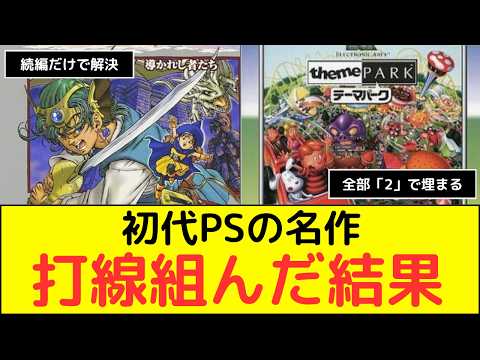
Creative Alternatives: Some fans proposed solutions: “Make it 48 games instead of 9.” “Fill the lineup with sequels: Star Ocean 2, Arc 2, Suikoden 2, Wild Arms 2, Resident Evil 2—all number 2s.” These responses, though humorous, express genuine appreciation for the library’s depth.
Broader Implications for Gaming
The original PlayStation’s ranking impossibility offers lessons for contemporary gaming. Current industry trends toward AAA blockbusters and indie games have created a two-tier market, with mid-tier publishers struggling. The PS1 thrived because mid-tier developers could take risks and succeed.
If the gaming industry could recapture that environment—where diverse approaches are funded and experimentation is rewarded—we might see another era of unprecedented creative output. The PS1’s legacy suggests that diversity of approach generates more total value than optimization for predictable success.
Conclusion: The Masterpiece That Cannot Be Ranked
The original PlayStation’s greatest achievement may not be any single game, but rather the creation of an environment where multiple masterpieces could flourish simultaneously. The ranking debate’s impossibility isn’t a failure—it’s proof of success.
Final Fantasy VII, Metal Gear Solid, Resident Evil, Crash Bandicoot, Valkyrie Profile, Arc the Lad, Panzer Dragoon Saga, Wild Arms, Chrono Trigger, and dozens of other titles each deserve consideration. That we cannot choose between them reflects not indecision, but abundance.
The original PlayStation taught gamers that “greatest” is subjective, that diversity produces value, and that the most important games are those that resonate personally. In an era of standardized, focus-tested design, that lesson remains revolutionary.