▶ Watch the original YouTube video
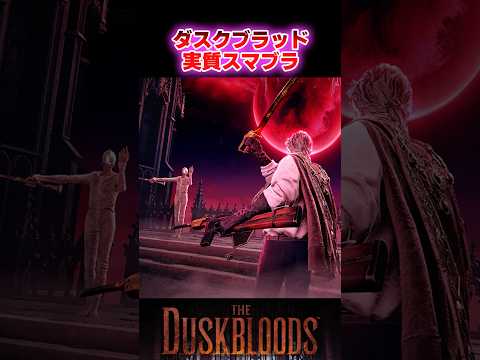
Why Duskbloods Is Being Called “Basically Smash Bros”—And What It Reveals About Fighting Game Culture
A wave of online reactions comparing the fighting game Duskbloods to Super Smash Bros. has sparked broader conversations about how players evaluate new competitive games. This comparison reveals not just surface-level similarities, but fundamental shifts in how the gaming industry and its communities assess innovation and value in the fighting game genre.
- What Happened
- Why It Matters
- Background
- Key Points
- The Evolution of Game Comparison Culture
- Understanding the “Smash Bros.” Label
- Industry Trends and Design Standards
- Comparative Analysis: Fighting Game Lineages
- Player Psychology and Community Dynamics
- Evaluation Framework: Five Criteria for Assessing Fighting Games
- Perspectives: Diverse Reactions to the Comparison
- Future Trajectory: Escaping the Comparison
- Practical Guidance for New Players
- Insights: What This Reveals About Gaming’s Maturity
What Happened
Duskbloods, a new fighting game, has generated significant online discussion centered around comparisons to the Super Smash Bros. series. Players and streamers have repeatedly noted that the game feels “essentially Smash Bros,” with similar mechanics, character selection systems, and overall gameplay philosophy. This reaction has become widespread enough to warrant analysis of what these comparisons actually mean and why they resonate so strongly with the gaming community.
Why It Matters
The way players respond to new games reveals important truths about gaming culture and industry standards. When a new fighting game is immediately compared to Smash Bros., it indicates that the series has become the industry benchmark—the standard against which all similar titles are measured. Understanding these reactions provides insight into how games are evaluated, what players value, and how the competitive gaming landscape has evolved over the past two decades. Additionally, this phenomenon shows how established franchises shape player expectations and industry development practices.
Background
The Super Smash Bros. series has dominated the fighting game landscape since its debut, establishing conventions that have become industry standards. Key characteristics include multiple playable characters, stage hazards and environmental variety, accessible controls for newcomers paired with depth for advanced players, and robust online multiplayer. Since 2018, particularly with the release of Super Smash Bros. Ultimate, these design principles have influenced numerous indie and commercial fighting game developers. The comparison of new titles to Smash Bros. is not new—similar discussions occurred around games like Pokkén Tournament and ARMS—but the frequency and consistency of these comparisons has increased significantly in recent years.
Key Points
- Duskbloods has received widespread player reactions describing it as similar to Super Smash Bros., particularly regarding combat systems and control mechanics
- The comparison reflects how Smash Bros. has become the industry standard for multi-character fighting games, establishing a template that influences modern game design
- Players use “Smash Bros.-like” as shorthand for multiple concepts: accessibility for beginners, competitive depth, character variety, and stage diversity
- This comparison serves multiple psychological functions: reducing cognitive load for new players, providing quality assurance through association with an established franchise, and creating common language within gaming communities
- The fighting game industry has experienced a “Smash Bros. effect” since 2018, with developers increasingly adopting similar design philosophies including multiple characters (10+), stage mechanics, simple-yet-deep control schemes, and online multiplayer focus
- Indie fighting games like Rivals of Aether and Them’s Fightin’ Herds initially received similar “Smash Bros. clone” comparisons before establishing their own competitive identities
The Evolution of Game Comparison Culture
Over the past 15 years, the way players evaluate new games has fundamentally changed. Prior to 2019, new releases were typically assessed as independent works. However, as the volume of available games increased and indie game markets expanded, players adopted a comparative evaluation framework: “This game is like X, but differs in Y ways.” This shift reflects practical necessity—with thousands of games releasing annually, players rely on familiar reference points to quickly understand new titles. YouTube gaming content and streaming platforms have accelerated this trend, with content creators regularly using comparisons to explain gameplay to audiences.
Understanding the “Smash Bros.” Label
When players describe Duskbloods as “basically Smash Bros.,” they are not necessarily making a criticism. The label carries multiple meanings depending on context. For some players, it signals that the game offers accessible entry points for newcomers—a significant quality indicator. For others, it indicates the presence of competitive depth and character variety. The term has become industry shorthand for “multi-character fighting game with environmental variety and broad appeal.” This multivalent nature makes the comparison both powerful and potentially misleading, as different players interpret the same statement in different ways.
Industry Trends and Design Standards
Analysis of fighting game development since 2018 reveals consistent design patterns across titles attempting to capture the Smash Bros. audience:
- Roster size of minimum 10+ playable characters
- Stage design incorporating environmental hazards and interactive elements
- Control schemes balancing simplicity for casual play with technical depth for competitive players
- Emphasis on online multiplayer infrastructure
- Visual design that clearly communicates character abilities and game state
These standards represent industry best practices rather than mere imitation. Developers recognize that Smash Bros. succeeded by solving fundamental problems in fighting game design: how to make competitive games accessible, how to balance character diversity, and how to create engaging spectator experiences.
Comparative Analysis: Fighting Game Lineages
The fighting game genre can be categorized into distinct lineages, each with different design philosophies:
Smash Bros. Lineage: Characterized by multiple characters, stage hazards, simplified controls, and broad accessibility. Examples include the Smash Bros. series itself and games directly influenced by its design.
Traditional Fighting Game Lineage: Represented by Street Fighter and Tekken, emphasizing one-on-one combat, complex combo systems, and character-specific mechanics. These games prioritize technical mastery and competitive depth.
Action-Fighting Hybrid Lineage: Games like Pokkén Tournament and ARMS blend fighting game mechanics with action game elements, often incorporating 3D movement and real-time positioning.
Indie Fighting Game Lineage: Titles such as Rivals of Aether and Them’s Fightin’ Herds represent independent developers creating Smash Bros.-inspired games with distinct identities and competitive communities.
Duskbloods appears to occupy the intersection between the indie fighting game lineage and the Smash Bros. lineage, drawing inspiration from established design principles while attempting to establish its own identity.
Player Psychology and Community Dynamics
Three psychological mechanisms explain why players seek and use comparative frameworks when evaluating new games:
Cognitive Load Reduction: New games present substantial information processing demands. Comparing unfamiliar systems to established games like Smash Bros. allows players to leverage existing knowledge, reducing the mental effort required to understand new mechanics.
Quality Assurance Through Association: Describing a game as “Smash Bros.-like” implicitly signals that it meets certain quality standards. Since Super Smash Bros. is developed by Nintendo and represents high production values, the comparison provides reassurance about Duskbloods’ quality and viability as a long-term investment for players.
Community Communication: Shared reference points enable players from different backgrounds to discuss games using common vocabulary. The phrase “Smash Bros.-like” creates mutual understanding across diverse player communities, facilitating discussion and knowledge sharing.
Evaluation Framework: Five Criteria for Assessing Fighting Games
Accessibility: How welcoming is the game to newcomers? Overly complex control schemes alienate casual players, while Smash Bros. succeeded by making core mechanics intuitive.
Depth: Does the game offer sufficient complexity to sustain long-term competitive play? Simple mechanics must conceal sophisticated strategic possibilities.
Character Individuality: Do playable characters possess distinct identities and playstyles? Homogeneous rosters reduce gameplay variety and replayability.
Visual Coherence: Does the game’s aesthetic effectively communicate its mechanics and world? This encompasses not graphical fidelity but design consistency and clarity.
Community Vitality: Does the game foster player interaction and social engagement? Successful games become social phenomena, not merely software products.
Perspectives: Diverse Reactions to the Comparison
Positive Interpretation: Many players view the “Smash Bros.-like” label favorably, interpreting it as confirmation that Duskbloods delivers the accessible-yet-competitive experience that made Smash Bros. successful. For players seeking similar gameplay experiences, the comparison serves as a quality endorsement.
Critical Perspective: Other players express concern that Duskbloods represents derivative design—a “second-hand” version of an established formula. This criticism reflects industry emphasis on originality and innovation, with players preferring games that establish novel identities rather than emulate successful predecessors.
Nuanced View: A third perspective acknowledges both similarities and distinctions, recognizing that Duskbloods draws inspiration from Smash Bros. while developing unique characteristics. This interpretation suggests that comparison and differentiation are not mutually exclusive.
Future Trajectory: Escaping the Comparison
Games initially labeled as “Smash Bros.-like” typically follow one of two paths. Some embrace the categorization, establishing themselves within the “Smash Bros.-inspired” genre. Others differentiate themselves through distinctive mechanics, competitive scene development, and unique world-building, eventually transcending the comparison entirely.
Historical precedent suggests Duskbloods may follow the differentiation path. Rivals of Aether and Them’s Fightin’ Herds both received similar “Smash Bros. clone” characterizations upon release, yet both developed independent competitive communities and established distinct identities. Success in the indie fighting game space requires moving beyond imitation toward innovation.
Critical factors determining Duskbloods’ trajectory include: how developers implement updates and DLC to introduce novel mechanics, whether a competitive scene develops organically around the title, and how effectively the game’s visual and narrative elements establish a unique world distinct from Smash Bros.
Practical Guidance for New Players
For players considering Duskbloods, several recommendations emerge from this analysis:
First, avoid allowing the “Smash Bros.-like” comparison to constrain your experience. While similarities exist, the game’s unique qualities emerge through extended play. Approach Duskbloods as an independent title rather than a derivative work.
Second, invest time in discovering your primary character. Testing multiple characters and identifying one that matches your playstyle significantly enhances engagement and competitive performance.
Third, consume high-level gameplay content through YouTube and Twitch. Observing skilled players reveals mechanical depth and strategic possibilities that may not be immediately apparent during initial play.
Fourth, explore related titles such as Rivals of Aether and Them’s Fightin’ Herds to understand the broader “Smash Bros.-inspired” genre and appreciate how different developers approach similar design challenges.
Insights: What This Reveals About Gaming’s Maturity
The prevalence of comparative evaluation reflects the gaming industry’s transition into maturity. Early gaming eras prioritized radical innovation and revolutionary design. Contemporary gaming emphasizes balance: maintaining the best practices established by successful predecessors while introducing meaningful innovations. Duskbloods’ comparison to Smash Bros. should not be interpreted as failure to innovate, but rather as evidence of thoughtful design grounded in proven principles.
The “Smash Bros. effect” represents industry consensus about what makes fighting games successful. Developers who ignore these lessons risk creating inaccessible or unbalanced experiences. Conversely, developers who build upon this foundation while adding distinctive elements position themselves for long-term success.
For Duskbloods specifically, the comparison provides both opportunity and challenge. The association with Smash Bros. offers immediate credibility and player interest. However, establishing a distinct identity separate from this comparison will prove essential for sustained growth. The game’s success will ultimately depend not on how closely it resembles Smash Bros., but on how effectively it leverages those similarities while forging its own path within the competitive fighting game landscape.