▶ Watch the original YouTube video
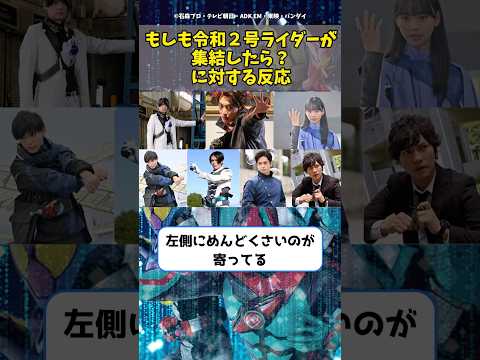
What If All Reiwa-Era Kamen Rider Secondary Riders Assembled? Fan Reactions and Series Evolution
A viral video concept exploring a hypothetical gathering of secondary Kamen Riders from the Reiwa era has sparked widespread fan discussion about character dynamics, narrative possibilities, and the franchise’s evolving approach to ensemble storytelling. The scenario highlights how secondary riders have become increasingly complex characters rather than mere supporting roles, reflecting broader industry trends in character-driven narratives.
- What Happened
- Why It Matters
- Background
- Key Points
- The Evolution of Secondary Riders: From Support to Complexity
- Narrative Possibilities: Character Interactions and Dialogue
- Industry Context: The Multi-Character Ensemble Trend
- Fan Reception: Expectations and Concerns
- Lessons from Previous Crossovers
- Insights and Future Implications
What Happened
A reaction video to the concept “What if all Reiwa-era secondary Kamen Riders assembled?” has generated significant engagement within the Kamen Rider fan community. The video explores a hypothetical scenario where secondary riders from recent Kamen Rider series—including Vulcan from Zero-One, Blaze from Saber, Vice from Revice, and others—would gather and interact. This concept has prompted fans to reconsider the role and importance of secondary riders throughout the franchise’s modern era.
Why It Matters
Secondary riders have traditionally occupied a supporting role in Kamen Rider narratives, but the Reiwa era has fundamentally redefined their function within each series. Understanding this shift reveals how the franchise is adapting to contemporary storytelling trends and audience expectations. The hypothetical assembly of these characters raises questions about narrative cohesion, character individuality, and the commercial viability of cross-series collaborations. For longtime fans and industry observers, this scenario represents a potential evolution in how the franchise might approach future multimedia projects.
Background
The Kamen Rider franchise, which began in 1971, has consistently featured secondary riders alongside primary protagonists. During the Heisei era (1989-2019), secondary riders typically fell into three categories: partner-type riders who supported the protagonist, conflict-driven riders who created narrative tension, and independent riders pursuing separate objectives. The transition to the Reiwa era (2019-present) has introduced a new paradigm. Vulcan in Zero-One evolved from corporate enforcer to independent ally through personal choice rather than external circumstances. Blaze in Saber introduced the unprecedented concept of a secondary rider originating from an alternate world. Vice in Revice established an entirely new archetype by existing as both an internal manifestation of the protagonist’s psyche and a distinct secondary rider entity.
Key Points
- Reiwa-era secondary riders represent a departure from traditional supporting character roles, each possessing distinct narrative functions and character arcs independent of the protagonist
- The hypothetical assembly of these characters would create unprecedented opportunities for character interaction and dialogue exploring their different perspectives and experiences
- Industry trends across anime and gaming franchises increasingly favor multi-character ensemble narratives over single-protagonist-focused stories, reflecting evolving audience preferences
- Fan reactions demonstrate both enthusiasm for potential new storytelling possibilities and concern about whether secondary riders’ individual characteristics might be diluted in a crossover scenario
- From a production standpoint, such a project would represent both a commercial opportunity to generate new merchandise and media content, and a creative challenge to maintain narrative coherence
- Past crossover experiences, particularly Kamen Rider Decade’s “Heisei Rider Wars,” provide both cautionary examples and templates for how multi-series collaborations might function
The Evolution of Secondary Riders: From Support to Complexity
The transformation of secondary rider roles reflects a deliberate creative shift by the franchise’s producers. In Heisei-era series, secondary riders primarily functioned as narrative tools—either reinforcing the protagonist’s journey, creating obstacles through conflict, or pursuing independent goals that occasionally intersected with the main plot. Vulcan’s character arc in Zero-One demonstrates the Reiwa approach: his development stems from internal choice and moral awakening rather than external plot devices. This internalized character motivation creates deeper audience investment and allows for more nuanced storytelling.
Blaze’s role in Saber introduces cross-dimensional complexity, positioning him not merely as a supporting character but as a representative of an entirely different worldview and value system. This setup allows for thematic exploration of how different perspectives can coexist and collaborate. Vice in Revice pushes the concept further by existing simultaneously as an internal psychological element and an external combatant, creating a dual nature unprecedented in franchise history.
Narrative Possibilities: Character Interactions and Dialogue
If these secondary riders were to assemble, several layers of meaningful interaction would emerge. First, they would likely discuss their distinct paths to becoming riders. Vulcan could share his experience of transitioning from corporate servitude to autonomous agency. Blaze could articulate the challenges of adapting to a world fundamentally different from his origin. Vice could explore the unique complexity of existing as both internal and external entities. These conversations would reveal how each character’s journey reflects different responses to similar fundamental questions about identity, purpose, and agency.
Second, their different relationships with their respective protagonists would create rich comparative dialogue. Vulcan functions as an equal partner, Blaze as a cooperative ally from another dimension, and Vice as an internal companion navigating shared consciousness. Examining these varied relationship dynamics could illuminate what “partnership” means in different narrative contexts and how secondary riders define their roles within their series’ ecosystems.
Third, such an assembly could explore how secondary riders contribute to their series’ thematic concerns. Each rider embodies different thematic priorities: Vulcan represents systemic change and institutional reform, Blaze symbolizes the fusion of different worldviews, and Vice embodies internal reconciliation and coexistence. A gathering of these characters could synthesize these themes into a larger statement about the Reiwa era’s narrative priorities.
Industry Context: The Multi-Character Ensemble Trend
The appeal of assembling secondary riders reflects broader industry trends. Successful franchises like Fate/Grand Order, The Idolmaster, and Uma Musume have demonstrated that audiences increasingly value multi-character ensemble narratives where various characters possess agency and development. This shift represents a departure from traditional single-protagonist storytelling toward what might be termed “distributed narrative authority,” where multiple characters drive the story forward from different perspectives.
From a business perspective, such projects create multiple revenue streams: new merchandise featuring character combinations, dedicated video content, potential theatrical releases, and expanded gaming opportunities. However, the creative challenge lies in maintaining each character’s individual identity while creating a coherent ensemble narrative. The franchise’s producers must balance commercial incentives with artistic integrity—a tension that has defined previous crossover attempts.
Fan Reception: Expectations and Concerns
Online responses to the secondary rider assembly concept reveal nuanced fan perspectives. Many fans express enthusiasm about seeing characters like Vulcan and Blaze interact, with particular curiosity about how Vice’s unique nature would function in a multi-character context. This enthusiasm reflects genuine investment in these characters’ development and a desire to explore narrative possibilities beyond their individual series.
However, significant concerns also emerge. Some fans worry that assembling secondary riders might dilute their individual characteristics, reducing complex characters to generic ensemble members. Others express skepticism rooted in Kamen Rider Decade’s mixed reception, fearing that production compromises might undermine narrative quality. These concerns demonstrate that fans possess sophisticated understanding of how crossover projects can either enhance or diminish character integrity.
Lessons from Previous Crossovers
The franchise has attempted multi-series collaborations before, most notably in Kamen Rider Decade and the Heisei Generations theatrical films. Decade, while conceptually ambitious, received mixed critical reception due to perceived narrative inconsistency and character mishandling. The Heisei Generations films achieved greater success by focusing on specific character pairings rather than attempting comprehensive ensemble narratives. These precedents suggest that successful secondary rider assembly would require careful narrative design prioritizing character-specific interactions over generic crossover spectacle.
Insights and Future Implications
The hypothetical assembly of Reiwa-era secondary riders represents more than fan speculation—it reflects genuine evolution in how the Kamen Rider franchise conceptualizes character roles and narrative structure. The Reiwa era’s secondary riders have transcended their traditional supporting function to become characters whose development, perspectives, and relationships merit equal narrative attention to protagonists. This shift aligns with contemporary storytelling preferences while maintaining the franchise’s core identity.
Should such a project materialize, its success would depend on whether producers can preserve each character’s individual narrative context while creating meaningful ensemble interactions. The concept demonstrates that audiences value secondary characters not as mere support structures but as fully realized entities whose experiences and perspectives enrich the overall narrative landscape. This recognition represents a maturation of the franchise’s approach to character development and audience engagement. For the Kamen Rider series moving forward, the secondary rider assembly concept suggests that future projects might increasingly focus on exploring relationships between characters across series boundaries, potentially establishing a new model for franchise-wide collaboration that respects individual character integrity while creating emergent narrative possibilities.