▶ Watch the original YouTube video
The “Beyond’s Bloodline” Theory: How Fans Are Reinterpreting Hunter x Hunter’s Royal Succession Arc
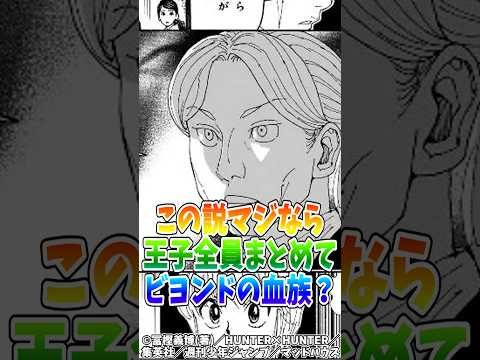
A viral fan theory circulating online suggests that all fourteen royal princes in Hunter x Hunter’s succession arc may be biological descendants of Beyond Netero, the mysterious son of the late Chairman Netero. This theory has sparked intense debate within the fandom, with supporters pointing to narrative parallels in creator Yoshihiro Togashi’s previous works and critics questioning the logical consistency of such a revelation.
What Happened
A theory has emerged on social media platforms and anime forums proposing that all of King Nasubi Hui Guo Rou’s fourteen sons may actually be biological children of Beyond Netero, rather than offspring from the various queens. The theory gained traction after fans noticed narrative inconsistencies in the royal family’s genealogy and observed that several princes possess abilities and physical characteristics that seem to exceed normal human parameters. The hypothesis suggests that Togashi deliberately obscured the princes’ maternal lineages to set up a major narrative revelation later in the story.
Why It Matters
If true, this theory would fundamentally reframe the entire royal succession arc. The conflict would shift from a simple power struggle over the throne to a more complex narrative about hidden family connections and the true nature of Beyond Netero’s influence on the Kakin Empire. This interpretation also creates a thematic bridge between the succession arc and the Dark Continent expedition, both of which are currently unfolding simultaneously in the manga. Understanding fan theories like this reveals how deeply readers engage with complex narrative structures and foreshadowing in modern manga storytelling.
Background
The royal succession arc introduced readers to an unusually complex family structure: King Nasubi has fourteen sons from multiple queens, each with distinct personalities, abilities, and ambitions. Beyond Netero, introduced as the son of the late Chairman Netero, has remained a mysterious figure whose true motivations and connections remain largely unexplained. The arc’s emphasis on genealogy and bloodline, combined with Togashi’s known creative pattern of using hidden family relationships as major plot devices, has led fans to speculate about deeper connections between these characters.
Togashi’s previous works, particularly Yu Yu Hakusho, established a pattern where protagonist lineage and hidden parentage serve as crucial narrative turning points. In Hunter x Hunter itself, the revelation that Gon is Ging’s son fundamentally altered the story’s trajectory. This creative precedent has primed fans to expect similar revelations in the succession arc.
Key Points
- The theory proposes that all fourteen royal princes are biological descendants of Beyond Netero, not the various queens
- Several princes display physical abilities and characteristics that seem inconsistent with normal human genetics
- Togashi’s previous works consistently employ hidden bloodline relationships as major plot devices
- The simultaneous progression of the succession arc and Dark Continent expedition suggests narrative convergence
- Online discussion is split between supporters citing structural parallels to works like Code Geass and Attack on Titan, and skeptics questioning the theory’s logical consistency
- The theory raises unresolved questions about the role and significance of the multiple queens
Comparative Analysis: Structural Parallels in Other Works
Supporters of the theory point to similar narrative structures in other major anime and manga. Code Geass features multiple royal siblings competing for imperial power, with hidden genetic factors influencing their abilities. Attack on Titan similarly uses royal bloodline mysteries as a central plot mechanism. Fire Emblem’s tactical gameplay scenarios involving royal succession wars present comparable structural frameworks. These parallels suggest that Togashi may be employing a well-established narrative pattern that resonates across multiple media formats.
Perspectives
Supporting the Theory: Proponents argue that the theory explains several narrative anomalies. The extreme physical capabilities of princes like Tserriednich and Camilla suggest genetic factors beyond normal human variation. The deliberate obscuring of maternal information across multiple queens appears intentional, creating space for a major revelation. The simultaneous progression of Beyond’s Dark Continent expedition and the succession conflict suggests these plotlines will eventually converge. Additionally, Togashi’s established creative pattern of using hidden parentage as narrative anchors supports this interpretation.
Skeptical Perspectives: Critics raise practical objections. If all fourteen princes are Beyond’s biological children, the existence of multiple queens becomes narratively meaningless. The timeline raises questions about whether Beyond had sufficient time to father so many children. Some argue the theory represents over-analysis and that the simpler explanation—that the princes are simply the biological sons of their respective mothers—is more likely. Others contend that the theory diminishes the significance of the queens’ characters and storylines.
Detailed Examination of Prince Characteristics
Fans have compiled detailed analyses of individual princes’ abilities and traits:
| Prince | Notable Characteristics | Theory Connection |
|---|---|---|
| Tserriednich | Abnormal physical strength and size | Suggests genetic factors beyond normal human capability |
| Camilla | Extreme aggression and unusual behavioral patterns | Implies possible genetic predisposition to psychological traits |
| Marayam | Exceptional intelligence and political acumen | Could indicate enhanced cognitive genetics |
| Chrollo | Religious fanaticism and spiritual obsession | Raises questions about psychological inheritance |
Togashi’s Creative Patterns
Analysis of Yoshihiro Togashi’s body of work reveals consistent thematic elements. In Yu Yu Hakusho, protagonist Yusuke’s demon heritage becomes central to the narrative. In Hunter x Hunter, Gon’s connection to Ging fundamentally shapes the story’s direction. Togashi repeatedly employs the narrative device of “hidden paternity” as a means to recontextualize character motivation and plot development. The royal succession arc’s emphasis on genealogy and the deliberate ambiguity surrounding the princes’ origins align with this established creative pattern.
Moreover, Togashi frequently uses complex family structures as vehicles for exploring themes of inheritance, destiny, and individual agency. The succession arc’s focus on fourteen princes from multiple mothers creates the narrative space necessary for such a revelation.
Online Community Response
The theory has generated substantial discussion across multiple platforms. On Twitter, supporters have posted detailed structural analyses arguing that the theory resolves several narrative inconsistencies. Reddit threads dedicated to the theory have accumulated thousands of comments, with users debating specific textual evidence. YouTube comment sections show mixed reactions, with some viewers praising the theory’s logical coherence while others dismiss it as speculative overanalysis.
On 5channel (Japan’s largest anonymous imageboard), dedicated Hunter x Hunter threads have produced increasingly sophisticated analyses connecting the succession arc to Beyond’s Dark Continent activities. These discussions suggest that the theory has achieved sufficient credibility within fan communities to warrant serious consideration as a legitimate interpretive framework.
Potential Narrative Implications
If the theory proves accurate, the narrative could unfold in several ways. The succession conflict could transform from a straightforward power struggle into a complex exploration of identity and familial connection. The revelation would create thematic resonance with the Dark Continent expedition, suggesting that Beyond’s activities and the succession war are interconnected elements of a larger narrative design.
Alternatively, a more nuanced revelation might emerge: rather than all princes being Beyond’s biological children, perhaps only a subset possess this connection, creating additional layers of mystery and conflict. This approach would align with Togashi’s tendency toward narrative complexity that exceeds reader expectations.
Unresolved Questions
The theory leaves several critical questions unanswered. If all princes are Beyond’s children, what is the narrative purpose of the multiple queens? How would such a revelation affect the characterization and agency of these female characters? What timeline would allow Beyond to father fourteen children? How does this theory account for the princes’ varying ages and apparent different maternal backgrounds?
These questions suggest that even if the core theory contains truth, the actual narrative revelation will likely be more complex and nuanced than the basic hypothesis proposes.
Insights
The “Beyond’s Bloodline” theory demonstrates how contemporary manga fandom engages in sophisticated textual analysis. Rather than passive consumption, fans actively construct interpretive frameworks based on narrative patterns, thematic consistency, and creator history. The theory’s circulation and debate reveal that Hunter x Hunter’s royal succession arc has achieved a level of narrative complexity that justifies serious critical engagement.
Whether the theory ultimately proves accurate or not, its existence indicates that Togashi has successfully created a narrative structure sufficiently ambiguous and layered to support multiple legitimate interpretations. This ambiguity appears intentional, designed to encourage reader investment in solving the story’s mysteries.
The theory also illustrates how knowledge of a creator’s previous works shapes audience expectations. Togashi’s established pattern of using hidden genealogy as a narrative device has created a framework through which fans interpret new material. This intertextual awareness represents a sophisticated form of media literacy within anime and manga communities.
Ultimately, the royal succession arc stands as one of the most structurally complex narratives in contemporary manga, regardless of whether this specific theory proves true. The intensity of fan engagement and the quality of analytical discussion surrounding it demonstrate the arc’s success in creating a genuinely mysterious and compelling narrative framework.