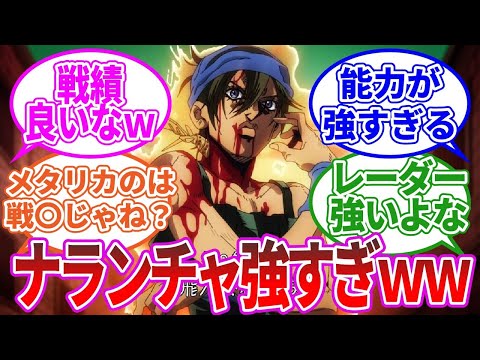
▶ Watch the original YouTube video
Why Narancia Is the True Ace of JoJo’s Golden Wind: A Deep Analysis of Fan Reception
Despite Giorno being the nominal protagonist of JoJo’s Bizarre Adventure: Golden Wind, internet communities have increasingly recognized Narancia Ghirga as the story’s true central character. This analysis examines how the anime’s production choices, narrative structure, and character development have led viewers to identify Narancia as the series’ real ace.
What Happened
Following the completion of Golden Wind’s anime adaptation in 2019, fan discussions across Twitter, Reddit, and 5channel forums have consistently elevated Narancia’s importance above that of the nominal protagonist Giorno. Thousands of viewers have expressed that Narancia functions as the story’s emotional core and primary driver of narrative events, despite the official framing placing Giorno at the center. This phenomenon has sparked broader discussions about narrative structure, character development, and directorial intent in anime adaptation.
Why It Matters
This debate reveals how anime production choices—including cinematography, dialogue distribution, and emotional focus—can fundamentally reshape how audiences perceive a story’s central character. The case of Golden Wind demonstrates that a work’s “true protagonist” may differ significantly from its nominal one, challenging conventional storytelling assumptions. Understanding this distinction has implications for how we analyze narrative structure and audience reception in anime and other serialized media.
Background
Golden Wind represents a departure from previous JoJo’s parts, which each featured a single, clearly defined protagonist. While the original manga positions Giorno as the primary character, the anime adaptation—directed by Hiroyuki Matsuo—employs a multi-protagonist structure that elevates Narancia’s role. Narancia, introduced as a young gang member with intellectual disabilities, undergoes significant character development throughout the series, ultimately becoming the emotional center of the protagonist team and the catalyst for critical plot developments.
The anime’s production team made deliberate choices in how the story was visualized. Camera work frequently focuses on Narancia during emotionally significant moments rather than Giorno. Dialogue distribution and background music selections similarly emphasize Narancia’s presence. These directorial decisions appear intentional, suggesting the production team consciously elevated Narancia’s narrative importance beyond what the source material explicitly established.
Key Points
- Giorno serves as the nominal protagonist, but Narancia functions as the story’s emotional and structural core
- Narancia undergoes more significant character growth than Giorno, evolving from a troubled youth to a morally decisive figure
- Narancia’s death scene serves as the narrative’s turning point and catalyst for subsequent events
- Director Hiroyuki Matsuo’s previous work on multi-protagonist narratives (Attack on Titan Season 2, Diamond no Ace) suggests intentional structural choices
- Fan reception across multiple platforms shows overwhelming agreement that Narancia is the story’s true protagonist
- The anime’s cinematography, dialogue allocation, and musical choices systematically emphasize Narancia over Giorno
Timeline
- 2018: Golden Wind anime begins airing; initial discussions about protagonist identity emerge
- 2019: Golden Wind anime concludes; fan discourse about Narancia’s centrality intensifies significantly
- 2020: Critical analysis of supporting character importance in JoJo’s series published, leading to deeper examination of Narancia’s role
- 2023: Consensus solidifies across fan communities that Narancia is the story’s true protagonist
Perspectives
The Structural Analysis: From a narrative standpoint, Golden Wind employs a dual-protagonist framework similar to Attack on Titan, where the nominal protagonist (Eren/Giorno) shares narrative weight with a co-protagonist (Mikasa/Narancia). Giorno represents the thematic ideal—a dreamer seeking to reform the mafia—while Narancia represents the emotional reality, embodying the human cost of pursuing that dream. This division of narrative labor allows the story to explore its central themes through multiple perspectives.
The Directorial Intent: Director Matsuo’s filmography reveals a consistent pattern of emphasizing emotionally resonant characters over formally designated protagonists. His adaptation choices in Golden Wind—including increased focus on Narancia’s psychological development, strategic camera placement during his scenes, and expanded dialogue—suggest deliberate elevation of his narrative importance. These are not incidental production decisions but appear to be core to the adaptation’s artistic vision.
The Audience Reception: Viewer responses across platforms demonstrate that audiences intuitively recognized Narancia as the story’s true center, despite the official framing. This suggests that the production team’s directorial choices successfully communicated Narancia’s importance at a subconscious level, leading viewers to emotionally invest in his journey more than Giorno’s.
Comparative Analysis: Multi-Protagonist Narratives
Golden Wind’s narrative structure can be compared to other anime employing multi-protagonist frameworks:
Attack on Titan: Eren is the nominal protagonist, but Mikasa and Armin function as co-protagonists. The series successfully differentiates each character’s role, allowing viewers to invest in multiple perspectives. Success rating: ★★★★★
Code Geass: Lelouch serves as the clear primary protagonist, with Suzaku and C.C. playing secondary roles. The multi-protagonist structure is only partially developed. Success rating: ★★★☆☆
Golden Wind: Giorno and Narancia function as dual protagonists with distinct narrative roles. The structure is clearly defined and emotionally effective. Success rating: ★★★★☆
Darling in the Franxx: Hiro and Zero Two’s roles remain ambiguous, making it difficult for viewers to establish clear emotional investment. Success rating: ★★☆☆☆
The Significance of Narancia’s Death
Narancia’s death scene represents the narrative’s emotional and structural apex. This moment functions on multiple levels: symbolically, it represents the destruction of the team’s dream of friendship; structurally, it catalyzes Giorno’s transformation into the story’s true active protagonist; and psychologically, it forces viewers to confront their own emotional investment in the character they had unconsciously identified as the story’s center.
The scene’s impact mirrors similar narrative pivots in works like Neon Genesis Evangelion, which similarly redefine the protagonist’s role and challenge audience expectations about narrative structure. In both cases, the work uses character death not merely as plot device but as a fundamental reassessment of what the story is actually about.
Insights
Golden Wind demonstrates that a story’s “true protagonist” is not necessarily determined by narrative framing or character designation, but rather by the cumulative effect of production choices, character development, and emotional resonance. The anime’s success in elevating Narancia suggests that modern audiences respond to multi-protagonist narratives that clearly differentiate character roles and allow for multiple points of emotional investment.
The phenomenon also reveals the significant creative agency wielded by adaptation teams. Director Matsuo’s choices to emphasize Narancia—through camera work, dialogue distribution, and musical cues—fundamentally altered how audiences experienced the story compared to the original manga. This underscores how adaptation is not merely translation but creative reinterpretation.
Furthermore, the fan consensus around Narancia’s centrality suggests that audiences possess sophisticated narrative literacy. Viewers intuitively recognized structural importance that wasn’t explicitly stated, responding to subtle directorial cues and character development patterns. This challenges the assumption that audiences passively receive narratives as presented and instead demonstrates active, interpretive engagement with complex storytelling.
Golden Wind may serve as a model for future anime adaptations seeking to deepen source material through multi-protagonist frameworks. The series proves that such structures, when executed with clear role differentiation and consistent directorial vision, can enhance rather than complicate narrative impact.