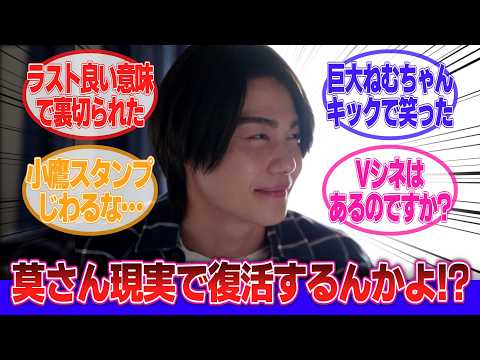
▶ Watch the original YouTube video
After 15 years of following the Kamen Rider franchise, one longtime fan argues that Kamen Rider Zero-One’s final episode “Last Case: Thoughts” represents the gold standard for series conclusions. Through masterful thematic execution, character development, and cross-media storytelling, the finale delivers an emotionally resonant ending that transcends typical tokusatsu conventions.
- What Happened
- Why It Matters
- Background
- Key Points
- Thematic Execution: The Perfect Recovery of “Dream”
- Character Development and Psychological Depth
- Cross-Media Storytelling Innovation
- Comparative Analysis: Zero-One’s Achievement
- Emotional Architecture and Viewer Psychology
- Industry Implications and Future Directions
- Viewer Reception and Online Response
- Critical Perspective: A 15-Year Fan’s Assessment
- Recommendations for Optimal Engagement
- Conclusion
What Happened
Kamen Rider Zero-One concluded with protagonist Ryo Fuwa awakening from a dream world into reality through a three-part narrative structure: the television finale, a theatrical film, and a post-credits scene. The ending reveals that Fuwa’s experiences within the dream shaped his actions in the real world, while supporting character Yume achieves independent selfhood for the first time. A new agent organization emerges to combat the threat of Nightmare, ensuring continuity of the series’ world.
Why It Matters
The success of a series finale significantly impacts overall reception and legacy. Zero-One’s conclusion demonstrates how contemporary tokusatsu productions can balance thematic depth with universal accessibility. The episode’s approach to cross-media storytelling—integrating television, film, and post-credits content—establishes a potential template for future special effects productions. Additionally, the complete resolution of the series’ central “dream” motif provides a masterclass in thematic payoff, addressing a persistent challenge in long-form serialized storytelling.
Background
Kamen Rider Zero-One aired in 2019-2020, initially exploring themes of artificial intelligence and human coexistence before gradually shifting toward more introspective, psychologically-driven narratives centered on the concept of “dreams.” The series featured protagonist Ryo Fuwa, portrayed by voice actor Kaii Nakamura, as a character who evolves from emotionally detached to fully human through his journey. Supporting character Yume served as a consistent presence throughout the narrative, existing within others’ worldviews until achieving autonomy in the finale. The franchise itself has a 15+ year history with varying degrees of critical and audience reception for previous final episodes, including mixed responses to conclusions in Wizard, Drive, Ghost, Ex-Aid, and Saber.
Key Points
- Three-part narrative structure: Television finale, theatrical film, and post-credits scene create a layered conclusion that completes the story across multiple media platforms
- Complete thematic resolution: The “dream” motif, central to the entire series, receives full narrative payoff rather than partial or ambiguous closure
- Character arc fulfillment: Each character’s choices and consequences align logically, with Ryo Fuwa’s journey from emotional detachment to humanity and Yume’s achievement of independent identity serving as narrative anchors
- Hopeful, luminous ending: The conclusion prioritizes optimism and light rather than tragedy, with imagery of a hero returning with the dawn
- Philosophical depth: The narrative explores the relationship between dreams and reality, suggesting they are mutually influential rather than opposing forces
- Universal accessibility: Complex thematic elements are distilled into a simple, emotionally resonant message about dreams and human growth that appeals across age groups
Thematic Execution: The Perfect Recovery of “Dream”
The defining characteristic of Zero-One’s finale lies in its exhaustive pursuit and complete resolution of the “dream” theme. Few tokusatsu productions maintain thematic consistency throughout an entire series while delivering emotionally satisfying conclusions. The revelation that protagonist Ryo Fuwa inhabited a dream world initially threatens despair—the sense that everything was meaningless. However, the post-credits awakening transforms this potential tragedy into triumph, demonstrating that dream experiences fundamentally shaped his real-world actions.
This contrasts sharply with previous Kamen Rider conclusions. Ghost (2016) pursued the theme of “bonds with the deceased” through the concept of “eyecons” but failed to fully resolve this theme by the finale, dividing viewer opinion. Ex-Aid (2017) explored “games” and life choices with thematic depth but struggled to communicate this complexity to all viewers. Saber (2020) presented ambitious, complex worldbuilding but sacrificed accessibility in the process. Zero-One succeeded where these predecessors faltered by selecting a universally resonant theme—”dreams”—and maintaining it consistently while ensuring narrative clarity.
Character Development and Psychological Depth
The finale’s treatment of character psychology demonstrates meticulous construction. Ryo Fuwa’s arc from emotionally cold to fully human unfolds logically across the series, culminating in his ability to dream. This transformation carries philosophical weight: the capacity to dream becomes synonymous with becoming human. Yume’s character development proves equally significant. Throughout the series, she existed within others’ worldviews. The finale grants her autonomous perspective for the first time—a narrative choice that embodies the series’ broader themes of individuality and freedom. This is not merely character progression but thematic crystallization.
Cross-Media Storytelling Innovation
The television-film-post-credits structure represents an evolution in tokusatsu production strategy. While cross-media integration has become industry standard since 2018, Zero-One’s three-layer approach maximizes this trend’s potential. The television finale provides narrative closure while leaving emotional resolution incomplete. The theatrical film extends the narrative. The post-credits scene delivers the true emotional climax. This structure creates a comprehensive entertainment experience that rewards engagement across multiple platforms while remaining comprehensible to viewers who experience only the television component.
Comparative Analysis: Zero-One’s Achievement
| Series | Central Theme | Finale Structure | Audience Reception |
|---|---|---|---|
| Ghost (2016) | Bonds with the deceased | Partial thematic resolution | Mixed opinions |
| Ex-Aid (2017) | Games and life choices | Complex presentation | Varying comprehension |
| Saber (2020) | Stories and knowledge | Ambitious but intricate | Divided evaluation |
| Zero-One (2019-2020) | Dreams and hope | Complete thematic resolution | High acclaim |
This comparison reveals Zero-One’s dual achievement: complete thematic resolution paired with universal comprehensibility. This balance proves extraordinarily difficult. Deeper thematic exploration typically increases narrative complexity and reduces accessibility. Zero-One’s creative team navigated this challenge successfully by distilling complex worldbuilding into a singular, powerful message.
Emotional Architecture and Viewer Psychology
The finale’s emotional impact stems from deliberate psychological manipulation. Early narrative elements plant doubt about whether Fuwa inhabits a dream world. This uncertainty compels viewer investment in discovering truth. The revelation that he indeed dreams within a dream creates profound disappointment. The immediate post-credits awakening reverses this despair into joy. This emotional trajectory—doubt, disappointment, reversal, triumph—creates deeper resonance than straightforward positive narratives. Few tokusatsu productions execute this emotional architecture with such precision.
Industry Implications and Future Directions
Zero-One’s success will likely influence tokusatsu production strategies across multiple dimensions. The television-film-post-credits structure will probably become a reference point for future series attempting cross-media integration. The importance of complete thematic resolution will receive heightened industry recognition. Character psychology and the correspondence between choices and consequences will receive greater emphasis in production planning. Additionally, the strategic selection of universally resonant themes over niche concepts will likely inform future creative decisions, as Zero-One demonstrates the commercial and critical value of accessibility without sacrificing depth.
Viewer Reception and Online Response
Online discourse surrounding the finale predominantly expresses satisfaction. Recurring phrases include “excellent final episode,” “refreshingly uplifting ending,” and “crisp conclusion.” The repeated use of “refreshing” indicates viewer appreciation for hopeful rather than tragic resolution. Comments specifically addressing thematic elements—”the dream-awakening concept is brilliant,” “the hero returning with dawn imagery”—demonstrate audience comprehension of narrative sophistication. Character-focused responses, particularly regarding Yume’s achievement of autonomy, indicate recognition of psychological depth. Expectations for future V-Cinema or theatrical continuations suggest sustained viewer investment in the series’ world.
Critical Perspective: A 15-Year Fan’s Assessment
From the vantage point of extended franchise engagement, Zero-One’s finale ranks among the highest-quality conclusions in Kamen Rider history. The narrative successfully balances intellectual depth with emotional resonance. Ryo Fuwa’s journey—learning humanity through dreams and applying that learning to reality—carries profound philosophical weight while remaining emotionally accessible. The concept of dreams and reality as mutually influential rather than opposed forces addresses genuine human experience.
One minor ambiguity persists: the ultimate cause of Fuwa’s dream state receives incomplete explanation. However, this likely represents intentional narrative choice, inviting viewer interpretation rather than constituting a flaw. The series leaves sufficient conceptual space for future expansion through V-Cinema or theatrical releases, particularly regarding Yume’s real-world existence and the new agent organization’s activities.
Zero-One transcends the category of “good story” to represent a technically sophisticated work integrating complete thematic resolution, psychological character development, and cross-media narrative architecture. The production will likely become a pedagogical reference point for tokusatsu creators navigating similar challenges.
Recommendations for Optimal Engagement
- Complete the trilogy: Television finale, theatrical film, and post-credits scene must be experienced sequentially for full narrative impact. Television-only viewing diminishes thematic completion
- Track Yume’s character arc: Following her psychological evolution throughout the series illuminates the broader themes of individuality and freedom
- Monitor Ryo Fuwa’s emotional development: Observing his progression from emotional detachment to humanity reveals the series’ structural sophistication
- Compare with previous Kamen Rider conclusions: Viewing Ghost, Ex-Aid, and Saber finales provides context for appreciating Zero-One’s achievements
Conclusion
Kamen Rider Zero-One’s final episode represents a significant achievement in tokusatsu storytelling. Through meticulous thematic execution, sophisticated character psychology, and innovative cross-media structure, the conclusion delivers emotional and intellectual satisfaction. The series demonstrates that accessibility and depth need not be mutually exclusive. For viewers seeking exemplary serialized narrative conclusion, Zero-One provides a masterclass in how to honor character journeys, resolve thematic threads, and leave audiences with hope rather than emptiness. One year of exceptional storytelling concludes with gratitude—Zero-One has indeed shown viewers how to dream.