▶ Watch the original YouTube video
Hunter x Hunter: Does Tseriedoni’s Royal Ability Actually Weaken Himself? Fan Theories Explained
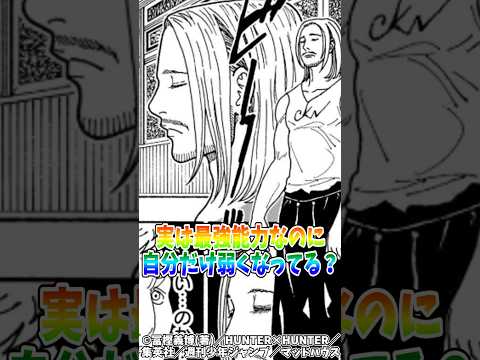
Fans of Hunter x Hunter are debating a paradoxical aspect of Prince Tseriedoni’s power: his royal ability appears to weaken him rather than strengthen him. This contradictory design has sparked extensive online discussion about what creator Yoshihiro Togashi intended with this unusual character setup.
What Happened
Online communities have identified a fundamental contradiction in Tseriedoni’s ability system from Hunter x Hunter’s Dark Continent arc. Unlike typical royal characters who gain strength from their status, Tseriedoni’s power—known as “Prince of the Royal Family”—appears to function as a self-limiting mechanism. This paradox has generated significant debate across Twitter, Reddit, and 4chan’s anime boards, with fans questioning whether this design flaw is intentional or a narrative inconsistency.
Why It Matters
Tseriedoni’s character design challenges conventional storytelling tropes about royalty and power. In most anime and manga, royal characters are depicted as inherently stronger due to their bloodline. By inverting this expectation, Togashi raises philosophical questions about the nature of strength, the burden of status, and whether power necessarily correlates with personal capability. This design choice reflects a broader shift in how modern anime defines “strength” beyond simple combat ability.
Background
Tseriedoni is a prince of the Kakin Empire introduced during the Dark Continent arc of Hunter x Hunter. He is characterized by an extremely distorted personality, finding pleasure in domination and viewing human relationships through a binary lens of ruler and ruled. His ability contradicts the expected power level of a royal character, creating tension between his social status and actual combat effectiveness. This contradiction mirrors broader themes in the series about the cost of power and the nature of human limitations.
Key Points
- Paradoxical Design: Tseriedoni’s ability weakens him rather than strengthens him, contradicting expectations for a royal character
- Fan Debate: Online communities question whether this is a logical inconsistency or an intentional philosophical statement by creator Togashi
- Thematic Purpose: The ability may represent the internal destruction of royal absolutism and the curse of inherited status
- Character Psychology: Tseriedoni’s distorted personality and self-destructive ability are deeply interconnected
- Industry Trend: This design reflects a shift in anime/manga toward redefining “strength” as more than combat power
- Comparative Analysis: Unlike other powerful characters with external limitations (Five Gojo from Jujutsu Kaisen, Ymir from Attack on Titan), Tseriedoni’s limitation is intrinsic to his ability itself
Comparative Analysis: Strength Redefined Across Anime
Tseriedoni’s ability stands apart from similar character designs in other major anime. In Attack on Titan, the Founding Titan possesses immense power but faces external constraints through royal servitude. In Jujutsu Kaisen, Satoru Gojo is the strongest character but experiences high energy consumption. Code Geass’s Lelouch commands others but grows stronger through his ability. Tseriedoni, however, embodies a unique contradiction: the ability itself is self-destructive, making him weaker the more he uses it. This fundamental difference suggests Togashi is exploring a deeper philosophical concept about the nature of power and identity.
Perspectives
Critical Interpretation: Some fans argue that Tseriedoni’s ability represents a logical flaw in the narrative, questioning how a royal character could possess such a disadvantageous power system. This perspective views the design as potentially inconsistent with established worldbuilding rules.
Philosophical Interpretation: Other fans argue this is Togashi’s intentional critique of royal absolutism. By giving Tseriedoni a self-limiting ability, Togashi suggests that inherited status does not guarantee strength, and that the pursuit of power can become self-destructive. This interpretation aligns with the series’ recurring theme that all abilities carry a cost.
Psychological Interpretation: A third perspective connects Tseriedoni’s distorted personality to his ability’s self-destructive nature. His warped psychology—viewing all relationships as dominance hierarchies—may be both cause and effect of his paradoxical power, creating a feedback loop of self-destruction.
Insights
Tseriedoni’s character design represents a sophisticated exploration of what strength truly means. Rather than presenting him as a conventionally powerful antagonist, Togashi has created a character whose internal contradiction becomes his defining characteristic. This approach suggests that true strength may not lie in raw power but in self-awareness and the ability to transcend one’s limitations.
The extensive online debate surrounding Tseriedoni reflects a deeper audience engagement with philosophical storytelling. Fans are not merely discussing combat mechanics but exploring questions about identity, status, and human nature. The character’s paradox resonates because it mirrors real-world contradictions that people experience—the gap between external status and internal capability, and the struggle to reconcile these opposing forces.
Togashi’s design philosophy, evident throughout Hunter x Hunter, emphasizes that power always carries a cost. Tseriedoni’s ability exemplifies this principle taken to its logical extreme: the cost is not external suffering but internal contradiction. This suggests that Tseriedoni’s eventual character arc may involve confronting this fundamental paradox, potentially serving as a crucial turning point in the narrative. Whether he accepts his weakness or pursues increasingly destructive power to overcome it remains one of the series’ most compelling unresolved questions.