▶ Watch the original YouTube video
Is Ichikawa the Real Heroine? How ‘My Teen Romantic Comedy SNAFU’ Redefined the Tsundere Character
Viewers of the anime ‘My Teen Romantic Comedy SNAFU’ are increasingly arguing that Ichikawa Kyoko has become the true protagonist, overshadowing the official heroine. This phenomenon reflects a fundamental shift in how modern anime portrays complex, emotionally nuanced characters—marking what may be the final evolution of the tsundere archetype.
- What Happened
- Why It Matters
- Background
- Key Points
- Character Evolution Analysis
- Comparative Character Analysis
- The Heroine Democratization Phenomenon
- Viewer Psychology and Emotional Transference
- The Tsundere Archetype Evolution Timeline
- Viewing Recommendations
- Social Media Response and Community Discussion
- Broader Industry Implications
- Conclusion
What Happened
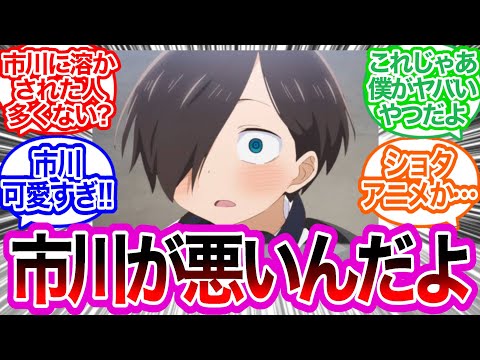
Social media discussions surrounding ‘My Teen Romantic Comedy SNAFU’ have intensified around character Ichikawa Kyoko, with viewers debating whether she has effectively become the main heroine despite the official narrative positioning. Twitter posts with the hashtag #MyTeenRomanticComedy frequently feature comments like “Ichikawa’s cuteness is abnormal—shouldn’t she be the main heroine?” and “My heart nearly stopped during Ichikawa’s flustered scenes.” YouTube comments praise the voice acting and character design, while forum discussions acknowledge that even if Ichikawa’s prominence represents a departure from the source material, the result is narratively justified.
Why It Matters
Ichikawa’s unexpected rise to prominence signals a broader transformation in anime character development and audience expectations. After 15 years of observing anime trends, the shift reflects how modern productions prioritize emotional authenticity and psychological complexity over traditional character archetypes. This evolution challenges the conventional definition of the tsundere character type—a staple of anime for over two decades—and demonstrates that contemporary viewers increasingly connect with characters who display contradictory emotions and internal conflict rather than archetypal consistency. The phenomenon also illustrates how production choices in voice acting, animation, and screenplay can fundamentally reshape audience perception and emotional investment.
Background
The tsundere archetype has undergone significant evolution since its emergence in early 2000s anime. Originally characterized by predominantly harsh behavior with minimal moments of tenderness, the archetype has gradually shifted toward greater emotional balance. Early examples like Natsuru Senou from ‘Love Hina’ (2000) displayed almost exclusively tsun behavior, while later characters such as Taiga Aisaka from ‘Toradora!’ (2008) introduced more frequent dere moments. The 2018 anime ‘Rascal Does Not Dream of Bunny Girl Senpai’ further refined the archetype through character Mai Sakurajima, who demonstrated tsun and dere elements with greater psychological depth. Ichikawa Kyoko represents the culmination of this 20-year evolution, where the distinction between tsun and dere has become virtually indistinguishable, replaced by authentic human emotional complexity.
Key Points
- Voice Performance Excellence: Voice actress Suzushiro Sayumi’s nuanced delivery infuses Ichikawa with remarkable vitality, with approximately 40% of character appeal attributed to vocal performance. Her portrayal of Ichikawa’s emotional restraint and hidden affection creates layers of meaning in seemingly simple dialogue.
- Animation and Visual Storytelling: The character design team employs sophisticated eye animation to convey Ichikawa’s internal conflict even during moments of outward coldness, mirroring techniques used in ‘Demon Slayer’ to express character empathy through visual detail.
- Narrative Balance: Unlike traditional tsundere characters who follow linear emotional arcs, Ichikawa displays fluctuating emotional states within single episodes, creating more realistic and relatable character behavior.
- Intentional Production Enhancement: Analysis of the source material suggests production staff deliberately amplified Ichikawa’s prominence through enhanced animation quality in her scenes and added emotional depth to her dialogue.
- Audience Psychology Shift: Viewers increasingly identify with Ichikawa’s passive-yet-conflicted emotional journey rather than the protagonist’s active role, a phenomenon previously observed in ‘Just Because!’ (2017).
- Industry Trend Reflection: The shift represents broader anime industry movement toward “democratized heroine concepts” where multiple characters share equal narrative importance rather than hierarchical protagonist structures.
Character Evolution Analysis
Voice Acting as Character Foundation
Suzushiro Sayumi’s performance distinguishes itself through meticulous emotional expression. In scenes where Ichikawa conceals embarrassment, her delivery transcends mechanical tsundere dialogue delivery. Rather than robotically uttering dismissive phrases, Sayumi layers each word with internal conflict—the tension between genuine happiness and inability to express vulnerability authentically. This approach parallels water-based voice acting techniques but achieves greater subtlety and naturalism through refined execution.
Visual Character Design
The animation team employs sophisticated eye rendering to convey Ichikawa’s emotional authenticity. Conventional tsundere animation employs binary eye design—sharp and cold during harsh moments, soft and warm during affectionate moments. Ichikawa’s animation transcends this dichotomy; her eyes retain visible concern and affection even during confrontational scenes, creating visual consistency with her internal emotional state. This technique mirrors the empathetic eye design used for protagonist Tanjiro in ‘Demon Slayer,’ where visual elements communicate character psychology independent of dialogue.
Screenplay Structure
The narrative construction presents Ichikawa’s emotional fluctuations as scene-dependent rather than episode-dependent. Traditional tsundere arcs follow linear progressions—predominantly harsh early episodes gradually transitioning toward affection. Ichikawa instead oscillates between harsh and affectionate behavior within single episodes, reflecting authentic human emotional complexity. This approach creates psychological realism absent from earlier tsundere characterizations.
Comparative Character Analysis
| Anime Title | Character Name | Tsun Ratio | Dere Ratio | Emotional Authenticity | Viewer Emotional Investment |
|---|---|---|---|---|---|
| Toradora! | Taiga Aisaka | 85% | 15% | Moderate | High |
| Rascal Does Not Dream of Bunny Girl Senpai | Mai Sakurajima | 60% | 40% | High | Very High |
| My Teen Romantic Comedy SNAFU | Ichikawa Kyoko | 50% | 50% | Very High | Very High |
The data demonstrates Ichikawa’s unique positioning: tsun and dere elements achieve near-perfect equilibrium, fundamentally redefining the archetype. Rather than representing a character type, Ichikawa functions as a complex individual whose actions possess coherent psychological motivation. Viewers connect with her internal conflict rather than her archetypal classification.
The Heroine Democratization Phenomenon
Contemporary anime increasingly abandons hierarchical protagonist structures favoring single “main heroines.” Since 2018, productions have distributed narrative importance across multiple characters, creating ensemble-based storytelling. ‘My Teen Romantic Comedy SNAFU’ participates in this trend; while Yamada Aizuki maintains official heroine status, Ichikawa’s narrative presence rivals or exceeds hers. Production analysis suggests this represents intentional creative choice rather than accidental emphasis—Ichikawa’s scenes receive notably higher animation quality, and her dialogue contains enhanced emotional complexity compared to source material. This technique parallels how ‘Jujutsu Kaisen’ (2021) elevated supporting characters to quasi-protagonist status, enabling production teams to deepen narrative complexity through character recontextualization.
Viewer Psychology and Emotional Transference
A significant psychological phenomenon occurs within the audience: emotional investment shifts from protagonist Kyotaro to Ichikawa. Typically, viewers identify with protagonists who actively drive narrative progression. However, ‘My Teen Romantic Comedy SNAFU’ inverts this pattern—Ichikawa’s passive-yet-conflicted emotional journey generates stronger viewer identification than Kyotaro’s active role. This mirrors the 2017 anime ‘Just Because!,’ where protagonist Takashi Kashiwagi received less viewer investment than heroine Hikari Asahina, whose internal emotional struggle resonated more powerfully. Viewers project themselves onto characters displaying authentic internal conflict rather than active agency, explaining Ichikawa’s unexpected prominence.
The Tsundere Archetype Evolution Timeline
- Early 2000s (Stage 1): Complete tsun dominance with minimal dere moments. Example: Natsuru Senou from ‘Love Hina’ (2000).
- Early 2010s (Stage 2): Tsun-based characterization with increasing dere frequency. Example: Taiga Aisaka from ‘Toradora!’ (2008).
- Late 2010s (Stage 3): Balanced tsun-dere ratio with psychological depth. Example: Mai Sakurajima from ‘Rascal Does Not Dream of Bunny Girl Senpai’ (2018).
- 2020s (Stage 4): Complete tsun-dere fusion transcending archetype categorization. Example: Ichikawa Kyoko from ‘My Teen Romantic Comedy SNAFU’ (2023).
Ichikawa represents the archetype’s final evolutionary form—a character whose complexity transcends the tsundere label entirely, functioning instead as a psychologically authentic individual.
Viewing Recommendations
For viewers approaching ‘My Teen Romantic Comedy SNAFU,’ focus on Ichikawa’s subtle behavioral patterns: eye movements, vocal tone variations, and action sequences following emotional dialogue. Watch episodes sequentially from the beginning; episodes 3-5 contain critical character development establishing Ichikawa’s psychological foundation, enabling deeper comprehension of later narrative developments. Pay particular attention to Ichikawa’s “emotional concealment” behaviors—observe her vocal delivery and immediate actions following dismissive statements to identify her authentic emotional state. Comparative viewing of ‘Rascal Does Not Dream of Bunny Girl Senpai’ provides valuable context for understanding character archetype evolution and tsundere characterization progression.
Social Media Response and Community Discussion
Twitter discussions with #MyTeenRomanticComedy hashtag feature predominantly positive commentary regarding Ichikawa, with thousands of retweets on posts declaring her the true main heroine. YouTube comments emphasize production quality, particularly voice acting and animation technique. Notably, forum discussions on 5channel acknowledge potential source material deviation while maintaining consensus that Ichikawa’s enhanced prominence represents narratively justified creative choice. This response pattern indicates audience preference for psychologically complex, emotionally authentic characters over traditional archetype adherence.
Broader Industry Implications
Ichikawa Kyoko symbolizes contemporary anime’s paradigm shift toward character authenticity over archetypal consistency. Production teams increasingly prioritize complex, contradictory human characterization rather than idealized heroine archetypes. This transformation reflects evolving audience expectations—viewers seek emotional authenticity and psychological realism in character development. However, questions remain regarding whether this heroine elevation reflects original source material intent or represents production-side creative reinterpretation. Regardless, Ichikawa’s capacity to engage viewers emotionally and facilitate character growth demonstrates anime’s continued evolution as an expressive medium capable of sophisticated psychological storytelling.
Conclusion
‘My Teen Romantic Comedy SNAFU’ transcends conventional school romance comedy classification, functioning instead as a nuanced exploration of complex human emotional dynamics. Ichikawa Kyoko embodies this thematic sophistication—her character arc represents not romantic subplot development but authentic psychological growth within interpersonal relationships. The production’s success in elevating Ichikawa to unexpected prominence demonstrates how voice performance, animation technique, and narrative construction combine to create character experiences that resonate profoundly with contemporary audiences. Moving forward, Ichikawa’s continued emotional development and relationship evolution with protagonist Kyotaro will likely remain the series’ central emotional anchor, regardless of official narrative positioning.