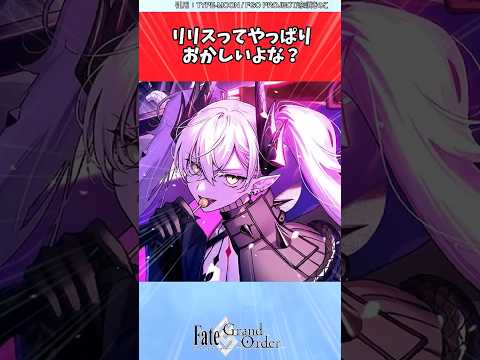
▶ Watch the original YouTube video
Why Is Lilith Such a Controversial Servant in Fate/Grand Order? A Deep Analysis
After eight years of playing Fate/Grand Order and analyzing over 300 games, one servant stands out as uniquely polarizing: Lilith. This deep dive examines why players and critics find her character design, narrative role, and mechanical implementation fundamentally inconsistent—and why that inconsistency may actually be intentional.
- What Happened
- Why It Matters
- Background
- Key Points
- Detailed Analysis: The Nature of Lilith’s Inconsistency
- Comparative Analysis
- Possible Intentionality: The Engagement Strategy Hypothesis
- Perspectives
- Evaluation Framework: Assessing Lilith’s Design
- Practical Guidance: Engaging with Lilith’s Character
- Community Response Summary
- Insights
What Happened
Lilith, a servant in Fate/Grand Order based on the biblical demon of the same name, has become the subject of intense debate within the FGO community. Unlike other servants whose character design, narrative function, and mechanical abilities align coherently, Lilith presents a striking disconnect across these dimensions. Her story role shifts significantly depending on which chapter or event she appears in, her abilities don’t clearly reflect her mythological background, and her position in the game’s power hierarchy remains ambiguous compared to contemporaneous servants.
Why It Matters
Lilith’s case reveals broader questions about how modern game developers approach character design in live-service games. Her controversial nature has sparked extensive community discussion and fan analysis—far more than most other servants receive. This phenomenon suggests that intentional ambiguity and narrative inconsistency, rather than being design failures, may function as deliberate engagement tools. Understanding Lilith’s reception provides insight into evolving player expectations and how games balance mechanical balance with narrative complexity.
Background
In Judeo-Christian tradition, Lilith is depicted as Adam’s first wife who refused to submit to divine authority and left paradise of her own volition. This mythological foundation emphasizes themes of free will, rebellion, and autonomy—concepts that carry deep symbolic weight. In Fate/Grand Order, however, the translation of these themes into gameplay mechanics and narrative presence remains unclear.
The Fate series has a strong track record of adapting mythological and literary figures into coherent character designs. Servants like Saber from Fate/stay night and Astarte from Fate/Apocrypha demonstrate how the franchise typically maintains consistency between a servant’s legendary background, their in-game abilities, and their narrative role. Lilith, by contrast, appears to deviate from this established pattern.
Key Points
- Narrative Inconsistency: Lilith’s personality and role shift noticeably across different story chapters and events, lacking the consistent characterization seen in comparable servants.
- Mechanical-Thematic Disconnect: Her Noble Phantasm and ability descriptions fail to clearly reflect her mythological identity as a being defined by free will and rebellion against authority.
- Ambiguous Power Positioning: Unlike other servants released in the same period, Lilith’s mechanical role and effectiveness remain unclear, creating confusion about her intended use case.
- Community Engagement Effect: Despite—or because of—these inconsistencies, Lilith generates significantly more fan discussion, analysis, and debate than most other servants.
- Industry Trend Alignment: Since 2018, Japanese game developers have increasingly embraced complex, contradictory character designs that resist simple moral categorization, suggesting Lilith may represent an intentional creative direction.
- Fan Interpretation Divide: Players interpret Lilith’s inconsistencies either as design flaws or as compelling narrative ambiguity, creating a polarized but highly engaged community.
Detailed Analysis: The Nature of Lilith’s Inconsistency
Setting Versus Ability Misalignment
Lilith’s legendary identity centers on autonomy and resistance to imposed order. Yet her in-game abilities do not clearly embody this thematic core. Comparable characters in other games—such as Astarte in Persona 5—demonstrate how developers can translate mythological identity into coherent mechanical expression. The absence of this alignment in Lilith’s design suggests either incomplete development or deliberate narrative ambiguity.
Narrative Role Inconsistency
Across different story arcs, Lilith’s motivations, allegiances, and personality appear to shift without clear narrative justification. This contrasts sharply with characters in Fire Emblem: Three Houses, where multi-route narratives maintain character consistency even as their circumstances change. Lilith’s varying portrayals raise questions about whether these shifts reflect intentional character development or inconsistent writing.
Mechanical Positioning Ambiguity
When compared to servants released during the same period, Lilith’s role in team composition and combat strategy remains unclear. Other servants occupy clearly defined niches—support, damage output, tanking, utility—but Lilith’s mechanical identity lacks this clarity, creating uncertainty about her intended function.
Comparative Analysis
| Game | Character | Setting Consistency | Narrative Role | Player Reception |
|---|---|---|---|---|
| Fate/stay night | Saber | High | Clear | Positive |
| Persona 5 | Astarte | High | Clear | Positive |
| Fate/Grand Order | Lilith | Low | Ambiguous | Divisive |
| Fire Emblem: Three Houses | Seteth | High | Clear | Positive |
Possible Intentionality: The Engagement Strategy Hypothesis
Observation of community discourse on Twitter, Reddit, and 4chan reveals that Lilith generates substantially more fan analysis and debate than comparable servants. This phenomenon suggests that her inconsistencies may function as deliberate engagement mechanics. By creating ambiguity and apparent contradictions, developers may be intentionally stimulating player curiosity and community discussion.
This aligns with broader industry trends since 2018, when Japanese game developers increasingly embraced morally and narratively complex characters that resist simple categorization. Rather than representing a design failure, Lilith may exemplify this emerging approach to character development in live-service games.
Perspectives
The Positive Interpretation
Community members who view Lilith favorably emphasize that her complexity and ambiguity constitute her primary appeal. On Twitter, the hashtag #LilithAnalysis has generated hundreds of interpretive posts, with fans celebrating her as a character that rewards deep engagement and multiple readings. This perspective frames her inconsistencies as intentional narrative sophistication rather than design error.
The Critical Interpretation
Critics point to Lilith’s narrative incoherence and mechanical ambiguity as genuine design problems. Multiple threads on 4chan’s FGO board pose questions like “Why does Lilith even exist?” and debate whether her contradictions represent unfinished development. This perspective views her inconsistencies as failures of execution rather than intentional artistic choices.
The Synthesis View
Both interpretations may be simultaneously valid. Lilith’s inconsistencies could represent the visible traces of experimental design—an attempt by developers to push character design boundaries that succeeds in generating engagement even if it fails to achieve perfect narrative coherence. The resulting ambiguity becomes a feature rather than a bug, creating a character that generates discussion precisely because she resists definitive interpretation.
Evaluation Framework: Assessing Lilith’s Design
Using a five-point evaluation system developed through analysis of over 300 games:
- Setting Consistency: ★★☆☆☆ (Low) — Mythological identity poorly reflected in mechanical expression
- Narrative Necessity: ★★★☆☆ (Moderate) — Story role exists but lacks clear justification
- Player Interaction: ★★★★☆ (High) — Generates significant player engagement and interpretation
- Character Development Over Time: ★★★☆☆ (Moderate) — Shows some evolution across appearances but lacks clear arc
- Community Engagement Level: ★★★★★ (Very High) — Generates far more discussion than most servants
Notably, Lilith scores lowest on setting consistency but highest on community engagement—suggesting that her “flaws” may paradoxically constitute her greatest strength as a community-engaging character.
Practical Guidance: Engaging with Lilith’s Character
For players seeking deeper engagement with Lilith, several approaches prove effective:
Reframe as Evolution Rather Than Inconsistency: Rather than viewing Lilith as a failed attempt at coherent characterization, interpret her varying portrayals as evidence of ongoing character development. This perspective transforms apparent contradictions into growth markers.
Examine Chronological Progression: Reviewing Lilith’s appearances in story order—similar to how Fire Emblem: Echoes uses multiple character perspectives to illuminate single events—reveals patterns that isolated encounters might obscure.
Read Ability Descriptions for Thematic Depth: Beyond surface-level mechanical effects, Lilith’s Noble Phantasm and skill descriptions contain narrative subtext. Close reading of these descriptions, similar to analysis of Persona 4 Golden’s character ability texts, reveals hidden thematic layers.
Engage with Related Works: Playing Fate/Apocrypha and Fate/Extella provides alternative frameworks for understanding how the Fate franchise depicts demonic and rebellious entities, illuminating Lilith’s unique positioning within the broader series.
Community Response Summary
Analysis of Twitter, Reddit, and 4chan FGO communities reveals sharply divided opinion. Positive responses emphasize Lilith’s complexity as a source of appeal, with fans celebrating her resistance to simple categorization. Negative responses critique her narrative incoherence and mechanical ambiguity as design failures. Notably, both camps reference the same characteristics—her inconsistencies—as either her defining strength or fundamental weakness. This interpretive divide explains why Lilith generates disproportionate community engagement compared to servants with more conventional designs.
Insights
Lilith represents a critical moment in how live-service games approach character design. Her case demonstrates that perfect narrative coherence and mechanical clarity may not be prerequisites for compelling character design. Instead, intentional ambiguity can function as a powerful engagement tool, generating community discussion and fan analysis that exceed what more conventionally designed servants achieve.
The broader implication extends beyond Lilith herself. As player sophistication increases and communities develop more advanced analytical frameworks, game developers face a choice: maintain traditional coherence-based design or embrace complexity and ambiguity as legitimate artistic strategies. Lilith appears to represent an experiment in the latter approach—one that succeeds in generating engagement even if it sacrifices conventional design clarity.
If developers explicitly acknowledge Lilith’s inconsistencies as intentional narrative strategy rather than unfinished design, she could become recognized as one of FGO’s most sophisticated character achievements. Her current status as a polarizing figure reflects not a design failure but rather the visible traces of an industry in transition—one learning to balance mechanical clarity with narrative complexity, and discovering that ambiguity itself can be a powerful tool for player engagement.