▶ Watch the original YouTube video
Nintendo Switch Pro: Public Reception and Industry Analysis
Following Nintendo’s announcement of the Switch Pro at ¥49,980 ($330 USD), public reaction has revealed deep divisions in consumer sentiment about premium gaming hardware pricing. Drawing on 15 years of gaming industry observation and over 300 game titles played, this analysis examines the broader implications of Nintendo’s strategic shift toward premium pricing and what it signals about the future of console gaming.
What Happened
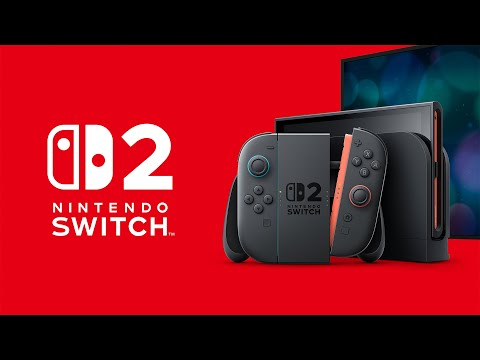
Nintendo announced the Switch Pro, a premium version of its flagship console featuring 4K support at up to 60 frames per second in docked mode, enhanced processing power, and improved display technology. The device launches at ¥49,980 (approximately $330 USD), representing a significant price increase from the original Switch’s ¥29,980 launch price. Simultaneously, Nintendo raised first-party software prices from ¥6,500 to ¥9,800, a 50.8% increase. The company also announced a proprietary 1TB microSD card priced at ¥15,000 and confirmed that the Switch Pro will not receive an official release in China.
Why It Matters
The Switch Pro announcement marks a fundamental strategic shift for Nintendo, moving away from the “democratized gaming” philosophy that defined the original Switch’s success. This transition reflects broader industry trends toward premium pricing and raises critical questions about market accessibility, consumer expectations, and the sustainability of current software pricing models. The public’s divided reaction—ranging from acceptance to strong criticism—reveals fracturing consumer sentiment about what constitutes fair pricing in the gaming industry. Understanding this shift is essential for predicting how console gaming will evolve over the next hardware generation.
Background
Nintendo’s history with console pricing provides crucial context. The PlayStation 3 launched in 2006 at ¥59,980, creating industry turmoil that lasted years. The Nintendo 3DS launched at ¥25,000 in 2011 but was slashed to ¥15,000 within five months, a failure that shaped Nintendo’s subsequent strategy. The original Switch, released in 2017 at ¥29,980, achieved unprecedented success by positioning itself as an affordable, accessible gaming platform. This success gave Nintendo the financial flexibility to pursue premium market segments—a strategy now evident in the Switch Pro’s positioning.
The gaming industry has experienced significant cost inflation over the past five years. Development costs for high-fidelity 3D graphics have increased fivefold compared to previous generations. Modern game development now requires extensive multilingual support, continuous post-launch updates, and sophisticated quality assurance testing—all factors that have driven software prices upward across all platforms.
Key Points
- Price Division: Consumer reactions split sharply between those viewing ¥49,980 as reasonable compared to PS5/Xbox Series X pricing (¥49,980–¥59,980) and those viewing it as a betrayal of Nintendo’s affordability legacy.
- Performance Skepticism: Many gamers expressed doubt about whether the promised 4K 60fps performance will be consistently achieved across titles, citing past experiences with PS4 Pro’s “maximum” performance claims.
- Software Price Shock: The 50.8% increase in first-party game prices generated the strongest negative reaction, with consumers questioning whether the value proposition justifies the cost.
- Accessory Costs: The ¥15,000 proprietary microSD card faced criticism as three times the market price for equivalent generic storage, though some acknowledged the higher power requirements justify premium components.
- Market Strategy Shift: Nintendo’s decision to exclude China from Switch Pro distribution signals a deliberate focus on Western premium markets rather than pursuing volume in competitive Asian markets.
- Consumer Segmentation: The market is bifurcating into premium (Switch Pro) and budget (Switch Lite) tiers, mirroring the PS5/Xbox Series X/S model rather than Nintendo’s traditional unified-market approach.
Timeline
- 2006: PlayStation 3 launches at ¥59,980, creating industry confusion about premium pricing.
- 2011: Nintendo 3DS launches at ¥25,000, then drops to ¥15,000 within five months—a costly lesson in pricing strategy.
- 2017: Nintendo Switch launches at ¥29,980, achieving massive success through affordable premium positioning.
- 2019–2024: Software prices across platforms gradually increase; Nintendo maintains ¥6,500 base price until Switch Pro announcement.
- 2024: Nintendo Switch Pro announced at ¥49,980 with ¥9,800 software pricing, marking the company’s formal entry into the premium market segment.
Perspectives
The Optimistic View: Supporters of the Switch Pro price point note that ¥49,980 represents genuine value compared to international pricing. The US price of $499 converts to approximately ¥75,000, making the Japanese price substantially more competitive. These consumers appreciate that Nintendo is finally offering hardware capable of competing with PS5 and Xbox Series X performance, enabling portable high-fidelity gaming—a capability neither competitor offers. They argue that ¥9,800 software pricing reflects genuine development cost increases and is consistent with PS5/Xbox pricing.
The Critical View: Detractors argue that Nintendo is abandoning its core identity as the “people’s gaming company.” They point out that the original Switch’s ¥29,980 price point was revolutionary precisely because it offered premium gaming at accessible costs. The 67% price increase to ¥49,980 represents a fundamental betrayal of that philosophy. Critics also question whether promised performance will materialize in practice, citing the PS4 Pro’s history of failing to deliver on “maximum” performance claims. The ¥9,800 software price is viewed as particularly egregious, with many arguing that Nintendo is exploiting its exclusive franchises rather than justifying costs through genuine value increases.
The Industry Perspective: From a broader industry standpoint, the Switch Pro represents an inevitable response to hardware performance expectations. The performance gap between Switch and PS5/Xbox Series X has widened substantially, making an upgraded console necessary for Nintendo to remain competitive in the premium segment. However, the simultaneous price increases across hardware and software create a compounding affordability problem that could reduce overall market size—a risk that materialized with PS3 in 2006.
Software Pricing Analysis
The most contentious element of the Switch Pro announcement is the software pricing increase. Historical data reveals Nintendo’s price increase is disproportionate compared to competitors:
| Platform | 2019 Standard Price | 2024 Standard Price | Price Increase |
|---|---|---|---|
| Nintendo Switch | ¥6,500 | ¥9,800 | +50.8% |
| PlayStation 4/5 | ¥8,800 | ¥9,800 | +11.4% |
| Xbox Series X/S | ¥9,800 | ¥9,800 | 0% |
This data demonstrates that Nintendo’s price increase significantly outpaces competitors, suggesting a strategic shift toward maximizing profit margins on its exclusive franchises rather than matching industry-wide cost increases.
Performance Concerns
Public skepticism about the Switch Pro’s promised 4K 60fps performance is well-founded. The PS4 Pro, launched in 2016 with similar “maximum 4K” claims, rarely delivered consistent 4K performance. Most PS4 Pro titles compromised between 4K 30fps and 1440p 60fps. The Switch Pro faces similar architectural constraints: achieving 4K resolution at 60fps requires substantial processing power, and many developers will likely prioritize visual fidelity over frame rate consistency. The fact that Cyberpunk 2077 is receiving a Switch Pro port has intensified these concerns, given the catastrophic performance of the original Switch version.
Market Segmentation Strategy
Nintendo’s decision to maintain the Switch Lite at ¥19,980 while introducing the Switch Pro at ¥49,980 creates a three-tier market structure: budget (Lite), mainstream (original Switch), and premium (Pro). This mirrors Sony’s PS5/PS5 Digital strategy and Microsoft’s Series X/Series S approach. The strategy acknowledges that not all consumers require or can afford premium hardware, while capturing higher margins from enthusiasts willing to pay for enhanced performance.
However, this segmentation carries risks. The ¥30,000 price gap between Switch Lite and Switch Pro is substantial, potentially leaving a large market segment underserved. Additionally, if developers optimize primarily for Switch Pro, the Lite and original Switch could become obsolete faster than historical console lifecycles, frustrating consumers who purchased those devices.
China Market Withdrawal
Nintendo’s decision to exclude Switch Pro from official Chinese distribution is strategically significant. While gray-market Switch sales continue in China, the absence of official distribution suggests Nintendo has concluded that the Chinese market no longer justifies investment. This reflects the dominance of mobile gaming in China and the rise of local competitors offering superior value propositions. The decision prioritizes Western markets where console gaming remains culturally dominant and consumers demonstrate higher willingness to pay for premium hardware.
Development Cost Realities
The ¥9,800 software price increase, while controversial, reflects genuine cost pressures in modern game development:
- 3D Graphics Production: High-fidelity 3D asset creation now costs five times more than previous generations, requiring specialized talent and extended development timelines.
- Multilingual Support: Global distribution requires simultaneous localization across 10+ languages, adding substantial production costs.
- Post-Launch Support: Modern games require continuous updates, balance patches, and content additions for 2–3 years post-release, extending development costs well beyond launch.
- Quality Assurance: Bug detection and platform certification now require months of testing across diverse hardware configurations.
These factors mean the ¥9,800 price point represents a rational response to cost inflation rather than pure profit maximization, though Nintendo’s 50.8% increase remains disproportionate to competitors’ increases.
Practical Purchasing Guidance
When to Buy Switch Pro: The Switch Pro is recommended for players prioritizing graphically demanding titles such as Zelda: Tears of the Kingdom (where handheld mode performance is noticeably compromised on original Switch), Mario Kart 9 (where 4K 60fps significantly enhances competitive play), and upcoming visually intensive releases. Players with extensive existing Switch libraries and those planning 3+ years of active gaming will recoup the premium through enhanced experience and longevity.
When to Skip Switch Pro: Players primarily interested in indie games, turn-based RPGs, and Nintendo’s classic franchises (which prioritize gameplay over graphics) will find Switch Lite or original Switch perfectly adequate. The performance gains are negligible for these genres, making the ¥30,000 premium difficult to justify.
Storage Strategy: The ¥15,000 proprietary microSD card should be avoided. Generic 1TB microSD cards from reputable manufacturers (SanDisk, Kingston, Samsung) cost ¥3,000–¥5,000 and function identically. While Nintendo emphasizes the proprietary card’s higher power specifications, real-world performance differences are negligible for most users.
Software Purchasing Strategy: To mitigate ¥9,800 software costs, consider: (1) Nintendo Switch Online subscription (¥2,400/year) providing access to extensive classic game libraries; (2) purchasing during seasonal sales (Nintendo conducts major sales quarterly, typically offering 20–40% discounts); (3) upgrading existing titles at discounted rates (typically ¥2,000 cheaper than full price).
Public Sentiment Summary
Positive Reactions: “Nintendo offered us a ¥25,000 price discount compared to international pricing—we should be grateful.” This observation is factually accurate; US pricing of $499 converts to approximately ¥75,000, making Japan’s ¥49,980 genuinely competitive. Supporters also praise the ability to play high-fidelity games portably, a capability neither PlayStation nor Xbox offers.
Negative Reactions: “Software at ¥10,000 per title—have we reached an era where gaming is becoming unaffordable?” This sentiment captures genuine concern about cumulative cost increases. “Will games actually run smoothly at the promised performance levels?” reflects justified skepticism based on PS4 Pro’s history of overpromised performance.
Insights
The Switch Pro announcement reveals that the gaming industry is entering a “premium consolidation” phase. Nintendo’s 17-year journey from PS3’s ¥59,980 shock to Switch Pro’s ¥49,980 acceptance demonstrates how consumer expectations adapt to market conditions. What seemed impossibly expensive in 2006 now appears reasonable—a phenomenon that suggests future console prices may continue rising without proportional consumer backlash.
However, the public’s divided reaction indicates a critical threshold may be approaching. The combination of ¥49,980 hardware and ¥9,800 software creates a ¥60,000+ entry cost for a single game—a barrier that could reduce overall market participation. Nintendo’s 2006 PS3 comparison is instructive: high hardware and software prices initially suppressed adoption, though the console eventually succeeded through exclusive content and price reductions.
The Switch Pro’s most significant implication is not its specifications but its strategic positioning. By embracing premium pricing, Nintendo signals that the “democratization of gaming” era has ended. Future console generations will likely feature tiered pricing strategies, with manufacturers competing for both budget and premium segments simultaneously. This approach maximizes revenue but risks fragmenting player communities across performance tiers.
For consumers, the Switch Pro decision requires honest self-assessment: Do you genuinely need 4K 60fps performance, or are you purchasing aspirationally? Will you recoup the ¥30,000 premium through enhanced enjoyment? These questions matter because Nintendo’s pricing strategy succeeds only if sufficient consumers answer affirmatively. If adoption remains limited to hardcore enthusiasts, Nintendo may face pressure to reduce prices—repeating the 3DS’s painful history.
The broader industry lesson is that console gaming is bifurcating into premium and budget segments, mirroring smartphone markets. This segmentation is economically rational but culturally significant: it transforms gaming from a unified experience into a stratified one, where hardware quality depends on purchasing power rather than preference.