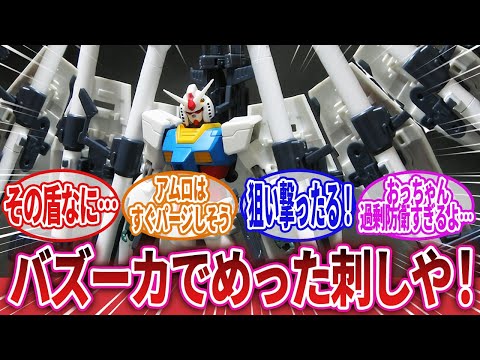
▶ Watch the original YouTube video
How the Internet Reacted to the Gundam Uncle’s Hardcore Series: A Deep Dive into Retro Mecha Anime Culture
The “Gundam Uncle Hardcore Series” has become a viral phenomenon in online anime communities, blending Showa-era robot anime aesthetics with modern internet culture. This fan-created character has transcended its origins to become a cultural touchstone that bridges generational divides in mecha anime fandom, sparking widespread discussion about the evolution of robot anime and its enduring appeal.
What Happened
The “Gundam Uncle” (ガンダムのおっちゃん) series emerged as a viral internet phenomenon, featuring a veteran pilot character who embodies an exaggerated, almost absurdist interpretation of classic mecha anime combat. The character is depicted with excessive equipment—multiple shields, rapid-fire bazookas, and unconventional weapon deployment tactics—that subvert traditional robot anime logic. Online communities have embraced this character across platforms like YouTube and Twitter, generating extensive commentary and creative interpretations that extend the concept across multiple mecha franchises and special effects properties.
Why It Matters
This phenomenon represents a significant shift in how anime fan culture operates in the internet age. The Gundam Uncle series demonstrates the dissolution of boundaries between official canon and fan-created content, showing how internet communities can collectively reinterpret established franchises. More broadly, it reflects a generational moment where viewers in their 30s to 50s—who grew up watching classic mecha anime—are revisiting and recontextualizing those works through contemporary cultural lenses. The series also exemplifies how modern fandom functions as a participatory, cross-referential network that blends multiple media properties and cultural touchstones into cohesive creative expressions.
Background
Robot anime has evolved through distinct historical periods since the original Mobile Suit Gundam debuted in 1979. The genre progressed from the “Real Robot” era of the 1980s through a period of diversification in the 1990s-2010s, and has recently entered what might be termed a “retrospective” phase. The Gundam Uncle character specifically references the Showa-era aesthetic of robot anime—characterized by what the community describes as a “violent beauty” or “aesthetic of violence.” This character embodies the combat philosophy of early mecha designs while being reinterpreted through 21st-century internet culture and meme dynamics.
The character is presented as a veteran pilot from the “13th Independent Glen Tai Special Attack Squadron,” a reference to 1980s military mecha anime like Dougram and Armored Trooper Votoms. This setting grounds the character in a specific historical moment of anime production while allowing for creative expansion and reinterpretation by fan communities.
Key Points
- Showa-era aesthetic revival: The character embodies the “violence without waste” philosophy that defined early Gundam series, taken to extreme and absurdist levels
- Creative fan interpretation: Internet communities have added elements not present in original works—multiple shield configurations, continuous bazooka fire, and shield-throwing techniques—demonstrating active creative engagement
- Cross-franchise synthesis: The series incorporates elements from Linebarrel, Armored Core, Ultraman, and other mecha and tokusatsu properties, creating a unified aesthetic
- Cultural bridge function: The character simultaneously expresses Showa-era biker gang culture aesthetics and contemporary internet humor, connecting disparate generational references
- Intergenerational appeal: Described as “kind to grandchildren like a gentle grandfather,” the character represents veteran wisdom meeting younger generations, reflecting broader demographic shifts in anime viewership
- Boundary dissolution: The series exemplifies how internet-era fandom has merged official canon with fan creation, making clear distinctions between the two increasingly irrelevant
Timeline
- 1979-1990s: Original Mobile Suit Gundam and early real robot anime establish the foundational “violent aesthetic” that the Uncle character references
- 1990s-2010s: Mecha anime diversifies across multiple stylistic and narrative approaches
- 2010s-2020s: Anime industry enters retrospective phase; works like Mobile Suit Gundam: Iron-Blooded Orphans emphasize stripped-down, brutal combat aesthetics
- 2019: Viewer first encounters the Gundam Uncle series
- 2020-2023: Character gains viral momentum across social media platforms; becomes subject of extensive fan analysis and creative reinterpretation
- 2023: Series achieves mainstream recognition within anime communities; spawns dedicated analysis and commentary
Perspectives
Fan interpretation: Online commenters emphasize the character’s embodiment of “true violence” and “lethal shield techniques,” viewing the series as a sophisticated commentary on mecha anime fundamentals rather than mere comedy. Comments like “teaching you real violence” and “shields overflowing with killing intent” suggest viewers recognize deeper cultural critique beneath the surface humor.
Cultural analysis: The character represents a deliberate fusion of Showa-era counter-culture aesthetics—specifically 1970s-80s biker gang customization culture—with robot anime’s inherent violence. This synthesis creates a new expressive form that speaks to audiences who experienced both cultural moments.
Generational perspective: The character functions as a symbolic representation of the Showa generation’s values encountering Reiwa-era sensibilities. The “kind grandfather” characterization suggests that older aesthetic frameworks are not being rejected but rather integrated into contemporary culture with self-aware irony and affection.
Franchise implications: Comments noting that the character could theoretically apply to multiple mecha properties (Saint Seiya, Gyrozetter, etc.) indicate that the Uncle represents a universal template for reinterpreting mecha combat across franchises, functioning as what internet culture terms a “meme”—a replicable unit of cultural meaning.
Comparative Analysis
Versus original Mobile Suit Gundam: Amuro Ray represents the “growth-type protagonist,” gradually increasing in power through combat experience. The Gundam Uncle is a “completed veteran,” already fully mature in combat ability. Where Amuro uses shields rationally for defense before counterattack, the Uncle weaponizes shields themselves, inverting the logic of the original series.
Versus Mobile Suit Gundam Unicorn: Unicorn Gundam expresses transcendence through technological systems that defy physics. The Uncle achieves similar transcendence through accumulated experience and audacity rather than mechanical innovation, representing individual rather than systemic transcendence.
Versus Mobile Suit Gundam: Iron-Blooded Orphans: Barbatos emphasizes simplicity and pure violence. The Uncle takes this simplicity further by deploying complex equipment in fundamentally simple ways—a paradoxical aesthetic that represents evolution of the Barbatos philosophy.
Internet Reactions and Commentary
Online responses demonstrate sophisticated multi-layered interpretation. Comments referencing “Minovsky aura” blend Gundam’s foundational Minovsky particle concept with Saint Seiya’s aura mythology, exemplifying how internet fandom operates through cross-textual reference. The observation that the character “might be spinning like a fidget spinner while firing” connects 2018 popular culture trends with classical mecha aesthetics, showing how contemporary reference points are continuously incorporated into the framework.
Notably, one commenter questioned whether Linebarrel was “just a Gundam knockoff,” revealing how Gundam functions as the prototypical reference point for all mecha anime in popular consciousness, regardless of actual historical accuracy. This demonstrates how internet culture prioritizes “quality of violence” over historical precision in making aesthetic judgments.
The description of the character as embodying “noblesse oblige”—the concept that high status carries high responsibility—indicates that viewers recognize the Uncle not merely as a violent archetype but as a figure bearing veteran responsibility toward younger generations, particularly the “youngest child” Barbatos unit.
Insights
The Gundam Uncle phenomenon represents a fundamental transformation in how anime culture operates in the internet age. The series demonstrates that the traditional boundary between official canon and fan creation has become functionally obsolete. What began as fan-generated content has become integrated into the broader mecha anime cultural ecosystem, suggesting that future anime production may increasingly emerge from collaborative internet communities rather than top-down studio decisions.
More significantly, the series reveals that mecha anime is not experiencing nostalgic decline but rather undergoing genuine evolution. By synthesizing multiple historical periods—Showa-era aesthetics, 1980s military anime references, contemporary internet culture, and cross-franchise elements—the Uncle character demonstrates that robot anime retains generative creative potential. The genre is not being consumed as historical artifact but actively reinterpreted as living cultural practice.
The character’s intergenerational appeal—simultaneously representing veteran wisdom and contemporary humor—suggests that aging anime audiences are not abandoning their formative cultural touchstones but rather integrating them into their current identities. The “kind grandfather” characterization indicates that Showa-era values are being preserved not through nostalgic repetition but through self-aware recontextualization that acknowledges both their historical specificity and ongoing relevance.
Finally, the series exemplifies how internet-era fandom functions as a participatory network rather than a consumption hierarchy. Viewers are not passive recipients of official content but active creators who collectively expand, reinterpret, and synthesize existing properties into new forms. This represents a genuine democratization of creative authority within fan communities, where the quality of interpretation matters more than official status.
However, one consideration warrants attention: the risk that excessive “meme-ification” of the character could overshadow mecha anime’s narrative and dramatic capacities. While the Uncle series demonstrates creative vitality, sustained engagement with robot anime’s storytelling potential—as evidenced by recent works like Mobile Suit Gundam: The Witch from Mercury—remains essential to prevent the genre from becoming merely a source of cultural reference material.