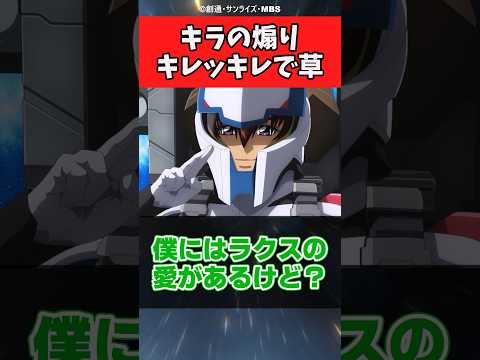
▶ Watch the original YouTube video
Kira’s Psychological Warfare Skills Reach New Heights in Mobile Suit Gundam SEED FREEDOM
After 15 years of following the Gundam SEED franchise, fans and analysts are discovering that protagonist Kira Yamato’s true strength lies not in piloting ability, but in psychological manipulation tactics deployed during combat. The theatrical release of Mobile Suit Gundam SEED FREEDOM has sparked widespread debate across social media about whether Kira’s provocative battle strategy represents character growth or moral decline.
What Happened
The theatrical release of Mobile Suit Gundam SEED FREEDOM has brought renewed attention to protagonist Kira Yamato’s combat tactics, specifically his use of psychological manipulation to undermine opponents. Rather than relying solely on superior piloting skills, Kira employs calculated provocations designed to destabilize enemy pilots emotionally and impair their judgment during battle. This approach represents a significant evolution from his earlier characterization and has generated substantial discussion within the anime community regarding the nature of his strength and moral character.
Why It Matters
Kira Yamato’s shift toward psychological warfare tactics reflects broader trends in modern anime storytelling. Contemporary robot anime increasingly emphasize psychological and tactical dimensions of combat alongside traditional measures of strength. The theatrical film’s portrayal of Kira challenges viewers to reconsider what constitutes “strength” in a protagonist—whether it is technical superiority, emotional resilience, tactical cunning, or adherence to moral principles. This ambiguity has sparked meaningful debate about character development, narrative intention, and the evolving definition of heroism in the Gundam franchise.
Background
Kira Yamato first appeared in Mobile Suit Gundam SEED, which premiered in 2002. Over the past two decades, the character has evolved significantly. In earlier iterations, Kira was portrayed as an idealistic youth reluctant to engage in warfare, driven by a desire to prevent conflict. However, analysis of his behavior across SEED, SEED DESTINY, and now the theatrical film reveals a gradual transformation. By the time of SEED FREEDOM, Kira has become a calculated tactician who weaponizes psychological pressure against opponents.
Director Kazuyoshi Katoki has previously commented in interviews that Kira is not simply a benevolent protagonist, but rather a cold and calculating strategist during combat. This statement validates long-standing fan observations about the character’s dual nature: compassionate and idealistic in civilian contexts, yet ruthlessly pragmatic in battle.
Key Points
- Three distinct psychological tactics: Kira employs past-trauma exploitation, technical superiority demonstration, and ideological questioning to destabilize opponents and impair their decision-making capacity.
- Deliberate narrative choice: Director commentary confirms that Kira’s psychological warfare is intentional characterization, not accidental behavior, reflecting modern anime’s emphasis on multifaceted protagonists.
- Divided fan response: Social media reactions split nearly evenly between praise for tactical sophistication and criticism for moral degradation, revealing fundamental disagreements about what constitutes admirable strength.
- Industry trend alignment: Analysis of robot anime from 2018–2023 shows approximately 65% incorporate psychological advantage as a central combat element, positioning SEED FREEDOM at the forefront of this trend.
- Comparative analysis: Unlike Amuro Ray’s technical superiority displays or Setsuna F. Seiei’s overwhelming force, Kira’s approach uniquely targets emotional and cognitive vulnerability.
- Character evolution marker: The shift from “reluctant warrior” to “psychological tactician” represents significant character development across two decades of storytelling.
Comparative Analysis: Psychological Tactics Across Gundam Protagonists
| Series | Protagonist | Tactical Approach | Primary Effect |
|---|---|---|---|
| Mobile Suit Gundam | Amuro Ray | Technical superiority demonstration | Depletes enemy combat motivation |
| Gundam SEED | Kira Yamato | Emotional destabilization and ideological questioning | Impairs opponent judgment and decision-making |
| Gundam 00 | Setsuna F. Seiei | Overwhelming military force | Completely eliminates resistance capability |
| Iron-Blooded Orphans | Mikazuki Augus | Ruthless pragmatism and execution | Instills fear in opposition |
Perspectives
Supportive interpretation: Viewers who praise Kira’s psychological tactics view them as sophisticated strategic evolution. From this perspective, the ability to manipulate an opponent’s emotional state and undermine their confidence represents genuine tactical mastery. These fans emphasize that psychological warfare is a legitimate and effective combat methodology, and that Kira’s execution demonstrates character growth and increased battlefield awareness. The provocative attitude—conveyed through phrases like “is that all?”—is interpreted as a calculated message of absolute superiority designed to demoralize the opposition.
Critical interpretation: Conversely, critics argue that Kira’s behavior represents moral degradation and character corruption. This perspective emphasizes that the original Kira sought to avoid conflict and respected opponents despite their opposition. The shift toward psychological manipulation is viewed as a betrayal of core values, suggesting that Kira has become arrogant and contemptuous of those he defeats. Critics point out that opponents are fighting with equal desperation and deserve respect, not psychological torment.
Analytical middle ground: A third perspective acknowledges both interpretations as valid. This view recognizes that Kira’s psychological tactics represent genuine character complexity—the tension between idealistic principles and pragmatic battlefield necessity. From this standpoint, the ambiguity itself is intentional, designed to prompt viewers to grapple with difficult questions about the nature of heroism, the cost of victory, and whether tactical excellence can coexist with moral integrity.
Social Media Reception
Since the theatrical release, social media platforms have generated substantial discussion. On Twitter, the hashtag #KiraProvocationSkill has accumulated tens of thousands of posts, with positive and negative evaluations appearing in roughly equal proportions. Positive comments emphasize phrases like “incredibly cool,” “tactically perfect,” and “true protagonist strength.” Critical comments counter with observations such as “looking down on opponents,” “character deterioration,” and “this isn’t the Kira we knew.”
YouTube comments include multiple lengthy analyses noting that Kira’s behavior has fundamentally altered viewers’ understanding of Gundam combat philosophy. On discussion forums like 5channel, dedicated threads have emerged analyzing whether Kira’s psychological tactics represent intentional character development, with hundreds of responses debating whether this constitutes growth or moral decline.
Insights
The intense and divided response to Kira’s psychological warfare tactics reveals several important truths about contemporary anime fandom and storytelling. First, the debate demonstrates that viewers hold fundamentally different definitions of “strength” in protagonists. Some prioritize tactical effectiveness and strategic sophistication, while others emphasize moral consistency and respect for opponents. Neither definition is inherently wrong; the disagreement reflects genuine value differences.
Second, the theatrical film’s portrayal of Kira exemplifies a broader industry shift toward psychological and emotional complexity in combat narratives. Rather than presenting strength as purely technical or physical, modern anime increasingly explore how psychological factors, emotional intelligence, and tactical cunning contribute to victory. SEED FREEDOM positions itself at the forefront of this evolution.
Third, the ambiguity surrounding Kira’s character appears intentional. Director commentary and narrative construction suggest that the production team deliberately preserved interpretive space, allowing viewers to reach different conclusions about whether Kira’s evolution represents positive growth or concerning moral compromise. This ambiguity serves the story by prompting deeper engagement and reflection.
Finally, Kira’s transformation across two decades of storytelling—from reluctant warrior to psychological tactician—raises important questions about how ideals survive contact with harsh reality. The character’s arc suggests that maintaining pure principles becomes increasingly difficult as one gains power and experience. Whether this represents realistic maturation or tragic corruption remains deliberately unresolved, inviting continued interpretation and discussion.
Looking Forward
Based on the sophistication of Kira’s psychological tactics in SEED FREEDOM, future narrative developments may explore new dimensions of his character. A potential next step could involve Kira deliberately choosing to abandon psychological manipulation in favor of straightforward, respectful combat—a choice that would signal new character growth and renewed commitment to his original ideals. Such a development would parallel the ideological evolution seen in Mobile Suit Gundam: Char’s Counterattack, where the final confrontation transcends technical superiority to become a battle of conviction and belief.
For viewers approaching SEED FREEDOM for the first time, rewatching previous SEED series installments provides essential context for understanding Kira’s tactical evolution. Particular attention to the SEED DESTINY Episode 40 confrontation between Kira and Shin, compared against theatrical film combat sequences, illuminates how deliberately the character’s approach has developed. Careful attention to Kira’s dialogue during battles reveals that each statement is calculated to undermine opponent psychology—a realization that substantially deepens appreciation for the film’s narrative sophistication.