▶ Watch the original YouTube video
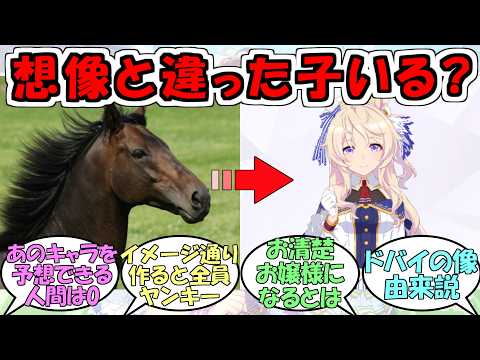
The Gap Between Real Racehorses and Their Game Counterparts: What Uma Musume Fans Really Think
Uma Musume Pretty Derby, the popular mobile game and anime that personifies real racehorses as characters, has sparked ongoing debate within its fanbase about how accurately the game’s characters reflect their real-world counterparts. A deep analysis of this phenomenon reveals a complex interplay between racing enthusiasts and gaming fans, each bringing different expectations to the same characters.
What Happened
Uma Musume Pretty Derby has become the subject of active discussion among fans regarding the gap between real racehorses and their in-game character representations. The community has been debating whether character personalities, abilities, and story arcs faithfully represent the actual horses they’re based on, or if they diverge significantly for creative purposes. This discussion has revealed a fundamental tension between two distinct fanbases: traditional racing enthusiasts who prioritize historical accuracy, and gaming/anime fans who prioritize character appeal and storytelling.
Why It Matters
This debate highlights a broader creative challenge facing personification-based media: how to balance respect for the source material with creative freedom. Uma Musume’s approach to this balance has become a case study in how modern media navigates the intersection of real-world subjects and fictional character creation. The discussion also reflects deeper questions about fandom identity, ownership, and how different communities interpret the same work through their own cultural lenses.
Background
Uma Musume Pretty Derby launched as a mobile game and has since expanded into multiple anime seasons and other media. The game features characters based on real racehorses from Japanese racing history, with their in-game abilities and story arcs often reflecting actual race results and historical moments. However, character personalities and behavioral traits frequently diverge from documented characteristics of the real horses. For example, the character Silence Suzuka is portrayed as a reserved, emotionally complex individual in the game, while the real racehorse was known for its powerful, determined racing style. Similarly, Gold Ship, a horse known for its difficult temperament in real racing, is depicted as a cheerful and affectionate character in the game.
Key Points
- Uma Musume fans actively debate whether in-game character personalities accurately reflect real racehorses’ documented traits and histories
- The game demonstrates high accuracy in reflecting actual race results and historical racing moments, but greater creative freedom in character personality design
- Two distinct fanbases—racing enthusiasts and gaming/anime fans—bring conflicting expectations to the same characters
- The phenomenon mirrors similar debates in other personification-based media, such as Kantai Collection (warships) and Touken Ranbu (Japanese swords)
- Fan communities have developed strategies to reconcile the gap, including separating “real horse” and “game character” interpretations
- The development team appears to balance historical respect with creative character design, though this balance remains contested among different fan segments
Comparative Analysis: Uma Musume Among Personification Media
Uma Musume occupies a unique position among personification-based media franchises. Unlike Touken Ranbu, which prioritizes character design over historical accuracy of the source objects, Uma Musume maintains relatively high fidelity to real racing history while still allowing significant creative interpretation of character personalities. Compared to Kantai Collection, which similarly blends historical warship data with character creation, Uma Musume demonstrates greater emphasis on reproducing actual race results and historical racing moments within its gameplay and narrative structure.
The game’s approach to character ability values and story outcomes closely mirrors real horses’ actual performance records—a level of historical detail rarely seen in comparable personification franchises. This suggests the development team intentionally signals respect for the source material while maintaining creative autonomy in character personality design.
Fan Psychology and the Gap Problem
Analysis of fan responses reveals two primary psychological mechanisms driving the perception of gaps between real horses and game characters. First, “schema mismatch” occurs when fans’ existing mental image of a real horse conflicts with the game’s character interpretation. This initial discomfort often diminishes as players engage with the game’s narrative and gradually reconstruct their understanding of how character traits represent different aspects of the real horse’s nature.
Second, a sense of “ownership” among racing fans creates resistance to reinterpretation. Racing enthusiasts often view real racehorses as belonging to their community’s cultural domain, and perceive game-based character design as unauthorized modification of something they consider theirs. This ownership dynamic extends beyond simple accuracy concerns into deeper questions of cultural authority and fandom identity.
Community Perspectives
Online reactions reveal diverse viewpoints. Twitter users frequently note discrepancies between real horse temperaments and game character personalities, though many acknowledge that game versions may represent different interpretations of the same underlying traits. Racing enthusiast communities on forums like 5channel’s horse racing board generally praise Uma Musume’s historical accuracy regarding race results and competitive records, while expressing reservations about personality characterizations. YouTube comments frequently feature racing fans stating they enjoy Uma Musume as a separate creative work rather than a historical representation, suggesting successful mental compartmentalization between the two contexts.
Practical Strategies for Engagement
Experienced players recommend several approaches to maximize enjoyment while navigating the gap issue. Separating “real horse” and “game character” as distinct interpretive layers allows simultaneous appreciation of both historical accuracy and creative storytelling. Researching actual racing history before or while playing specific character stories deepens understanding of how game narratives reference real events. Beginning with story mode rather than competitive gameplay provides clearer context for character design choices and narrative intent. Supplementing game experience with the anime adaptation offers additional character development and emotional depth that may clarify design decisions.
Insights
The Uma Musume gap debate represents a healthy, mature fandom engaging with fundamental questions about creative adaptation and source material respect. Rather than indicating creative failure, the ongoing discussion suggests the development team has successfully created space for multiple valid interpretations. The phenomenon mirrors broader trends in contemporary media where personification of real-world subjects has become increasingly common across various entertainment properties.
The core insight is that perceived gaps between real horses and game characters stem not from disrespect or inaccuracy, but from fundamentally different fanbases applying different interpretive frameworks to the same work. Racing fans prioritize historical fidelity and behavioral authenticity, while gaming fans prioritize narrative coherence and character appeal. Neither perspective is invalid; rather, they represent different but equally legitimate ways of engaging with the source material.
The development team’s approach—maintaining high historical accuracy in race results while exercising creative freedom in personality design—can be understood as a form of “creative translation,” converting real horses’ essential characteristics into game-appropriate character language. When this translation succeeds, fans recognize how game traits represent real horse qualities. When translation falters, gaps emerge.
Moving forward, the franchise could benefit from more explicit communication about design choices, helping both fanbases understand how specific character traits relate to real horse characteristics. Encouraging dialogue between racing enthusiasts and gaming fans, rather than treating them as opposing groups, could deepen overall appreciation for the work. Ultimately, Uma Musume’s engagement with the gap problem positions it not merely as entertainment media, but as a work that prompts meaningful reflection on how creative adaptation honors and transforms its source material.