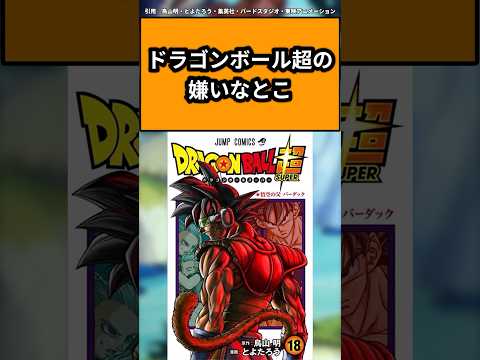
▶ Watch the original YouTube video
Why Dragon Ball Super Is Criticized by Fans: A 15-Year Analysis of the Franchise’s Controversial Sequel
Dragon Ball Super, which premiered in 2015, has faced persistent criticism from longtime fans of the franchise. Through analysis of fan reactions and comparative study of similar anime sequels, the core issues emerge: rapid power scaling, character inconsistencies, and the controversial decision to continue a story many considered complete.
What Happened
Dragon Ball Super launched in April 2015 as a continuation of the Dragon Ball franchise, approximately two years after the original manga concluded. The series introduced new characters, new story arcs including the Tournament of Power, and significantly accelerated the power scaling of established characters. However, the series has generated substantial criticism from the fanbase, with complaints ranging from narrative pacing to character development issues.
Why It Matters
Dragon Ball remains one of the most influential anime franchises globally, with a dedicated fanbase spanning decades. The reception of Dragon Ball Super reflects broader industry trends regarding sequels to completed works, the balance between commercial viability and creative integrity, and how established franchises navigate fan expectations. Understanding this criticism provides insight into what audiences value in long-running series and the challenges of extending narratives beyond their intended conclusion.
Background
The original Dragon Ball manga concluded in 1995, followed by Dragon Ball Z (1989-1996), which introduced increasingly powerful adversaries across multiple story arcs spanning years of narrative time. The franchise was considered complete when the final manga chapter depicted Goku meeting a new challenger ten years after the defeat of Majin Buu. Dragon Ball Super recontextualized this ending, revealing the story would continue with new threats and transformations. The series aired for 131 episodes before concluding in 2018, with subsequent theatrical films released in 2018 and 2022.
Key Points
- Accelerated Power Scaling: Character strength increased dramatically within a single year of narrative time, compared to the multi-year arcs of Dragon Ball Z, undermining the sense of earned progression and struggle that defined earlier seasons.
- New Character Design Inconsistency: Original Super characters like Beerus and Whis exhibit a tonal lightness inconsistent with the serious themes of late-series Dragon Ball, creating a jarring fusion of comedic and dramatic elements.
- Goku Character Deviation: The anime adaptation portrays Goku as simplistic and battle-obsessed, lacking the nuanced psychology and tactical insight present in the original manga.
- Underutilization of Legacy Characters: Popular characters such as Vegito and Future Trunks received diminished narrative focus and less impactful story roles compared to their Dragon Ball Z appearances.
- Narrative Completion Disruption: The decision to continue a concluded story alienated fans who experienced the original ending as satisfying and complete, creating a psychological sense of betrayal.
- Film Success Contrast: Theatrical releases including “Broly” (2018) and “Super Hero” (2022) received significantly more positive reception, suggesting production constraints rather than conceptual problems.
Timeline
- 1995: Original Dragon Ball manga concludes
- 2015: Dragon Ball Super anime premieres on April 5
- 2015-2017: Tournament of Power arc airs, representing the series’ most controversial period
- March 2018: Dragon Ball Super anime concludes after 131 episodes
- December 2018: “Dragon Ball Super: Broly” theatrical film released to critical acclaim
- June 2022: “Dragon Ball Super: Super Hero” theatrical film released, receiving improved fan reception
Perspectives
Fan criticism reveals multiple distinct viewpoints. Critics argue that Super fundamentally misunderstands what made Dragon Ball Z successful: the extended narrative timeframes that allowed character development to feel earned and consequential. They note that the original series spent three years on the Frieza arc, four years on the Cell arc, and seven years on the Majin Buu arc, creating genuine tension through prolonged struggle. Super compressed comparable power escalation into months, eliminating narrative weight.
Supporters of Super acknowledge the television series’ limitations while praising the theatrical films for demonstrating the franchise’s continued potential. They argue that separating the anime series from the films provides a more balanced evaluation, as the films showcase deeper character exploration and visual sophistication impossible within weekly television production constraints.
Industry analysts contextualize Super within broader 2010s trends where established franchises received continuations primarily for economic security rather than creative necessity. Similar patterns appeared in “Attack on Titan” Season 4, “Boruto” (Naruto sequel), and other long-running series, suggesting systemic industry pressures rather than isolated creative failures.
Insights
Dragon Ball Super’s critical reception illuminates the psychological contract between creators and audiences regarding narrative closure. When audiences experience a story’s conclusion as satisfying and thematically complete, the announcement of continuation can trigger a sense of betrayal independent of the sequel’s actual quality. This phenomenon appears consistently across multiple franchises, suggesting that the decision to continue completed narratives carries inherent risks that quality alone cannot fully mitigate.
The stark contrast between Super’s television series reception and its theatrical films’ reception indicates that production methodology significantly impacts creative output. The temporal and financial constraints of weekly television production appear fundamentally incompatible with the character depth and narrative sophistication audiences expect from Dragon Ball. This suggests that future franchise extensions might benefit from prioritizing limited, high-quality theatrical releases over extended television series.
Fan criticism, while sometimes emotionally expressed, demonstrates sophisticated analytical engagement with storytelling mechanics. Detailed discussions regarding power scaling logic, character psychology, and narrative pacing indicate that audiences possess refined understanding of what constitutes effective long-form storytelling. The persistence of these criticisms suggests they reflect genuine structural issues rather than mere nostalgia or resistance to change.
The franchise’s future appears to depend on whether creators can reconcile the commercial appeal of continuation with the creative integrity that made the original work significant. The theatrical films suggest this reconciliation is possible, but only through fundamentally different production approaches than those employed in the television series.