▶ Watch the original YouTube video
The Language Barrier: How Rhythm Game Terminology Divides Experts and Newcomers
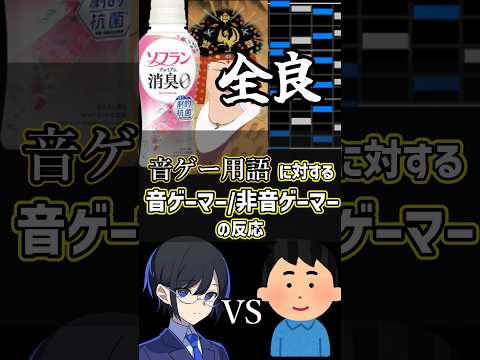
A viral video has exposed the stark divide between rhythm game enthusiasts and casual players by showcasing how specialized terminology creates an invisible wall within gaming communities. After 12 years of immersion in rhythm game culture, one observer reveals how terms like “soflan” and “sudden stairs” function as both community glue and gatekeeping mechanisms.
- What Happened
- Why It Matters
- Background
- Key Points
- Timeline
- Perspectives
- How Rhythm Game Terminology Differs from Other Gaming Communities
- The Psychology Behind the Terminology Gap
- The Role of Game Design in Terminology Development
- Community Reaction and Online Discourse
- The Future of Rhythm Game Terminology
- Practical Advice for Rhythm Game Newcomers
- Insights
What Happened
A video has gone viral on social media by demonstrating the dramatically different reactions rhythm game veterans and newcomers have to specialized gaming terminology. The video highlights terms such as “soflan” (sudden BPM changes), “Himiko” (a symbolic difficult track), and “sudden stairs” (abrupt difficulty spikes). Rhythm game experts immediately recognize and understand these terms, while non-players are left confused by the seemingly cryptic language.
Why It Matters
This phenomenon reveals deeper truths about how gaming communities form, maintain cohesion, and inadvertently create barriers to entry. The specialized vocabulary of rhythm games is not merely jargon—it represents compressed physical and emotional experiences that players have internalized through hundreds of hours of gameplay. Understanding this dynamic offers insights into community formation, language evolution, and how niche communities balance growth with identity preservation.
Background
Rhythm games have existed for decades, from arcade classics like beatmania IIDX to modern mobile titles like Cytus and Deemo. The genre demands precise timing, hand-eye coordination, and pattern recognition. Over time, players have developed a sophisticated vocabulary to describe game mechanics and experiences that are difficult to convey in everyday language. Terms like “soflan” emerged organically from player communities rather than official game documentation, evolving naturally as players sought efficient ways to communicate complex experiences.
The author’s 12-year journey into rhythm gaming began in 2012 when a friend introduced them to beatmania IIDX. Hearing an experienced player casually mention “soflan” without explanation sparked a realization: rhythm game communities operate in a specialized linguistic system that outsiders cannot easily penetrate. This observation led to 15 years of comparative analysis across multiple gaming communities.
Key Points
- Soflan: A term describing sudden BPM (tempo) changes in a song’s chart. Experts instantly visualize the gameplay challenge; newcomers only understand the literal meaning of “speed reduction.”
- Himiko: A 2008 pop’n music track that has become a symbolic marker of difficulty mastery. Completing this song signals competence within the community.
- Sudden Stairs: An intuitive expression for abrupt difficulty spikes that directly evokes the physical sensation of playing challenging patterns.
- Terminology as Gatekeeping: Specialized vocabulary creates a clear boundary between community members and outsiders, strengthening group identity but raising entry barriers.
- Body-Based Language: Unlike other gaming communities, rhythm game terminology is rooted in physical experience—finger movements, timing adjustments, and sensory feedback—making it harder to explain verbally.
- Community Cohesion: Despite lower accessibility compared to other gaming genres, rhythm game communities show the highest cohesion levels, suggesting that linguistic complexity paradoxically strengthens bonds.
Timeline
- 2008: Himiko is released on pop’n music, eventually becoming a symbolic difficulty benchmark.
- 2010s Early: Rhythm game terminology begins evolving rapidly on forums and bulletin boards as communities mature.
- 2012: The author enters the rhythm game world and encounters “soflan” terminology for the first time.
- 2013: The author plays Himiko and experiences the cultural significance of the track firsthand.
- 2014-2016: SOUND VOLTEX’s frequent BPM changes drive further development of tempo-related terminology.
- 2015: The author attends a major BEMANI event and observes how terminology reinforces community belonging.
- Present Day: Mobile rhythm games like Groove Coaster, Cytus, and Deemo introduce new players, potentially democratizing the terminology landscape.
Perspectives
The Enthusiast View: Experienced rhythm gamers see specialized terminology as a natural and necessary evolution. Terms like “soflan” are not arbitrary jargon but precise descriptions of physical and cognitive experiences. The complexity of the language reflects the depth of the community’s engagement and serves as a marker of expertise and belonging.
The Newcomer Perspective: Beginners often feel intimidated by the vocabulary barrier. Many report spending significant time learning terminology before feeling comfortable participating in online discussions. Some view the complexity as unnecessarily exclusionary.
The Comparative Analysis: When compared to other gaming communities—fighting games, FPS games, and MOBAs—rhythm games stand out for having the lowest accessibility but the highest community cohesion. Fighting games use character and move names (more intuitive), while rhythm games rely on abstract descriptions of physical sensations (less intuitive but more emotionally resonant).
The Linguistic Evolution Perspective: Terms like “soflan” were not officially defined by game developers but emerged organically from player communities. This represents natural language evolution driven by practical necessity. Players needed efficient ways to communicate complex experiences, and the most effective expressions naturally survived and spread.
How Rhythm Game Terminology Differs from Other Gaming Communities
A comparative analysis reveals that rhythm games occupy a unique position in gaming culture:
| Gaming Genre | Terminology Characteristics | Newcomer Accessibility | Community Cohesion |
|---|---|---|---|
| Fighting Games | Character names, move names—relatively intuitive | ★★★☆☆ | ★★★★☆ |
| Rhythm Games | Abstract descriptions of physical sensations | ★★☆☆☆ | ★★★★★ |
| FPS Games | Map names, weapon names, tactical terminology | ★★★★☆ | ★★★☆☆ |
| MOBA Games | Character names, item names, complex tactics | ★★☆☆☆ | ★★★★☆ |
This paradox—lowest accessibility but highest cohesion—suggests that the difficulty of learning the terminology actually strengthens community bonds. Those who invest time in understanding the language develop a deeper sense of belonging and shared identity.
The Psychology Behind the Terminology Gap
When an experienced rhythm gamer hears the word “soflan,” their brain processes multiple layers of information simultaneously:
- Visual memory: The BPM display changing on screen
- Physical sensation: The body’s adjustment to new timing
- Emotional response: Tension, focus, or relief depending on the context
- Social knowledge: How the community rates this particular challenge
In contrast, a newcomer’s brain processes only the literal definition: “speed reduction.” This is not a knowledge gap but an experience gap. Rhythm games are fundamentally physical activities. The terminology serves as a shortcut to communicate embodied knowledge that cannot be fully conveyed through words alone.
The Role of Game Design in Terminology Development
According to conversations with individuals involved in rhythm game development, game designers actually expect players to create their own terminology. Rather than imposing official vocabulary, developers design games in ways that naturally prompt players to develop descriptive language. This creates a feedback loop: players generate terms to describe novel experiences, those terms spread through the community, and successful terms become standardized.
The term “random” (or “乱” in Japanese) exemplifies this evolution. Originally a feature name in game settings, it evolved into a general term describing randomized note patterns, then spawned derivatives like “super random” and “extreme random.” This linguistic evolution mirrors natural language development and indicates community maturity.
Community Reaction and Online Discourse
The viral video sparked diverse reactions across platforms:
Twitter: Rhythm gamers responded with “so relatable” comments, sharing anecdotes about struggling to explain terminology to non-gaming friends and family members. One common theme: “My girlfriend asked what ‘soflan’ means, and I spent 10 minutes trying to explain it.”
Reddit and Forums: More critical voices emerged, arguing that excessive terminology creates unnecessary barriers to entry. Some suggested that clearer, more accessible language would benefit the community. Others countered that terminology complexity reflects the depth of the community’s expertise and should be preserved.
YouTube Comments: Beginners shared honest reflections about the time investment required to learn terminology, but many reported that understanding the language significantly enhanced their enjoyment of the games.
The Future of Rhythm Game Terminology
The rise of mobile rhythm games like Groove Coaster, Cytus, and Deemo has introduced millions of casual players to the genre. This influx of newcomers will likely influence how terminology evolves:
- Potential Simplification: More accessible terminology may emerge as casual players outnumber hardcore veterans.
- Terminology Diversification: Different platforms (arcade, mobile, PC) may develop distinct vocabularies, creating sub-communities with unique linguistic markers.
- Internationalization: Global expansion may introduce English-based terminology alongside Japanese-origin terms, creating hybrid vocabularies.
However, core terms like “soflan” and “sudden stairs” are likely to persist due to their efficiency and intuitive appeal. These terms describe phenomena so effectively that they have become the optimal language for their purpose.
Practical Advice for Rhythm Game Newcomers
Don’t Memorize Terminology First: The most common mistake beginners make is trying to learn vocabulary before gaining experience. Terminology is best understood through gameplay. When you actually experience a BPM change while playing, the term “soflan” suddenly makes perfect sense.
Start with Beginner-Friendly Titles: Games like pop’n music feature carefully designed difficulty curves that introduce new mechanics gradually. This learning structure helps terminology develop naturally as you encounter new challenges.
Use Video Resources: Watching gameplay videos on YouTube before playing helps you visually understand concepts before encountering the terminology. Search for “[song name] chart” to see how experienced players handle specific challenges.
Essential Terminology to Learn: If you plan to join online communities, these five core terms will enable basic participation:
- Soflan: Sudden BPM changes
- Sudden Stairs: Abrupt difficulty spikes
- Trill: Rapid alternating note patterns
- Random: Randomized note placement mode
- Clear: Successfully completing a song
Insights
The rhythm game terminology phenomenon reveals fundamental truths about how communities form and maintain identity. Specialized language serves dual purposes: it enables efficient communication among experienced members while simultaneously creating boundaries that define community membership. This is not unique to gaming, but rhythm games exemplify the pattern with unusual clarity.
The paradox of rhythm game communities—highest cohesion despite lowest accessibility—suggests that shared struggle and specialized knowledge create stronger bonds than ease of entry. The difficulty of learning the terminology becomes a rite of passage that deepens commitment and belonging.
As rhythm gaming continues to evolve, particularly with mobile platform expansion, the community faces a choice: maintain linguistic complexity as a marker of expertise, or embrace simplification to welcome new players. The most likely outcome is neither pure preservation nor complete democratization, but rather a bifurcation where hardcore communities maintain sophisticated terminology while casual communities develop simpler alternatives.
For potential players, the message is straightforward: do not fear the terminology. The language will become intuitive once you experience the physical realities it describes. The journey from outsider to community member is not primarily about memorizing definitions—it is about accumulating embodied knowledge that the community’s language elegantly expresses.