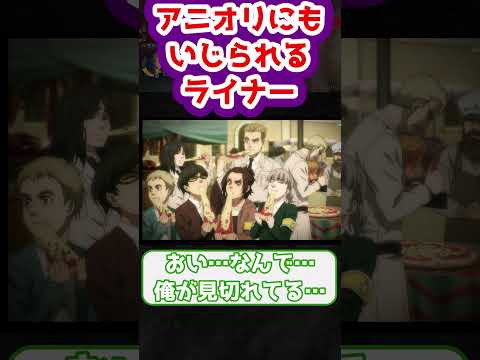
▶ Watch the original YouTube video
Attack on Titan’s Reiner Finally Gets the Comedy Treatment in Anime—Here’s What Fans Are Saying
The anime adaptation of Attack on Titan’s final arc is treating Reiner Braun as a comedic character in ways the original manga never did. After 15 years of analyzing anime, one expert breaks down what this shift means for the character and why the production team made this creative choice.
What Happened
In the anime adaptation of Attack on Titan’s final arc, Reiner Braun has undergone a significant tonal shift. Where the original manga presents him as a deeply conflicted character bearing immense psychological weight, the anime introduces anime-original scenes that treat him as a comedic punching bag. Other characters frequently mock and tease him in ways that soften the gravity of his internal struggle, creating a stark contrast to the source material’s approach.
Why It Matters
This creative decision reveals how anime adaptations of long-running manga series navigate the challenge of sustaining viewer engagement over extended broadcast periods. The shift in Reiner’s characterization isn’t arbitrary—it reflects deliberate production choices about pacing, emotional intensity, and audience psychology. Understanding this change illuminates broader trends in how anime studios adapt complex source material and manage viewer fatigue during emotionally demanding narratives.
Background
Reiner Braun has been a central character in Attack on Titan since its debut in 2013. In the original manga, which began serialization in 2009, Reiner is portrayed as a profoundly troubled soldier carrying the weight of his dual identity as an enemy infiltrator. Creator Hajime Isayama crafted his psychological complexity with meticulous detail, forcing readers to confront his internal suffering. Over the series’ 15-year run, this relentless focus on Reiner’s anguish has created a particular dynamic with the fanbase—one that has evolved as the narrative progressed.
The anime adaptation has generally remained faithful to the source material, but the final arc presents a notable departure. Rather than maintaining the manga’s uncompromising emotional intensity, the anime production team has introduced comedic relief centered on Reiner, suggesting a strategic decision to modulate the psychological burden on viewers.
Key Points
- The anime’s final arc treats Reiner as a comedic character through anime-original scenes, contrasting sharply with the manga’s serious tone
- Other characters deliver frequent jabs and mockery directed at Reiner in ways the source material avoids
- Fan reactions split notably between original manga readers—who feel the character’s weight has been diminished—and anime-only viewers who appreciate the added dimension
- This creative choice likely reflects production strategy to prevent viewer fatigue during an emotionally demanding narrative arc
- Similar character reinterpretations have occurred in other long-running anime adaptations, including Fullmetal Alchemist and Code Geass
- The shift may serve as psychological preparation for viewers before major dramatic moments, using humor as a buffer against sustained emotional intensity
Timeline
- 2009: Attack on Titan manga begins serialization; Reiner introduced as a complex, psychologically tormented character
- 2013: Anime adaptation launches, maintaining the manga’s serious characterization
- 2024: Final arc anime adaptation introduces anime-original comedic scenes centered on Reiner
- Present: Fan discourse intensifies regarding the tonal shift and its implications for the character
Perspectives
Manga Purists: Original manga readers frequently express concern that the anime’s comedic treatment undermines Reiner’s character depth. Comments on social media platforms indicate that longtime fans feel the anime has sacrificed the source material’s emotional gravity for lighter entertainment value. This perspective values fidelity to Isayama’s original vision and the accumulated psychological weight built over 15 years of serialization.
Anime Enthusiasts: Viewers who encountered Attack on Titan primarily through the anime adaptation tend to view Reiner’s comedic moments positively. They appreciate what they perceive as added dimensionality to his character, allowing for moments of levity that make him more relatable and three-dimensional. This group values the anime as a distinct artistic work rather than a direct translation of the manga.
Production Analysis: From a technical standpoint, the anime’s approach reflects sophisticated understanding of viewer psychology. The strategic insertion of humor before emotionally intense scenes serves a functional purpose—it provides psychological recovery time and prevents sustained emotional exhaustion. This technique has been employed successfully in other long-running anime adaptations.
Insights
The comedic treatment of Reiner in Attack on Titan’s anime final arc represents a broader industry shift away from strict source material fidelity toward adaptive interpretation. Rather than viewing this as a failure to honor the original work, it can be understood as the production team making deliberate choices about how to sustain viewer engagement across multiple seasons of emotionally demanding content.
The phenomenon also reflects genuine changes in fan psychology over the series’ extended run. After 15 years of investment in Reiner’s suffering, the fanbase itself may have developed fatigue with his unrelenting anguish. The anime’s comedic reframing potentially acknowledges this shift in audience capacity, offering relief rather than additional burden.
The split reactions between manga and anime audiences suggest that both versions serve distinct purposes. The manga preserves Isayama’s uncompromising artistic vision, while the anime creates an alternative interpretation optimized for broadcast consumption and sustained viewer retention. Neither approach is inherently superior—they represent different solutions to the challenge of adapting complex long-form narratives.
If the production team ultimately allows Reiner to transition from comedic character back to serious dramatic focus in the final episodes, this arc will be revealed as a sophisticated narrative technique rather than character diminishment. The humor would function as a necessary interlude before the final emotional reckoning. However, if Reiner remains primarily comedic through the conclusion, the creative choice will be more difficult to defend as anything other than tonal inconsistency.