▶ Watch the original YouTube video
How JoJo’s Bizarre Adventure Critiques Corporate Exploitation: A 15-Year Fan Analysis
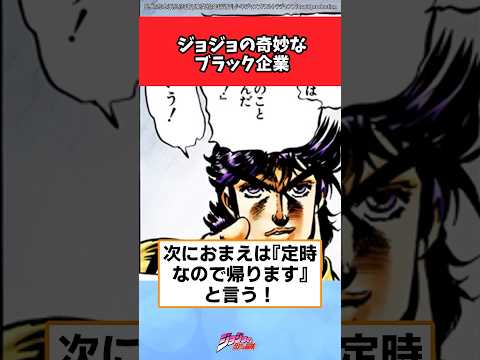
Readers and fans are increasingly recognizing that JoJo’s Bizarre Adventure contains subtle yet deliberate critiques of corporate exploitation and labor abuse. Through a detailed analysis spanning 15 years of fandom, this article explores how creator Hirohiko Araki weaves social commentary into his manga, using workplace dysfunction as a metaphor for systemic oppression.
What Happened
Recent online discussions have highlighted what fans are calling “black company” (exploitative workplace) depictions throughout JoJo’s Bizarre Adventure. These scenes—ranging from unreasonable labor demands in Part 4 to organizational control in Part 5 and forced labor in Part 6—are now being recognized not merely as comedic elements, but as intentional social critique. The shift in interpretation reflects how reader understanding evolves with personal life experience, particularly as younger fans enter the workforce.
Why It Matters
JoJo’s Bizarre Adventure is one of the most influential manga series globally, with a readership spanning decades. If Araki is indeed embedding social commentary about labor exploitation into his narrative, this demonstrates how mainstream entertainment can address serious societal issues while maintaining broad appeal. This approach offers valuable lessons about how art can function simultaneously as entertainment and social criticism, particularly for audiences experiencing workplace dysfunction in contemporary society.
Background
JoJo’s Bizarre Adventure began serialization in 1987 and has spanned eight parts across multiple decades. Each part reflects the social and economic conditions of its publication period. The series is known for its distinctive visual style, complex character development, and increasingly sophisticated narrative structure. Creator Hirohiko Araki has demonstrated consistent awareness of contemporary social issues throughout his career, though the extent to which this is intentional versus coincidental has been debated among fans and critics.
Key Points
- Part 4 Labor Exploitation: “Diamond is Unbreakable” depicts characters subjected to unreasonable demands during school festival preparation, which initially reads as comedic but reveals darker implications upon re-reading as an adult.
- Part 5 Organizational Control: “Golden Wind” presents the Passione organization as a metaphor for corporate hierarchy, featuring an invisible boss, internal distrust, unclear objectives, and severe consequences for attempting to leave.
- Part 6 Forced Labor: “Stone Ocean” depicts prison labor as the most explicit representation of workplace exploitation, presenting conditions that mirror the worst aspects of modern labor abuse.
- Temporal Reflection: Each part’s setting and character professions align with the social issues prevalent during its serialization period, suggesting deliberate thematic choices rather than coincidence.
- Interpretation Shifts: The same scenes read differently depending on reader age and life experience, indicating Araki’s sophisticated use of layered meaning.
- Character Resistance: Protagonists consistently resist exploitative systems from within, offering narratives of individual agency against structural oppression.
Timeline
- 1987-1989: Parts 1-2 serialized during the end of Japan’s bubble economy era
- 1987-1992: Part 3 serialized during Cold War conclusion and shifting global order
- 1999-2005: Part 4 serialized during Japan’s “Lost Decade,” reflecting regional economic decline
- 2001-2005: Part 5 serialized during globalization and intensified international competition
- 2000-2003: Part 6 serialized during prison reform debates and rising labor awareness
- 2012: Author first consciously recognized Part 4’s labor exploitation themes upon re-reading
- 2016: Author initially read Part 5 as straightforward mafia narrative
- 2019: Part 5 anime adaptation prompted re-evaluation, revealing organizational critique
- 2021: Part 6 anime viewing prompted recognition of explicit labor exploitation themes
- Present: Online communities actively discuss and debate Araki’s social commentary intentions
Perspectives
The Social Critique Interpretation: Many fans and analysts argue that Araki deliberately embeds commentary on labor exploitation, organizational control, and systemic oppression into his narratives. This perspective notes the precise alignment between each part’s setting and contemporary social issues, the consistent depiction of characters resisting unjust systems, and the sophisticated layering of meaning that rewards re-reading with adult perspective.
The Entertainment-First Interpretation: Other readers contend that JoJo’s is primarily entertainment-focused, and any social commentary is either incidental or secondary to narrative and character development. This view suggests that the workplace dysfunction depicted may simply reflect common manga tropes rather than deliberate critique.
The Comparative Analysis: When compared to similar works like “Attack on Titan” (which explicitly critiques organizational power structures) and “Fullmetal Alchemist” (which addresses state exploitation), JoJo’s approach appears more subtle and personal. Rather than grand systemic critique, Araki focuses on individual resistance within immediate, relatable contexts—a distinctly different but equally valid approach to social commentary.
The Reader Evolution Perspective: Many fans report that their interpretation of identical scenes changes dramatically based on life experience. Scenes that seemed humorous in adolescence become troubling or poignant after entering the workforce, suggesting Araki has crafted narratives with sufficient depth to accommodate multiple valid interpretations simultaneously.
Insights
JoJo’s Bizarre Adventure appears to function as a sophisticated work of social commentary disguised within mainstream entertainment. Whether this is entirely intentional or partially intuitive, the result is a narrative that speaks differently to readers at different life stages. The series demonstrates that popular manga can address serious themes—labor exploitation, organizational control, systemic oppression—while maintaining broad commercial appeal and entertainment value.
The core message across multiple parts remains consistent: characters confronted with unjust systems do not passively accept them. Giorno Giovanna rebels against Passione from within; Jolyne Cujoh fights to reclaim her freedom in prison. These narratives offer implicit encouragement to contemporary readers facing their own systemic challenges, suggesting that resistance is possible even within seemingly inescapable structures.
The work also illustrates the value of revisiting influential media across different life stages. The same text yields different insights depending on the reader’s accumulated experience, making JoJo’s a genuinely dynamic work rather than a static artifact. This quality—the ability to deepen and transform in meaning as readers mature—may be central to the series’ enduring cultural significance.
Finally, JoJo’s Bizarre Adventure demonstrates that social critique and entertainment are not mutually exclusive. By embedding commentary within compelling narratives, complex characters, and distinctive visual storytelling, Araki has created a work that functions simultaneously as escapist adventure and cultural commentary—a balance that many contemporary works struggle to achieve.