▶ Watch the original YouTube video
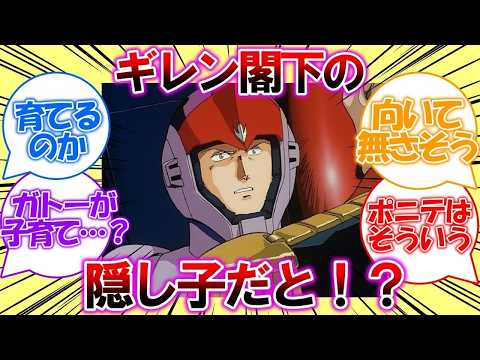
A fan-created scenario imagining Gundam characters Gato and Kelly raising Giren Zabi’s hidden children has sparked widespread discussion in the anime community. The concept explores how elite soldiers navigate parenthood while grappling with ideological legacy and personal transformation.
What Happened
A creative fan concept has emerged depicting Gato and Kelly—two seasoned Zeon soldiers—raising Gremmy and Puru, the hidden children of Giren Zabi, after the One Year War. This “if” scenario reimagines these combat-hardened characters in domestic situations, from managing bath time to learning about holiday traditions. The concept has generated substantial engagement across anime fan communities, with viewers debating the narrative potential, character psychology, and thematic depth of this unconventional premise.
Why It Matters
This fan creation exemplifies how anime communities explore narrative possibilities within established universes. It demonstrates the creative potential of examining gaps in official canon while raising questions about character development, ideological inheritance, and the transformative power of parenthood. The scenario’s appeal lies not in absurdity but in the fundamental contradiction between military identity and parental responsibility—a tension that generates meaningful storytelling opportunities.
Background
The Gundam franchise has long explored themes of succession, ideology, and generational conflict. Giren Zabi, a ruthless Zeon leader, represents authoritarian ambition, while Gato embodies unwavering military conviction. Kelly operates a junk shop, suggesting distance from combat. Gremmy possesses a 90-year-old mental age in a child’s body, while Puru, at 23, combines innocence with dangerous capability. This scenario imagines these characters navigating the contradictions between their established identities and the demands of child-rearing.
Key Points
- Core Premise: Gato and Kelly become guardians of Giren Zabi’s hidden children—Gremmy and Puru—after the One Year War, creating an “if” scenario grounded in existing character relationships.
- Character Dynamics: The age disparity (Gremmy’s mental maturity versus physical youth; Puru’s emotional complexity) amplifies parenting challenges and narrative potential.
- Ideological Tension: The scenario explores how Zeon’s ideological legacy might be inherited, transformed, or rejected through the lens of parental responsibility rather than military doctrine.
- Domestic Details: Fan discussions emphasize mundane childcare moments—bathing routines, holiday celebrations, dietary preferences—as vehicles for character development and emotional depth.
- Thematic Depth: The concept challenges the military identity of its protagonists, forcing them to prioritize individual growth over ideological purity.
- Community Reception: Responses range from comedic appreciation of the incongruity to serious analysis of psychological transformation and narrative possibility.
Comparative Analysis
Fire Emblem: Three Houses: While this game features mentorship and student development, the focus remains strategically oriented. Gato and Kelly’s childcare scenario prioritizes humanistic growth over tactical advancement.
Hollywood Action Films: The “soldier protecting children” trope is common in Western cinema, but typically emphasizes individual emotional bonds. Gundam’s version adds layers of political ideology, Zeon philosophy, and the question of ideological inheritance—elements absent from conventional action narratives.
Attack on Titan: Both works explore soldiers’ responsibility toward future generations, but Attack on Titan grounds this in universal human survival. Gundam’s scenario centers on the more complex question of ideological transmission and personal transformation within a specific political framework.
| Work | Central Theme | Ideological Context | Narrative Complexity |
|---|---|---|---|
| Gundam (This Scenario) | Soldiers as Parents | Zeon Ideology & Legacy | Political & Philosophical |
| Hollywood Films | Soldier Protection | Personal Emotion | Emotional & Direct |
| Attack on Titan | Generational Responsibility | Human Survival | Universal Values |
Gato’s Paradox: The Soldier as Father
The most compelling aspect of this scenario lies in Gato’s fundamental contradiction. In canon, Gato pursues his convictions with uncompromising intensity, willing to sacrifice civilian lives for ideological objectives. Parenthood demands the opposite: long-term perspective, respect for individual autonomy, and willingness to subordinate personal conviction to another’s growth.
This internal conflict mirrors psychological arcs seen in other Gundam works. Heero Yuy in Gundam Wing struggles between perfect soldierhood and human connection. Gato’s parental journey would generate similar existential tension: Can a soldier trained in absolute conviction learn to embrace uncertainty? Can ideological purity coexist with unconditional parental love?
Kelly’s role becomes equally significant. As a junk shop operator, she represents distance from active combat and suggests capacity for civilian life. She may serve as emotional anchor, helping Gato navigate the gap between military training and parental instinct.
Ideological Inheritance and Personal Growth
Giren Zabi’s decision to entrust his children to Gato suggests preparation for ideological succession. Yet this delegation paradoxically ensures the ideology’s transformation. Gremmy and Puru, raised through daily parental care rather than political indoctrination, would inevitably develop differently than Giren intended.
This mirrors patterns in Mobile Suit Gundam SEED, where characters like Kira and Athrun inherit parental expectations but ultimately forge independent paths. Gremmy and Puru would experience similar divergence: their growth shaped by Gato’s struggles with conviction, Kelly’s pragmatism, and the simple fact of being loved as individuals rather than ideological vessels.
Narrative Richness Through Domestic Detail
Fan discussions emphasize small moments: Gato studying holiday traditions from books and television, Kelly insisting on proper bath routines, Gremmy’s emotional vulnerability, Puru’s innocent chaos. These details matter because they reveal character through action rather than exposition.
Works like K-On! and Nichijou demonstrate how daily life, rendered with care, generates emotional resonance. Similarly, Gato and Kelly’s navigation of parenting—learning, adapting, occasionally failing—would create genuine character development. A scene of Gato solemnly researching Christmas traditions, or Kelly patiently explaining social norms to Puru, conveys transformation more effectively than any ideological speech.
Fan Reception and Underlying Psychology
Community responses reveal sophisticated engagement with the concept. The predominant reaction—laughter at the incongruity—masks deeper recognition of narrative potential. Fans appreciate how the scenario’s contradictions generate storytelling possibilities.
Positive responses to specific details (Puru’s bath-time stubbornness, Gato’s earnest holiday preparation) indicate fan understanding of character essence and how those essences would manifest in parental contexts. Critical responses questioning canonical consistency, while valid, miss the point: fan creation’s value lies in exploring possibilities beyond official canon.
Practical Engagement Guide
Foundation: Watch Mobile Suit Gundam, Gundam ZZ, and Gundam Unicorn to understand Gato, Kelly, Gremmy, and Puru’s canonical backgrounds and psychological profiles.
Analysis: Consider each character’s suitability for this scenario. Why would Gato’s military conviction create parental conflict? How would Kelly’s civilian orientation complement or complicate Gato’s approach? What would Gremmy and Puru’s unique circumstances demand from their guardians?
Comparative Thinking: Imagine alternative scenarios—Char as parent, Amuro as father—and consider what makes Gato and Kelly’s situation narratively distinctive.
Related Works: Mobile Suit Gundam: Iron-Blooded Orphans explores soldiers considering future generations. Gundam Build Fighters depicts parent-child relationships with nuance. These works provide context for understanding this scenario’s thematic resonance.
Insights
This fan scenario succeeds because it identifies genuine narrative tension within the Gundam universe. The contradiction between military identity and parental responsibility isn’t incidental—it’s the scenario’s core. Through this contradiction emerges the possibility of authentic character transformation.
Fifteen years of anime engagement reveals a consistent principle: the most compelling stories emerge from contradiction. This scenario embodies that principle perfectly. Soldiers and childcare, ideological inheritance and personal growth, Zeon philosophy and human connection—these opposing forces generate narrative richness.
The scenario’s ultimate strength lies in its tonal potential. Presented as pure comedy, it would entertain. Presented as serious drama, it would move. But the most effective approach would embrace both simultaneously: finding profound emotional truth within domestic comedy, allowing humor and depth to coexist. That balance—where everyday parenting moments carry ideological weight—represents the scenario’s highest possibility.
Fan creation of this caliber demonstrates the creative vitality of anime communities. By respecting canonical foundations while exploring narrative gaps, fans extend the franchise’s thematic reach. This scenario proves that the most valuable fan work isn’t mere wish-fulfillment—it’s thoughtful exploration of character and ideology through unconventional premises.