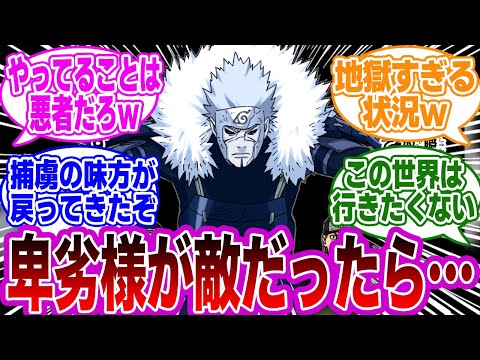
▶ Watch the original YouTube video
A hypothetical scenario exploring what would happen if Tobirama Senju, the Second Hokage, were actually an enemy of the Hidden Leaf Village has captivated NARUTO fans for years. This thought experiment challenges the traditional portrayal of one of the series’ most influential figures and raises profound questions about leadership, morality, and the long-term consequences of political decisions in the NARUTO universe.
What Happened
Beginning around 2015, NARUTO fans began circulating an alternative scenario on social media platforms like Twitter: what if Tobirama Senju, the Second Hokage and founder of the Hidden Leaf Village, had actually been working against the village’s interests? This “what if” scenario gained significant traction within fan communities, sparking widespread debate about Tobirama’s true motivations, his controversial decisions, and their lasting impact on the series’ narrative.
Why It Matters
This fan theory matters because it challenges how audiences interpret established characters and the moral complexity of leadership in long-running narratives. The scenario forces readers to reconsider pivotal moments in NARUTO—such as the sealing of the Nine-Tailed Fox into the newborn Naruto and the surveillance policies imposed on the Uchiha clan—and question whether these decisions were truly for the village’s benefit or served hidden agendas. The debate reflects broader themes about authority, accountability, and how decisions made by leaders ripple through generations.
Background
Tobirama Senju is one of NARUTO’s most influential yet enigmatic characters. As the Second Hokage and co-founder of the Hidden Leaf Village alongside his brother Hashirama, he is traditionally portrayed as a brilliant strategist and devoted leader. However, a closer examination of his actions reveals a pattern of morally ambiguous decisions. His choice to seal the Nine-Tailed Fox into the newborn Naruto Uzumaki condemned the child to a lifetime of suffering and social ostracism. Additionally, his policies of monitoring and restricting the Uchiha clan—ostensibly for security reasons—created deep resentment that eventually contributed to the clan’s downfall and tragic massacre.
The character’s limited screen time and sparse internal monologue in the original manga leave significant gaps in understanding his true motivations, making him an ideal subject for fan speculation and alternative interpretations.
Key Points
- Core Premise: The scenario posits that Tobirama’s controversial decisions—the Nine-Tailed Fox sealing and Uchiha surveillance policies—may have been deliberate actions to weaken the village rather than protect it
- Narrative Ambiguity: Tobirama’s character is intentionally written with limited exposition, allowing multiple interpretations of his true allegiances and motivations
- Thematic Relevance: The theory aligns with NARUTO’s broader exploration of how leaders’ decisions create unintended (or intended) consequences for future generations
- Fan Engagement: The scenario has generated extensive fan fiction, video essays, and social media discussions, demonstrating its appeal across the fanbase
- Moral Complexity: The theory challenges the binary good-versus-evil framework, suggesting that even “heroes” may operate from questionable motives or cause harm through their decisions
- Comparative Analysis: Similar character-reversal scenarios exist in other anime such as Code Geass and Attack on Titan, reflecting a broader trend in anime fandom of re-examining established narratives
Timeline
- 2006: NARUTO begins serialization in Weekly Shonen Jump; Tobirama is introduced as a respected historical figure
- 2012-2014: NARUTO’s later arcs reveal more details about Tobirama’s decisions and their consequences, prompting increased fan scrutiny
- 2015: The “What if the Second Hokage was the enemy?” scenario gains prominence on Twitter and other social platforms
- 2015-Present: Fan theories, video essays, and alternative interpretations proliferate across YouTube, Reddit, and fan forums
Perspectives
Supporting the Theory: Proponents argue that Tobirama’s decisions are difficult to justify from a purely benevolent standpoint. The sealing of the Nine-Tailed Fox into a newborn child is presented as necessary, yet it condemns Naruto to decades of suffering. The Uchiha surveillance policies, while framed as security measures, systematically marginalized an entire clan and fostered the resentment that eventually led to their destruction. These fans contend that the pattern of Tobirama’s decisions suggests either incompetence or deliberate sabotage.
Opposing the Theory: Critics argue that reinterpreting Tobirama as an enemy undermines the character’s established role and disrespects the original author’s intentions. They maintain that Tobirama made difficult but necessary choices within the context of his era, and that judging historical decisions by modern moral standards is unfair. This group emphasizes Tobirama’s genuine contributions to the village’s founding and stability.
Analytical Perspective: A third group of fans approaches the scenario as a thought experiment about moral relativism rather than literal canon revision. They argue that Tobirama’s actions can be understood as justified from his perspective while simultaneously acknowledging their harmful consequences. This interpretation aligns with NARUTO’s recurring theme that different characters operate from conflicting but internally consistent value systems.
Insights
The enduring appeal of the “What if the Second Hokage was the enemy?” scenario reveals several important truths about NARUTO and contemporary fan culture. First, the theory demonstrates that NARUTO’s narrative structure deliberately incorporates moral ambiguity and interpretive flexibility. Creator Masashi Kishimoto intentionally left gaps in Tobirama’s characterization, allowing readers to project their own interpretations onto the character.
Second, the scenario reflects a broader cultural shift toward skepticism of authority and institutional power. The theory gained particular traction following 2015, a period when anime fandom increasingly engaged with narratives questioning leadership and institutional decision-making. This trend accelerated further after 2020, suggesting that fan interpretations are influenced by contemporary social and political contexts.
Third, the debate illustrates how long-running serialized narratives create opportunities for retroactive reinterpretation. As NARUTO accumulated hundreds of chapters and episodes, fans could selectively emphasize certain scenes and decisions to construct alternative readings of established characters. The theory is not simply a rejection of canon but rather a sophisticated engagement with textual ambiguity.
Finally, the scenario’s popularity demonstrates that fans value intellectual engagement and interpretive freedom. Rather than passively consuming the narrative as presented, fans actively construct alternative frameworks for understanding characters and events. This creative participation transforms the fanbase from passive audience into collaborative interpreters of the text.
The Second Hokage scenario ultimately exemplifies how classic anime narratives can sustain multiple valid interpretations, and how fan communities use speculative fiction to explore themes of leadership, morality, and historical consequence.