▶ Watch the original YouTube video
Mushoku Tensei Season 3 Episode 14: Why Elis’s Letter Scene Captivated Anime Fans
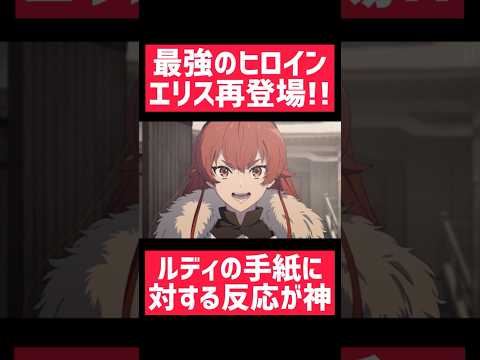
In Mushoku Tensei Season 3 Episode 14, the reappearance of Elis and her reaction to a letter from Rudeus sparked widespread praise on social media. The scene’s nuanced psychological portrayal of conflicting emotions through a simple letter exchange demonstrates how anime can express complex character development through minimalist storytelling techniques.
What Happened
Mushoku Tensei Season 3 Episode 14 featured the long-awaited return of Elis, one of the series’ main heroines. The pivotal moment centers on Elis receiving a letter from Rudeus. Rather than depicting a direct conversation, the scene focuses on her internal emotional response as she processes the message. Her facial expressions and subtle body language convey a complex mix of conflicting feelings—joy, confusion, regret, and hope—without relying on dialogue. This restrained approach to character expression resonated strongly with viewers, who praised the scene across Twitter, Reddit, and YouTube as exceptionally well-executed.
Why It Matters
The scene exemplifies how modern anime has evolved in depicting character psychology. Rather than relying on explicit emotional declarations or action sequences, the episode demonstrates that profound character development can emerge from quiet, introspective moments. This approach challenges conventional storytelling in the harem anime genre, which traditionally emphasizes surface-level character appeal over psychological depth. The letter scene redefines what “strength” means for a heroine—shifting focus from physical prowess to emotional resilience and the ability to confront internal conflict. For viewers invested in Rudeus’s relationships with multiple heroines, the scene clarifies that each character possesses genuine, independent emotional depth rather than serving as mere romantic options.
Background
Mushoku Tensei originated as a web novel before being adapted into a light novel series and subsequently animated. The franchise has maintained a reputation for complex character development and psychological realism within the fantasy setting. The series features multiple heroines with distinct personalities and emotional arcs, creating a narrative structure where each character’s relationship with the protagonist carries genuine weight. Elis, in particular, shares significant history with Rudeus, making her emotional response to his letter laden with unresolved feelings and past experiences. The letter as a narrative device carries particular significance in anime storytelling, as it allows for emotional expression without the complications of face-to-face interaction, creating psychological distance that paradoxically enables deeper emotional honesty.
Key Points
- Elis’s Return: After a prolonged absence, Elis reappears in the narrative through the reception of Rudeus’s letter, marking a significant moment in her character arc.
- Minimalist Expression: The scene relies on visual storytelling—facial expressions, hand movements, and gaze shifts—rather than dialogue to convey Elis’s emotional state.
- Emotional Complexity: The portrayal captures multiple simultaneous emotions rather than a single, straightforward reaction, reflecting realistic human psychology.
- Genre Redefinition: The scene challenges conventional harem anime tropes by treating each heroine as a fully realized character with independent emotional validity.
- Viewer Reception: Social media responses overwhelmingly praised the scene’s execution, with many describing it as “godlike” in quality and emotional impact.
- Narrative Significance: The letter exchange serves as a turning point in the complex web of relationships between Rudeus and multiple heroines, reshaping character dynamics.
Timeline
- 2008: Toradora! established letter-based emotional expression as a powerful anime storytelling technique.
- 2012: Hyouka demonstrated subtle psychological portrayal through minimalist dialogue and visual cues.
- 2015: Haikyuu!! Season 2 used letters and messages to convey respect and emotional connection between characters.
- 2019: The Quintessential Quintuplets explored multiple heroines’ emotional responses to protagonist communication.
- 2024: Mushoku Tensei Season 3 Episode 14 synthesizes these techniques into a more psychologically sophisticated portrayal of conflicting emotions.
Perspectives
The scene can be interpreted through multiple analytical frameworks. From a psychological perspective, Elis’s reaction demonstrates the cognitive dissonance of simultaneously experiencing conflicting emotions—love, uncertainty, regret, and hope coexisting without resolution. From a narrative standpoint, the letter functions as a bridge between separated characters, allowing emotional intimacy despite physical distance. From a production perspective, the animation team’s choice to emphasize subtle facial expressions over dramatic action reflects a deliberate artistic decision to prioritize character interiority. Some viewers interpret the scene as a commentary on the limitations and paradoxical power of written communication—how text can convey emotional truth more effectively than direct conversation by removing the pressure of immediate response. Others view it as a pivotal moment that establishes Elis as a character of genuine psychological depth rather than a romantic archetype, fundamentally altering how audiences perceive her role within the narrative.
Comparative Analysis with Similar Works
Toradora! (2008): This series pioneered the use of letters and messages as primary emotional expression tools. However, character emotions in Toradora tend toward binary states—affection or rejection, happiness or sadness. Elis’s scene surpasses this by depicting simultaneous, contradictory emotions without resolving them into a single emotional state.
The Quintessential Quintuplets (2019): Like Mushoku Tensei, this series features multiple heroines with romantic interest in the protagonist. However, the emotional responses in Quintuplets are generally more straightforward expressions of affection. Elis’s reaction is more psychologically layered, incorporating past trauma, current uncertainty, and future hope in a single moment.
Haikyuu!! Season 2 (2015): This sports anime uses letters and messages to convey respect and gratitude between characters. The emotional palette is narrower—primarily admiration and appreciation—whereas Elis’s scene encompasses romantic love, psychological conflict, and existential uncertainty simultaneously.
| Series | Year | Letter Function | Psychological Complexity | Emotional Range |
|---|---|---|---|---|
| Toradora! | 2008 | Direct emotional expression | Moderate | Affection, embarrassment |
| Haikyuu!! Season 2 | 2015 | Expression of respect and friendship | Moderate | Admiration, gratitude |
| The Quintessential Quintuplets | 2019 | Multiple expressions of romantic interest | Moderate | Affection, anticipation |
| Mushoku Tensei Season 3 Episode 14 | 2024 | Integrated expression of love and psychological conflict | High | Love, regret, confusion, hope, uncertainty |
Viewer Reception and Social Media Response
The episode generated substantial engagement across multiple platforms. On Twitter, the hashtag #MusokuTensei3Episode14 trended with users posting reactions emphasizing Elis’s facial expressions and the emotional depth of the scene. Common praise included “Elis’s expressions are godlike,” “I cried at the letter scene,” and “I didn’t know anime could express such complex emotions.” Reddit discussions highlighted the contrast between Mushoku Tensei’s approach and conventional harem anime, with users noting that each heroine possesses genuine psychological independence rather than serving as interchangeable romantic options. YouTube comments reflected similar sentiment, with viewers reporting multiple rewatches of the scene and appreciation for the production team’s restraint in allowing visual storytelling to carry emotional weight. Some criticism emerged from viewers who dislike the harem anime structure entirely, though such comments targeted the genre itself rather than the episode’s execution quality.
Production and Creative Intent
The animation team’s decision to emphasize subtle visual expression over dialogue reflects sophisticated understanding of anime’s unique storytelling capabilities. By limiting verbal communication, the scene forces viewers to interpret character emotion through micro-expressions, hand movements, and eye contact—techniques that require active viewer engagement and emotional projection. This approach transforms the letter from a mere plot device into a psychological catalyst that reveals character interiority. The production team’s choice aligns with broader industry trends toward psychological realism in character portrayal, particularly in works adapted from source material that prioritizes internal monologue and emotional complexity. The scene demonstrates how anime can translate literary introspection into visual language, creating emotional resonance that transcends the limitations of either medium alone.
Insights
Mushoku Tensei Season 3 Episode 14 represents an evolution in how anime depicts character psychology and romantic relationships. The scene illustrates that genuine emotional depth emerges not from dramatic declarations or physical action, but from the quiet confrontation with conflicting feelings. This approach redefines the harem anime genre by treating multiple heroines as psychologically autonomous characters whose emotional responses carry narrative weight independent of the protagonist’s perspective. The letter scene demonstrates that restraint in expression can paradoxically create greater emotional impact than explicit dialogue, as viewers must actively interpret visual cues and project their own emotional experiences onto the character. The widespread positive reception suggests that contemporary anime audiences increasingly value psychological authenticity over conventional romantic tropes, indicating a maturation in both production quality and viewer expectations. The scene’s success also highlights the enduring power of written communication as a narrative device—in an era of instant digital messaging, the formal letter retains symbolic weight as a vehicle for sincere emotional expression. For the broader anime industry, this episode exemplifies how adaptation from source material can enhance emotional storytelling by leveraging animation’s unique capacity for subtle visual expression, creating moments that resonate beyond the original text’s capabilities.