▶ Watch the original YouTube video
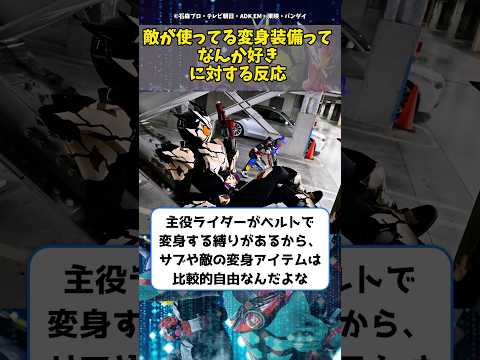
Why Enemy Rider Transformation Items Are More Popular Than Hero Belts: A 15-Year Fan’s Analysis
A deep dive into the Kamen Rider toy design philosophy reveals that enemy transformation items often feature superior design, greater collectibility, and strategic scarcity compared to hero belts. This analysis explores how toy manufacturers intentionally prioritize enemy equipment to maximize revenue and appeal to adult collectors.
What Happened
A YouTube video examining the popularity of enemy-used transformation items in the Kamen Rider franchise sparked discussion about why these items often outperform hero belts in design quality, collectibility, and market value. The analysis highlights how items like the Buggle Driver, Break Gunner, and Mega Ul Order have become more sought-after by fans than the main protagonist’s transformation belts, commanding premium prices on secondary markets and receiving more innovative design features.
Why It Matters
Understanding toy design philosophy and manufacturer strategy reveals how successful franchises balance narrative constraints with commercial objectives. The Kamen Rider case demonstrates that intentional design choices—including limiting production runs, adding weapon integration, and enabling multiple form variations—can create higher perceived value and sustained collector interest. This pattern has implications for how long-running media franchises maintain revenue streams and fan engagement across multiple generations.
Background
The Kamen Rider franchise, spanning over 50 years, has established a core narrative convention: the hero transforms using a belt. This tradition creates design constraints for protagonist equipment but leaves enemy items free from such limitations. A 15-year dedicated fan with experience collecting over 200 Kamen Rider toys observed that enemy transformation items consistently feature more complex mechanisms, integrated weapon functionality, and superior playability compared to hero belts. This phenomenon became particularly evident during the Kamen Rider Ex-Aid era (2016–2017) with the Buggle Driver, and continued through subsequent series including Ghost, Build, and Saber.
Key Points
- Design Freedom: Enemy items lack the narrative constraint of “belt transformation,” allowing manufacturers to experiment with weapon integration, multiple form variations, and more complex mechanisms
- Superior Playability: Items like the Break Gunner function as both transformation devices and weapons, enabling more diverse play scenarios than hero belts limited to transformation sequences
- Strategic Scarcity: Enemy items are produced in lower quantities than hero belts, creating premium pricing and secondary market value—with some items selling for 3–5 times their original retail price
- Visual Impact: Hand-held weapon-type items maintain stronger on-screen presence than belt-worn equipment, translating to greater toy shelf presence and collector appeal
- Expanded Revenue Streams: Limited initial releases followed by premium platform re-releases (such as Premium Bandai exclusives) with new accessories maximize long-term profitability
- Broader Market Appeal: Smaller, hand-held items have lower price points, easier storage, and improved safety profiles, attracting both child and adult purchasers
Design Philosophy: Enemy Items vs. Hero Belts
The fundamental difference lies in narrative flexibility. Hero belts must maintain visual consistency with 50 years of franchise tradition, limiting radical redesigns. The Kamen Rider Ex-Aid’s protagonist belt, for example, prioritizes transformation functionality over combat capability. Conversely, the Buggle Driver—used by enemy characters—integrates gun mechanics, enabling both transformation and weapon-based play. This dual functionality represents superior toy design efficiency, embodying the principle of “one item, multiple uses.”
Complexity also differs significantly. Enemy items frequently feature multiple form variations and interchangeable components. The Lost Driver from Kamen Rider Ghost offered more transformation possibilities than the protagonist’s Ghost Driver, providing greater long-term play value. This complexity justifies higher price points and encourages collectors to purchase multiple variants.
Market Strategy and Scarcity Economics
Production volume directly impacts secondary market value. Hero belts require large production runs to meet mainstream demand from children, keeping prices stable. Enemy items, targeted at dedicated adult collectors, receive limited initial production. The Hazard Trigger from Kamen Rider Build exemplifies this strategy: released as a limited edition, it subsequently commanded 2–5 times its original retail price on resale platforms like Mercari and Yahoo Auctions.
Re-release strategy amplifies this value. Items like the Mega Ul Order from Kamen Rider Saber were initially limited, then re-released exclusively through Premium Bandai with new weapon attachments. This approach maintains scarcity while generating multiple purchase opportunities—collectors buy both original and enhanced versions.
Fan Reception and Online Discourse
Community response across Twitter, 5channel, and YouTube confirms the pattern. Adult collectors frequently express preferences for enemy items, citing superior design and greater playability. Comments like “the enemy’s equipment is more interesting than the hero’s” and “the Break Gunner is unfairly good” appear consistently. Notably, fans demonstrate sophisticated understanding of scarcity economics, with discussions about waiting for re-releases versus purchasing from secondary markets.
Insights
The popularity of enemy transformation items reflects a deliberate, multi-layered strategy by manufacturers. Rather than a design oversight, the superiority of enemy equipment represents intentional differentiation. By constraining hero belt design through narrative tradition while liberating enemy items from such restrictions, manufacturers create distinct product categories serving different market segments: children (hero belts) and adult collectors (enemy items).
This strategy sustains franchise revenue across decades by maintaining engagement with aging fans while attracting new younger audiences. The Kamen Rider franchise’s 50+ year longevity stems partly from this balance—both protagonist and antagonist equipment receive compelling design attention, ensuring comprehensive fan investment in the complete narrative ecosystem.
As the franchise’s demographic shifts toward adult collectors, enemy items will likely receive increasing emphasis. However, manufacturers face a calibration challenge: excessive price increases risk alienating collectors, while over-production undermines scarcity value. Premium platform exclusives and strategic re-releases represent the current solution, balancing accessibility with exclusivity.
Ultimately, the enemy item phenomenon demonstrates that toy design excellence emerges not from unlimited creative freedom, but from navigating competing constraints—narrative tradition, production economics, safety standards, and collector psychology. The items that succeed are those that optimize across all dimensions simultaneously.