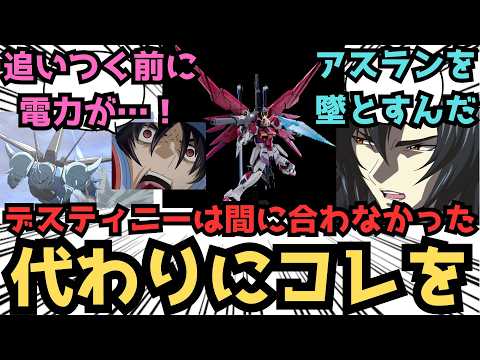
▶ Watch the original YouTube video
After 15 years of analyzing the Gundam SEED franchise, a critical examination reveals significant contradictions between Chairman Durandal’s claims about his mobile suit designs and their actual battlefield performance. From the Destiny Gundam’s battery limitations to the Legend Gundam’s incomplete frame, these design flaws expose a fundamental gap between the chairman’s ambitious rhetoric and the harsh realities of wartime production constraints.
What Happened
Following the theatrical release of Gundam SEED FREEDOM, fan communities have engaged in heated discussions about the technical specifications and actual performance capabilities of the mobile suits developed under Chairman Durandal’s command. The core issue centers on a persistent discrepancy: while Durandal claims his machines represent superior evolution beyond the Impulse Gundam, the actual combat footage and technical specifications reveal machines hampered by fundamental design compromises, particularly regarding battery capacity and incomplete systems integration.
Why It Matters
This contradiction is significant because it potentially reflects a deliberate thematic element—the gap between Durandal’s idealistic vision and the pragmatic limitations of wartime production. However, the ambiguity surrounding whether this inconsistency is intentional storytelling or unintended continuity error has generated substantial debate within the Gundam fan community. Understanding this distinction affects how viewers interpret Durandal’s character and the credibility of his strategic decisions throughout the narrative.
Background
The Gundam SEED franchise, which premiered in 2004, presents a complex political landscape where mobile suit development serves as a critical strategic element. Chairman Durandal, a central antagonist, oversees the development of multiple advanced mobile suits including the Destiny, Legend, and Impulse variants. Throughout the series, Durandal makes bold claims about these machines’ capabilities, positioning them as revolutionary advancements that surpass previous generation technology. However, detailed examination of both dialogue and combat sequences reveals significant gaps between these claims and actual performance metrics.
Key Points
- Destiny Gundam Battery Problem: Despite claims of superiority across all performance metrics, the Destiny relies on battery pack modifications rather than fundamental technological advancement, reducing it to equipment configurations equivalent to the Impulse’s Force Silhouette system
- Legend Gundam Incomplete Development: The Legend Gundam operates with an exposed frame, only partially complete, while its planned next-generation Dragoon system remains unimplemented
- Impulse Gundam Operational Failures: The Impulse experiences critical battery depletion during pursuit operations, demonstrating that basic performance specifications fall short of operational requirements
- Production System Breakdown: Material shortages and time constraints force the deployment of machines with significantly compromised completion levels
- Rhetoric vs. Reality Gap: Durandal’s eloquent descriptions of machine capabilities mask ad-hoc modifications and emergency-level engineering solutions
- Strategic Implications: The reliance on multiple incomplete machines suggests a strategy dependent on unit coordination rather than individual machine superiority
Comparative Analysis with Other Gundam Works
When examined against other Gundam series, the SEED development approach reveals distinctive characteristics. In Mobile Suit Gundam Z, the Psycho Gundam demonstrates high performance but explicitly trades this capability for extreme pilot strain—a clear, intentional design tradeoff. Mobile Suit Gundam Unicorn similarly addresses battery limitations as a consistent narrative element throughout the story. In contrast, SEED’s machine limitations appear inconsistently addressed, with Durandal’s dialogue frequently ignoring or minimizing technical constraints that are evident in combat sequences.
The Calamity Gundam, despite sharing lineage with the Strike Gundam, was produced in extremely limited quantities—approximately 18 units including variants. Meanwhile, Destiny and Impulse units were manufactured in substantially greater numbers, suggesting different development priorities and resource allocation strategies that remain unexplained within the narrative.
Thematic Interpretation
One plausible interpretation suggests that these contradictions intentionally represent Durandal’s character as an idealistic leader confronting harsh operational realities. His eloquent descriptions of machine capabilities may symbolize the gap between visionary ambition and practical constraints. However, if this represents deliberate thematic expression, the narrative insufficiently emphasizes this conflict. Scenes where characters directly challenge Durandal’s claims about machine readiness remain limited, potentially undermining the thematic coherence of this interpretation.
The modern anime industry increasingly employs deliberate ambiguity in technical specifications to sustain viewer engagement and fan discussion. The active debate following SEED FREEDOM’s release demonstrates this strategy’s effectiveness in maintaining community interest. However, this approach carries risk: while it stimulates creative interpretation, it may simultaneously undermine narrative credibility and character motivation clarity.
The Destiny Silhouette System
Durandal’s statement that the Destiny Silhouette system would achieve “identical equipment configuration to the Force Silhouette” effectively concedes that no new technological advancement was achieved. Rather than transcending the Impulse’s limitations, the Destiny merely accepts equivalent constraints in different form. This represents not evolution but lateral redesign—a critical distinction that the narrative largely glosses over.
Community Response
Following SEED FREEDOM’s theatrical release, fan communities across Twitter, YouTube, and discussion forums engaged in extensive technical analysis. Common criticisms included: the contradiction between Durandal’s claim that Destiny represents “the ultimate mobile suit” while simultaneously experiencing battery depletion failures; the observation that Destiny’s equipment configuration mirrors rather than exceeds Impulse’s capabilities; and concerns that ZAFT’s development infrastructure has fundamentally collapsed under resource and time constraints.
Notably, SEED fan communities demonstrate stronger emphasis on technical specification consistency compared to other Gundam franchise communities. This reflects the series’ narrative focus on political complexity and strategic decision-making, where technical credibility directly impacts character and institutional believability.
Broader Implications
The Destiny Gundam emerges as the most symbolically significant machine in SEED, embodying the tension between ambitious capability claims and fundamental operational limitations. This contradiction may intentionally represent the human condition—the perpetual gap between idealistic aspiration and pragmatic reality. If future SEED installments develop this theme explicitly, transforming technical contradiction into narrative turning point, Durandal’s character complexity would deepen substantially.
The incomplete Messiah platform similarly suggests that Durandal’s ultimate objective—the Destiny Plan—may represent an unrealizable ideal rather than achievable strategic goal. This interpretation would reframe the chairman’s character from strategic mastermind to tragic idealist, though the narrative currently leaves this reading ambiguous.
Recommendations for Deeper Engagement
For viewers seeking richer understanding of SEED’s technical narrative, several approaches enhance comprehension. First, examine Durandal’s dialogue critically, distinguishing between surface claims and underlying operational realities. Pay particular attention to Athrun’s facial expressions during his machine transfer scene—his complex emotional response suggests awareness of contradictions between the chairman’s rhetoric and actual machine status.
Second, compare Durandal’s performance claims directly against actual combat sequences. Battery depletion failures during pursuit operations represent fundamental capability limitations that contradict superiority claims. These details reveal SEED’s technical depth when examined systematically.
Third, viewing Mobile Suit Gundam Unicorn provides valuable comparative context. The Unicorn’s battery limitations function as consistent narrative elements, contrasting sharply with SEED’s inconsistent treatment of similar constraints. This comparison clarifies SEED’s distinctive approach to technical specification storytelling.
Recommended viewing sequence: complete SEED, proceed to SEED Destiny, then SEED FREEDOM. This progression allows viewers to observe Durandal’s character evolution and the accumulating gap between his ideals and operational reality.
Conclusion
After 15 years of Gundam franchise analysis, SEED’s technical contradictions stand out for their ambiguous intentionality. The gap between Durandal’s eloquent claims and harsh operational realities creates compelling interpretive possibilities, yet the narrative insufficiently clarifies whether this contradiction represents deliberate thematic expression or unresolved continuity inconsistency.
The franchise’s ultimate value may lie not in technical specification perfection, but in the questions these contradictions raise: What constitutes a truly superior machine? How do leaders reconcile idealistic vision with practical constraints? How should subordinates respond when authority figures’ words diverge from observable reality? These questions, emerging from SEED’s technical ambiguities, provide the series’ most substantive thematic engagement. Whether intentional or accidental, these contradictions have generated the franchise’s most intellectually rigorous fan discourse, demonstrating that technical specification analysis can serve as legitimate framework for exploring character psychology and institutional dynamics.