▶ Watch the original YouTube video
Why “I Hate That I Understand” Resonates So Deeply: A 15-Year Analysis of Modern Anime and Gaming Culture
The phrase “I hate that I understand”—a complex expression of self-awareness and self-loathing—has become a defining emotional touchstone for modern audiences across anime, gaming, and VTuber communities. Drawing from 15 years of fan analysis and observation, this article explores why this particular articulation of psychological conflict has exploded in popularity and what it reveals about contemporary youth psychology.
- What Happened
- Why It Matters
- Background
- Key Points
- Timeline of Cultural Emergence
- The Psychological Structure Explained
- Why This Phrase Resonates Now
- Comparative Analysis: How This Expression Differs
- Online Reactions and Community Response
- Broader Cultural Implications
- Practical Framework for Engaging with This Emotion
- Conclusion: Understanding as a Sign of Growth
What Happened
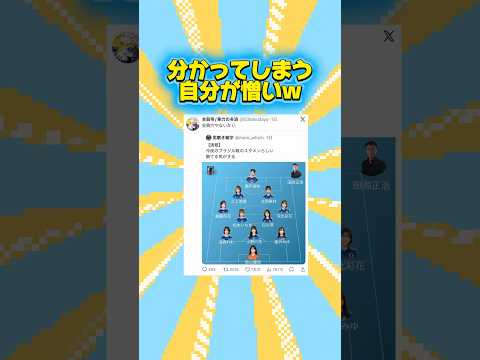
The phrase “I hate that I understand” (分かってしまう自分が憎い) has emerged as a dominant emotional expression across anime, gaming, and VTuber platforms over the past decade. This phrase encapsulates a specific psychological state: the simultaneous recognition of one’s flaws and the self-loathing that comes from possessing that very awareness. What began as a niche character trait in mid-2010s anime has evolved into a widespread cultural phenomenon, with audiences across social media platforms—Twitter, YouTube, Reddit, and 2channel—expressing deep resonance with this particular articulation of internal conflict.
Why It Matters
This phrase matters because it represents a fundamental shift in how modern audiences—particularly those aged 20-40—understand and articulate psychological distress. Unlike earlier generations’ expressions of self-doubt, “I hate that I understand” captures a distinctly contemporary form of suffering: the pain that comes from possessing too much self-knowledge in an age of information overload. The prevalence of this phrase across entertainment media signals a broader cultural moment where self-awareness has become both a source of growth and profound anxiety. Understanding why this resonates reveals critical insights into how social media, self-help culture, and digital connectivity have reshaped modern psychology.
Background
The phrase gained significant traction following the 2013 anime adaptation of “My Teen Romantic Comedy SNAFU” (Oregairu), which featured protagonist Hachiman Hikigaya—a character defined by his painful self-awareness. Hachiman fully understands that his isolation stems from his own personality flaws, yet this very understanding torments him. He knows he must change, but simultaneously resists that change. This contradiction became the emotional core that resonated with audiences.
From 2009 through the early 2010s, anime and gaming narratives primarily focused on external conflicts or straightforward self-improvement narratives. However, beginning in the mid-2010s, a marked shift occurred. Works like “Persona 5” (2016), “High Score Girl” (2018), and more recently “Oshi no Ko” (2023) began centering narratives around the psychological pain of self-recognition itself. This shift reflects broader societal changes: the decline of the self-help boom that dominated the 2000s-early 2010s, replaced by exhaustion among younger generations who internalized those messages.
The rise of VTuber culture accelerated this phenomenon. VTubers—who perform as characters while maintaining awareness of their real selves—embody the contradiction at the heart of this phrase. The gap between the performed self and the authentic self creates a unique form of psychological tension that has become increasingly normalized and discussed within VTuber communities since 2020.
Key Points
- “I hate that I understand” expresses a three-layered psychological structure: self-recognition of flaws, self-loathing for possessing that recognition, and suffering from the loathing itself
- This phrase represents a shift from 1990s existential self-hatred (“I hate myself”) and 2000s capability-focused self-doubt (“I’m worthless”) to 2010s recognition-focused psychological conflict (“I hate that I’m aware”)
- The phrase’s popularity correlates directly with the decline of self-help culture and the rise of information-saturated, social media-driven environments where self-awareness is unavoidable
- Online reactions across Twitter, YouTube, and forums reveal audiences seeking not just empathy but precise linguistic articulation of their internal contradictions
- VTuber culture has normalized and accelerated the spread of this emotional expression by creating communities where the gap between performed and authentic selves is constantly negotiated
- The phenomenon reflects a generational experience: those who grew up during the self-improvement boom now face exhaustion from its impossible demands
Timeline of Cultural Emergence
- 1995: “Neon Genesis Evangelion” popularizes existential self-hatred (“I hate myself”) as a primary emotional expression in anime
- 2006: “The Melancholy of Haruhi Suzumiya” shifts focus to capability-based self-doubt (“I’m worthless”)
- 2013: “My Teen Romantic Comedy SNAFU” introduces the self-awareness paradox as central theme; phrase begins gaining traction
- 2016: “Persona 5” brings the theme into gaming; broader audience exposure increases
- 2018: “High Score Girl” and other works normalize the theme; phrase becomes recognizable across platforms
- 2020: VTuber culture expansion accelerates phrase usage and normalization within streaming communities
- 2023: “Oshi no Ko” demonstrates the theme’s evolution toward exploring what comes after self-recognition
The Psychological Structure Explained
The phrase “I hate that I understand” operates on three distinct psychological layers. The first layer is self-recognition: the individual fully comprehends their flaws, limitations, and the role their personality plays in their circumstances. This is not vague self-doubt but precise, often painful clarity.
The second layer is self-negation: the individual despises themselves for possessing this awareness. There is a paradoxical desire to unknow what has been learned—to return to a state of ignorance that would be less painful.
The third and deepest layer is meta-suffering: the individual suffers from the very act of hating themselves for understanding. This creates a recursive loop of psychological distress that cannot be easily resolved through conventional self-improvement frameworks.
Hachiman Hikigaya from “My Teen Romantic Comedy SNAFU” exemplifies this structure perfectly. He understands that his isolation is self-inflicted, that his cynicism is a defense mechanism, and that genuine connection requires vulnerability. Yet this understanding does not liberate him—it imprisons him further. He cannot unknow what he knows, and he cannot act on his knowledge without confronting the very vulnerabilities he has spent years avoiding.
Why This Phrase Resonates Now
The explosive popularity of this phrase reflects several converging cultural factors. First, the internet has made self-knowledge unavoidable. Previous generations could maintain illusions about themselves; contemporary youth receive constant feedback through social media metrics, algorithmic analysis, and peer commentary. This information overload creates a situation where ignorance is nearly impossible.
Second, the self-help and self-improvement culture that dominated the 2000s-early 2010s created impossible standards. Younger generations internalized messages about constant self-optimization, personal growth, and the malleability of the self. When reality failed to match these promises, exhaustion set in. The phrase “I hate that I understand” captures this exhaustion: the understanding that self-improvement narratives are insufficient, yet the inability to escape their demands.
Third, social media has created a bifurcation of the self. Users maintain a performed identity (their social media presence) while remaining aware of their authentic self. This gap between performance and authenticity creates the exact psychological tension that the phrase articulates. VTubers experience this tension most acutely, which explains why the phrase has become particularly prevalent in VTuber communities.
Comparative Analysis: How This Expression Differs
Understanding why “I hate that I understand” is distinct requires comparing it to similar expressions of self-negation across different eras:
| Expression | Focus | Representative Work | Era |
|---|---|---|---|
| “I hate myself” | Denial of existence itself | Neon Genesis Evangelion | 1995 |
| “I’m worthless” | Denial of ability or value | The Melancholy of Haruhi Suzumiya | 2006 |
| “I hate that I understand” | Denial of one’s capacity for awareness | My Teen Romantic Comedy SNAFU | 2013 |
This progression reveals a crucial pattern: the target of self-negation has shifted from existence itself, to capability, to the capacity for self-awareness. This shift correlates directly with increased access to information. As knowledge becomes more abundant and unavoidable, the psychological pain of possessing that knowledge becomes the primary source of distress.
Online Reactions and Community Response
Across multiple platforms, reactions to this phrase reveal consistent patterns. On Twitter, responses predominantly feature variations of “This is me” and “Thank you for putting this into words.” The gratitude expressed is not for validation of suffering, but for precise linguistic articulation of internal experience. Users report that encountering the phrase creates a moment of recognition—a sense that their specific form of psychological distress has been accurately named.
On YouTube comment sections, emotional responses dominate: “I cried at this scene” and “I felt like I was watching my own life.” These comments suggest that audiences are experiencing not just empathy but a form of witnessing—the sense that their internal world has been made visible and validated through artistic expression.
On discussion forums like 2channel, more critical responses emerge: “This is just an excuse for inaction” and “This is self-indulgent.” However, even these critical comments reveal the phrase’s psychological resonance. Critics are not dismissing the phrase’s accuracy; they are expressing anxiety about its implications—the fear that acknowledging the contradiction might lead to paralysis rather than growth.
The demographic pattern is notable: responses are strongest among those aged 20-40, the generation that experienced both the self-improvement boom and its subsequent exhaustion. Younger audiences show growing familiarity with the phrase, suggesting its continued cultural penetration.
Broader Cultural Implications
The prevalence of “I hate that I understand” signals a fundamental shift in how contemporary culture processes psychological distress. Rather than seeking solutions through self-help frameworks or external validation, audiences are increasingly seeking precise articulation of their contradictions. This represents a move away from problem-solving narratives toward acknowledgment-based narratives.
The phrase also reflects the impact of information technology on consciousness. In an era of algorithmic analysis, data tracking, and constant feedback, self-knowledge has become involuntary. Users cannot avoid understanding themselves; the technology environment forces continuous self-reflection. The phrase captures the specific pain of this forced awareness.
Looking forward, the trajectory suggests that works addressing not just the recognition of contradiction but the navigation of it will gain prominence. “Oshi no Ko” (2023) demonstrates this evolution—moving beyond depicting the pain of self-awareness toward exploring how characters live with and through that awareness. This represents a potential maturation of the theme, where acknowledgment of contradiction becomes a foundation for growth rather than a source of paralysis.
Practical Framework for Engaging with This Emotion
For those who resonate with this phrase, a three-step framework can facilitate productive engagement:
Step 1: Articulation
The moment of encountering the phrase is itself valuable. Returning to it repeatedly allows the emotional experience to be processed and integrated. Language creates distance from raw emotion, enabling reflection.
Step 2: Investigation
Identify specifically what you “understand” that causes distress. Write it down. Specificity transforms vague anxiety into identifiable psychological material that can be examined and addressed.
Step 3: Transcendence
Engage with works that depict characters moving beyond this recognition. “My Teen Romantic Comedy SNAFU,” “Persona 5,” and “Oshi no Ko” all demonstrate that self-awareness, while painful, can become a foundation for authentic connection and growth. Observing how characters navigate this contradiction provides a map for personal navigation.
Recommended Works for Deeper Exploration:
- “My Teen Romantic Comedy SNAFU” (2013)—The foundational text for this theme
- “Persona 5” (2016)—Gaming-based exploration of self-recognition and social contradiction
- “High Score Girl” (2018)—Everyday manifestations of self-contradiction
- “Oshi no Ko” (2023)—Contemporary exploration of performed versus authentic self
Conclusion: Understanding as a Sign of Growth
The phrase “I hate that I understand” has become a defining emotional expression for contemporary audiences because it captures a genuinely new form of psychological experience. Unlike previous generations, modern youth cannot escape self-knowledge. The internet, social media, and algorithmic analysis ensure continuous feedback about the self. The phrase articulates the pain of this unavoidable awareness.
However, the phrase also contains an implicit truth: the capacity to recognize one’s contradictions is itself a form of consciousness and potential growth. Perfect individuals do not exist. Those who can acknowledge their imperfection while continuing to engage with life and others are, paradoxically, demonstrating the most human form of strength.
The danger lies in allowing the articulation of the contradiction to substitute for engagement with it. Simply naming the pain does not resolve it. The next phase of cultural evolution will likely involve works and communities that move beyond articulation toward navigation—showing how individuals can live authentically while holding their contradictions.
For those who resonate with this phrase: your recognition of contradiction is not a failure. It is evidence of consciousness. The challenge ahead is not to resolve the contradiction—which may be impossible—but to build a life that acknowledges it while moving forward anyway.