▶ Watch the original YouTube video
How Character Class Discrimination Reveals Deep Flaws in Identity V’s Gaming Community
Identity V players experience stark differences in how teammates treat them based on character class selection, with rescue-focused characters receiving praise while coffin bearer characters face dismissal. This phenomenon reflects broader issues in competitive gaming communities where meta-game dominance has begun to override skill-based evaluation and character diversity.
- What Happened
- Why It Matters
- Background
- Key Points
- Comparative Analysis Across Asymmetrical Games
- Perspectives
- Psychological Mechanisms Behind Class Discrimination
- Future Trajectory and Emerging Countertrends
- Practical Strategies for Marginalized Class Players
- Community Response and Emerging Awareness
- Insights
What Happened
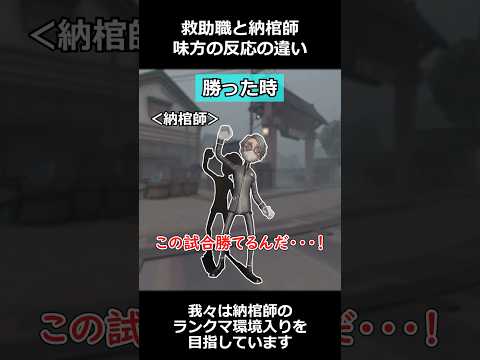
A detailed analysis of Identity V’s player community reveals a significant disparity in how teammates respond to different character class selections. Players who select rescue-oriented characters consistently receive positive feedback such as “reliable” and “reassuring,” while those choosing coffin bearer characters encounter negative reactions including “weak” and “dead weight.” This treatment occurs regardless of actual player skill level, suggesting that character class perception—rather than demonstrated ability—drives community judgment.
Why It Matters
This pattern of class-based discrimination has serious implications for gaming communities. It limits character diversity, discourages new players from exploring the full roster, and creates an environment where perceived meta-game viability supersedes individual skill expression. The phenomenon extends beyond Identity V, appearing in other competitive titles like Valorant and Overwatch 2, indicating a systemic issue in how esports-influenced communities evaluate player choices. Understanding these dynamics is crucial for maintaining healthy, inclusive gaming environments.
Background
Identity V is an asymmetrical multiplayer game where one player controls a hunter while others play as survivors attempting to escape. The game features over 25 distinct survivor characters, each with unique abilities and roles. The rescue character archetype emphasizes team support and protection mechanics, while the coffin bearer focuses on individual survival and repair efficiency.
The author, drawing from 15 years of gaming experience and over 500 hours in Identity V, documented a personal experience in 2021 where teammates immediately requested he switch from his main coffin bearer character, despite his above-average skill level. Conversely, when playing rescue characters with identical performance metrics, he received encouraging messages from the same player pool.
This disparity exists despite the development team’s efforts to maintain relatively balanced game mechanics across character classes. According to 2023 patch notes, both rescue and coffin bearer characters are designed to provide equivalent value when used effectively.
Key Points
- Perception vs. Performance Gap: Character class reputation influences teammate evaluation more than actual in-game performance, creating a disconnect between perceived and demonstrated ability.
- Professional Scene Influence: International Identity V tournaments heavily favor rescue characters, establishing a “meta” that cascades through the community and becomes self-reinforcing.
- Role Clarity Effect: Rescue characters have explicit team-support roles, while coffin bearer characters have more ambiguous responsibilities, leading communities to assign higher value to clearly defined roles.
- Meta-Game Fixation: Once a character class becomes established as “strong” or “weak” in community perception, this assessment persists even after balance changes, similar to patterns observed in League of Legends and Valorant.
- Stereotype Mechanism: Players unconsciously apply stereotypes to character selection, treating class choice as an indicator of player skill and playstyle preference, similar to real-world occupational stereotyping.
- Balance Patch Frequency Correlation: Games with less frequent balance updates (Identity V: monthly) show stronger meta fixation and class discrimination compared to titles with weekly adjustments (Overwatch 2).
Comparative Analysis Across Asymmetrical Games
Identity V vs. Dead by Daylight vs. Friday the 13th: The degree of class discrimination correlates directly with character differentiation. Identity V exhibits the most severe discrimination due to highly specialized character abilities, while Friday the 13th shows minimal discrimination because character roles are less distinct. Dead by Daylight occupies a middle position with moderate discrimination levels.
Balance Update Frequency Impact: Identity V (monthly updates) shows significantly higher meta fixation than Valorant (bi-weekly updates) or Overwatch 2 (weekly updates). This suggests that infrequent balance adjustments allow problematic meta perceptions to calcify within communities.
Perspectives
The Meta-Game Defense: Some community members argue that rescue characters genuinely perform better in competitive contexts, making the preference statistically justified rather than discriminatory. This perspective contains merit—professional tournament data does show higher rescue character selection rates.
The Diversity Advocacy Position: Counterarguments emphasize that individual skill can overcome class limitations, and that community-wide meta adherence unnecessarily restricts playstyle diversity. This view has gained traction, particularly in the Japanese community, where recognition of coffin bearer viability has grown over the past year.
The Esports Influence Critique: Some observers note that the professionalization of Identity V has inadvertently created a culture where optimal competitive choices become mandatory for casual players, fundamentally altering community norms around character selection freedom.
Psychological Mechanisms Behind Class Discrimination
The phenomenon operates through what psychology terms the “stereotype effect.” Character selection functions as identity expression, causing players to unconsciously infer ability levels from class choice. This creates self-fulfilling prophecies: rescue character players receive encouragement and support, improving their performance, while coffin bearer players face skepticism and reduced team coordination, potentially degrading their results regardless of individual skill.
The author identifies this as a broader trend in gaming communities post-2015, where esports professionalization has shifted cultural norms from “play what you enjoy” to “play what wins,” with corresponding social pressure mechanisms enforcing meta conformity.
Future Trajectory and Emerging Countertrends
The analysis predicts continued class discrimination expansion due to Identity V’s growing international esports presence and regular new character additions. However, hopeful signs emerge: certain content creators have gained significant viewership (hundreds of thousands of views) by demonstrating high-rank achievement with traditionally “weak” characters, suggesting community appetite for diversity narratives.
The Japanese community specifically shows measurable shifts toward recognizing coffin bearer viability, indicating that sustained counter-narrative messaging can influence perception.
Practical Strategies for Marginalized Class Players
Avoid Beginner Matches: Discrimination is most severe in beginner-level play where meta-game dependence is highest. Establishing credibility in ranked play before using non-meta characters reduces stereotype activation.
Master Class Strengths: Developing distinctive playstyles that highlight coffin bearer advantages (individual skill expression, self-defense capability, repair efficiency) can shift teammate perception from “weak player” to “skilled specialist.”
Use Voice Communication: Active voice chat participation humanizes players and disrupts stereotype-based judgment, allowing teammates to form impressions based on communication quality and decision-making rather than character selection alone.
Cross-Game Skill Development: Playing Dead by Daylight, where class discrimination is less pronounced, allows players to develop transferable skills that demonstrate competence when returning to Identity V.
Community Response and Emerging Awareness
YouTube comments and Twitter discussions reveal widespread player frustration with class-based treatment disparities. The hashtag #IdentityVClassDiscrimination briefly trended, with numerous players reporting identical experiences to the author’s documented case. Professional players have begun publicly cautioning against meta over-reliance, indicating emerging pushback within competitive circles.
However, counterarguments persist, with some community members defending class preferences as statistically justified, though critics note this reasoning sometimes serves to rationalize discriminatory behavior toward players choosing non-meta characters.
Insights
Identity V’s class discrimination problem serves as a barometer for gaming community maturity. As communities professionalize and esports influence grows, the pressure to conform to “optimal” choices intensifies. This creates a paradox: the sophistication that enables competitive excellence simultaneously erodes the diversity and inclusivity that sustains long-term community health.
The core issue is not that rescue characters are stronger—they may be—but that communities have allowed this advantage to justify social exclusion of players making different choices. This represents a failure of community culture rather than a game design problem.
The path forward requires deliberate cultural intervention. Individual players can reject stereotype-based judgment, content creators can showcase non-meta character mastery, and developers can accelerate balance patches to prevent meta calcification. Most importantly, the community must recognize that character diversity strengthens rather than weakens the overall ecosystem.
The author concludes that the next time a teammate selects a “weak” character, the choice to support rather than dismiss that player represents the first step toward building a gaming community that values both competitive excellence and human inclusion. This shift is not merely about fairness—it is essential for Identity V’s long-term viability and cultural health.