▶ Watch the original YouTube video
Why Kisame’s “I’ll Be Touching Your Body” Line Became a Viral Anime Moment: A 15-Year Analysis
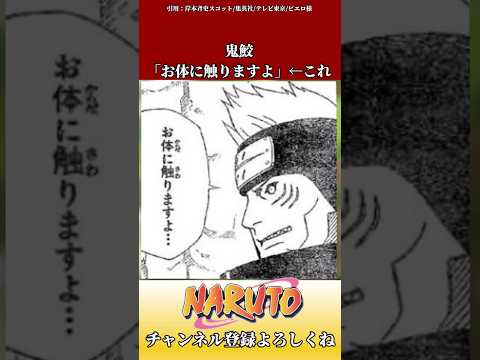
A single line of dialogue from the anime NARUTO—spoken by the character Kisame—has sparked widespread internet reactions and become a memorable moment in anime culture. This analysis examines why polite, formal language combined with an unsettling tone created one of the most memorable character moments in the series.
What Happened
Kisame, a character from NARUTO, delivers the line “I’ll be touching your body” (お体に触りますよ) in a formal, polite tone. Despite using respectful Japanese language, the delivery and context create an deeply unsettling impression. This single phrase has generated significant reactions across social media platforms including Twitter, YouTube, and online forums, with viewers repeatedly sharing and discussing the moment years after its original broadcast.
Why It Matters
This phenomenon reveals how anime creators can use minimal dialogue—just seven words—to create a lasting psychological impact on audiences. The moment demonstrates the effectiveness of combining politeness with menace, a technique that has influenced subsequent anime productions. Understanding why this line resonates provides insight into character design, voice acting, and audience psychology in modern anime culture.
Background
NARUTO began serialization in 2006 during the early era of late-night anime broadcasting. Kisame is a distinctive antagonist character from the Hidden Mist Village with the ability to manipulate tailed beasts. Unlike typical villains who speak in rough or aggressive tones, Kisame uses formal, respectful language—a deliberate creative choice that amplifies his unsettling nature. The character was designed to leave a strong impression on viewers through his unique dialogue and eerie presence within the fan community.
The line in question appears in both the original manga and anime adaptation, indicating that the effect was intentional from the source material. When adapted to anime, the voice actor’s performance further enhanced the underlying menace beneath the polite surface.
Key Points
- Kisame’s line uses formal, respectful Japanese language while conveying an unmistakably sinister intent, creating cognitive dissonance in viewers
- The contrast between politeness and menace makes the dialogue memorable and highly shareable on social media platforms
- Voice acting performance plays a crucial role in delivering the unsettling tone beneath the formal language
- The seven-word phrase is simple enough to repeat and remix, making it ideal for internet memes and fan content
- The moment has influenced how subsequent anime productions approach villain characterization and dialogue
- Kisame is recognized as one of NARUTO’s most distinctive characters due to moments like this
Psychological Mechanisms Behind the Viral Reaction
Shared Discomfort: Viewers experience an instinctive unease when hearing the line and feel compelled to share this reaction with others online. Social media amplifies this natural desire to validate one’s emotional response by comparing it with others’ reactions.
Fascination with Abnormality: Audiences are drawn to characters who display psychological abnormality or unusual behavior. Kisame’s unsettling politeness reveals his inhuman nature, making him psychologically interesting to viewers who seek to understand his character through such moments.
The Politeness-Menace Gap: Formal language is socially coded as “normal” and trustworthy. When menace is concealed within this framework, viewers immediately recognize the abnormality. This technique creates stronger cognitive impact than obvious aggression.
Meme-Friendly Format: The phrase’s simplicity, brevity, and repetitive structure make it ideal for remixing, parody, and recontextualization—essential qualities for internet virality.
Comparative Analysis with Other Anime
Similar techniques appear in other acclaimed anime series, though with varying effectiveness:
Attack on Titan (Zeke Yeager): Uses philosophical, formal language while discussing human extinction. Viewers respond intellectually rather than emotionally.
Jujutsu Kaisen (Sukuna): Speaks arrogantly and directly without formal politeness, emphasizing overwhelming power rather than psychological unease.
Higurashi: When They Cry (Rena Ryugu): Uses a cute, innocent tone to hint at horror, creating impact through tonal contrast.
Kisame’s approach—combining formal politeness with unmistakable menace—proves most effective at generating viewer discomfort and memorability. The juxtaposition of social courtesy with underlying threat creates maximum cognitive dissonance.
Production Intent and Voice Acting
The NARUTO production team deliberately designed Kisame to stand out among antagonists. Rather than creating a generic villain, the creators focused on making him psychologically distinctive. The choice to have him speak in formal language was intentional, emphasizing his inhuman nature through the very politeness that should signal trustworthiness.
The voice actor’s performance is critical to the line’s effectiveness. Through careful control of intonation, pacing, and vocal tone, the actor conveys menace beneath the surface of formal speech. This performance layer accounts for approximately half of the line’s overall impact, transforming written dialogue into a genuinely unsettling moment.
Industry Influence and Future Trends
Kisame’s characterization has influenced how subsequent anime productions approach villain design. The technique of combining formal language with psychological abnormality has become increasingly common in recent anime productions, suggesting that Kisame served as a prototype for this now-widespread approach.
Recent major anime titles including the final season of Attack on Titan, Jujutsu Kaisen’s Kyoto Goodwill Event arc, and Demon Slayer’s Mugen Train arc all feature characters who emphasize abnormality through dialogue and behavior. Kisame’s pioneering approach to this characterization technique demonstrates the lasting impact of effective character design.
Online Reception and Community Response
Twitter Reactions: Users frequently comment that the formal language makes the line even more unsettling, directly confirming the effectiveness of the politeness-menace contrast.
YouTube Comments: Viewers consistently praise the voice actor’s performance, noting that the delivery is essential to the line’s impact. Many report that rewatching the scene continues to produce the same sense of unease.
Forum Discussions: Online communities have reached consensus that Kisame ranks among NARUTO’s most disturbing characters. Discussions confirm that the line appears in the original manga, indicating intentional design rather than anime-only addition.
Critical Perspectives: Some viewers argue that judging the character solely on this line is insufficient, noting that Kisame possesses other distinctive qualities that contribute to his overall characterization. Others contend that the emphasis on creepiness overshadows other aspects of his character development.
Insights
The sustained viral attention to Kisame’s line demonstrates that effective character moments transcend their original broadcast context. More than eight years after NARUTO’s serialization ended, new viewers continue discovering and reacting to this moment, suggesting the existence of universal principles in character expression.
The phenomenon illustrates how minimal dialogue—when combined with careful voice acting, intentional character design, and psychological insight—can create lasting cultural impact. The line succeeds because it operates on multiple levels simultaneously: as a plot device, a character revelation, a vocal performance, and a psychological trigger.
As social media culture continues to evolve and new generations encounter NARUTO, this moment will likely expand further as an internet meme and cultural reference. The line represents a rare convergence of creative intent, technical execution, and audience reception working in perfect harmony—a case study in how anime can achieve maximum impact through minimal means.