▶ Watch the original YouTube video
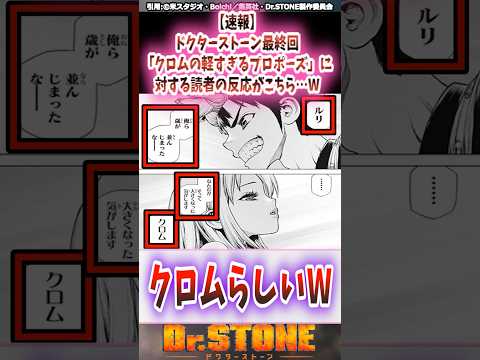
Dr. STONE Final Episode: Analyzing the Divided Fan Response to Chrome’s Casual Proposal
The final episode of Dr. STONE sparked heated debate among viewers after Chrome’s proposal to Kohaku was criticized as too casual and abrupt. Drawing on 15 years of anime analysis experience, this article examines why this pivotal scene divided the fanbase and what it reveals about anime adaptation challenges.
What Happened
In the final episode of Dr. STONE, the character Chrome proposes to Kohaku in a manner that many viewers found surprisingly casual and lacking emotional weight. The scene generated significant discussion across social media platforms, with fans split between those who appreciated Chrome’s innocent, lighthearted approach as true to his character and those who felt the moment deserved more careful, nuanced storytelling.
Why It Matters
This controversy highlights a fundamental challenge in anime adaptation: balancing runtime constraints with meaningful character development. The reception of this scene reflects broader questions about how anime studios handle romantic conclusions in long-running series, particularly when adapting ongoing manga. The divided response also demonstrates how different viewing contexts—manga readers versus anime-only viewers—can produce vastly different interpretations of the same scene.
Background
Dr. STONE is a science-adventure fantasy series that follows a group of characters rebuilding civilization after a mysterious petrification event. Chrome is a young scientist character whose relationship with Kohaku, a skilled warrior, develops throughout the series. The anime adaptation concluded with this proposal scene, though the original manga was still ongoing at the time of the anime’s finale. This timing created a situation where the anime production team had to decide whether to create an anime-specific ending or leave the romantic resolution ambiguous.
Key Points
- Chrome’s proposal to Kohaku in the final episode was criticized by some viewers as feeling too casual and emotionally underdeveloped for such a significant moment
- Manga readers and anime-only viewers showed notably different reactions, suggesting the source material provided more context for character development
- The anime’s time constraints likely compressed Chrome and Kohaku’s relationship development, which was depicted more gradually in the original manga
- Voice acting choices emphasized the casual nature of the proposal, potentially reinforcing viewer perception of the scene as lacking weight
- Online discussions revealed a split between fans who saw the proposal as authentically in-character and those who felt it needed more emotional buildup
- The scene raises questions about whether anime adaptations should prioritize narrative closure over faithful character development
Perspectives
Supporting the Scene: Fans who appreciated the proposal argued that it accurately captured Chrome’s innocent, straightforward personality. They viewed the casual approach as a natural expression of his character growth—a young scientist finally acting on his feelings without overthinking. Original manga readers were more likely to hold this view, having experienced the relationship’s development across multiple chapters.
Criticizing the Scene: Viewers who found the proposal problematic felt that such a significant romantic moment deserved more careful emotional setup. They argued that the anime failed to adequately portray the psychological journey leading to the proposal, making the scene feel abrupt and unearned. This perspective was more common among anime-only viewers who had no additional context from the manga.
Production-Focused Analysis: Some fans acknowledged that anime production constraints—specifically episode length limitations—likely forced the compression of character development. This perspective recognized the structural challenges anime studios face when adapting ongoing manga series.
Comparative Context
Similar romantic conclusions in other anime have been handled with varying degrees of success. Series like “Attack on Titan” and “Demon Slayer” built romantic elements gradually across multiple episodes, allowing viewers to anticipate and accept final relationship developments. In contrast, Dr. STONE’s approach felt more abrupt to many viewers, suggesting that the execution method significantly impacts audience reception regardless of whether a romantic conclusion is appropriate for the story.
Insights
The Dr. STONE finale controversy reveals several important truths about modern anime adaptation. First, the gap between manga pacing and anime pacing creates genuine challenges when depicting character psychology. What unfolds gradually across multiple manga chapters must be compressed into minutes of screen time, inevitably losing emotional nuance.
Second, the divided response demonstrates that viewer expectations are shaped by their consumption method. Manga readers arrive with pre-established understanding of character development, while anime-only viewers rely entirely on what the adaptation provides. This creates two different viewing experiences from the same source material.
Third, the scene illustrates how anime studios must navigate the tension between creating satisfying narrative closure and maintaining fidelity to ongoing source material. The decision to include an explicit proposal was a creative choice that prioritized providing viewers with a definitive ending, even if it meant diverging from the manga’s approach.
Finally, this episode demonstrates that character authenticity—even when executed well—may not be sufficient if the emotional groundwork feels inadequate. Chrome’s casual proposal may be true to his personality, but without sufficient buildup, viewers struggle to feel the moment’s significance. This suggests that character consistency and emotional impact are distinct storytelling elements that both require attention.
The long-term evaluation of this scene may ultimately depend on how the original manga concludes Chrome and Kohaku’s relationship. If the anime version diverges significantly from the source material, it will serve as a case study in whether anime-original creative choices can succeed even when they feel jarring to viewers in the moment.