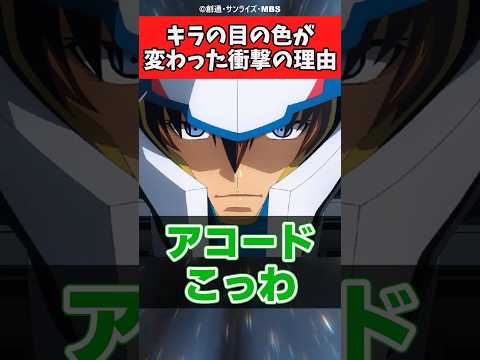
▶ Watch the original YouTube video
After more than two decades of speculation, the theatrical film Mobile Suit Gundam SEED FREEDOM has finally unveiled the secret behind protagonist Kira Yamato’s mysterious eye color changes. The revelation has sparked intense debate within the fan community, with reactions ranging from satisfaction to skepticism about the explanation’s consistency with the original series.
What Happened
The theatrical release of Mobile Suit Gundam SEED FREEDOM has addressed one of the franchise’s longest-standing mysteries: the meaning behind Kira Yamato’s eye color transformations. Since the original TV series aired in 2002, fans have observed that Kira’s eyes change color during moments of intense emotion, combat, or heightened mental stress. The film provides an official explanation for this phenomenon, though the fan response has been decidedly mixed.
Why It Matters
This revelation is significant because it represents a rare instance of a major anime franchise resolving a core character mystery that remained unexplained for over 20 years. The explanation carries implications for how we understand Kira’s character, the nature of genetic modification in the Gundam SEED universe, and the broader trend of anime productions providing “retroactive explanations” for previously ambiguous plot elements. For longtime fans, this moment represents both the fulfillment of long-held curiosity and potential closure on years of community speculation.
Background
In the Gundam SEED universe, humanity is divided between “Naturals” (unmodified humans) and “Coordinators” (genetically enhanced individuals). Kira Yamato is a Coordinator with exceptional abilities, designed specifically to pilot advanced mobile suits. Throughout the original TV series and subsequent installments, viewers noticed that Kira’s eyes would change color—typically becoming more vibrant or shifting hue—during critical moments. These instances occurred during his first deployment in the Freedom Gundam, his reunion with Lacus Clyne, his confrontation with Athrun Zala, and the final battle against Genesis.
For two decades, this visual phenomenon remained unexplained in official canon, leading fans to develop numerous theories. Some speculated it was a biomarker indicating the activation of Coordinator abilities. Others theorized it represented a manifestation of hidden power or psychological transformation. The mystery became a defining point of discussion in fan communities, spawning countless forum debates, fan theories, and analytical essays.
Key Points
- Kira’s eye color changes have been officially explained in Mobile Suit Gundam SEED FREEDOM, ending a 20+ year mystery
- The phenomenon is connected to Coordinator genetic modifications and emotional/combat states, though the exact mechanism remains debated among fans
- Fan reactions are divided: some celebrate the resolution while others question whether the explanation is consistent with earlier series depictions
- The revelation raises questions about why other Coordinators do not exhibit similar eye color changes
- The explanation reflects a broader industry trend of providing retroactive clarification for previously ambiguous story elements
- The mystery’s resolution may impact fan community engagement, as the “unsolved mystery” previously served as a focal point for ongoing discussion
Timeline
- 2002: Mobile Suit Gundam SEED airs; viewers begin noticing Kira’s eye color changes
- 2003-2004: Fan theories proliferate through online forums and anime magazines
- 2004-2005: Mobile Suit Gundam SEED DESTINY continues the series with additional eye color change scenes
- 2006 onwards: Mystery remains unresolved across multiple Gundam SEED-related media
- 2024: Mobile Suit Gundam SEED FREEDOM theatrical release provides official explanation
Perspectives
Fan Satisfaction: Many longtime viewers express relief and joy at finally receiving an answer to a question that has occupied their minds for over two decades. These fans view the revelation as validation of their investment in the series and their analytical engagement with the material.
Critical Skepticism: Other fans question whether the explanation adequately accounts for all instances of eye color changes in the original series. Some suggest the explanation may be a “retroactive addition” rather than a planned element, raising concerns about narrative consistency.
Logical Consistency: A significant portion of the fan community has focused on verifying whether the theatrical explanation aligns with established lore about Coordinator genetics and whether it explains why Kira alone exhibits this trait among other Coordinators like Lacus Clyne, Athrun Zala, and Cagalli Yula Athha.
Character Interpretation: Some analysts view the eye color change as a visual representation of Kira’s “dual nature”—his hidden identity as a genetically engineered super-soldier beneath his outward appearance as an ordinary teenager. The explanation’s treatment of this duality influences how viewers understand his character arc.
Comparative Analysis: Similar Tropes in Other Anime
The eye color change phenomenon is not unique to Gundam SEED. Other major anime have employed similar visual indicators:
Code Geass: Lelouch’s eyes turn red when activating his Geass ability—a clearly defined and consistently explained mechanic established early in the series.
Attack on Titan: Eren’s pupils change during titan transformation, presented as a natural consequence of physical metamorphosis.
Demon Slayer: Tanjiro’s eyes change when executing Breathing Techniques, with clear visual and narrative consistency.
In comparison, Gundam SEED’s approach to Kira’s eye color changes remained deliberately ambiguous for two decades, making the eventual explanation a unique case study in how franchises handle long-term narrative mysteries.
Industry Context: The Trend of Retroactive Explanations
The revelation reflects a broader shift in anime production philosophy. From the 2000s through early 2010s, many creators embraced ambiguity and left mysteries unresolved, encouraging viewer interpretation. Works like Neon Genesis Evangelion and The Melancholy of Haruhi Suzumiya exemplified this approach.
However, since the mid-2010s, there has been a notable trend toward providing “retroactive explanations” for previously ambiguous elements. Recent Gundam productions including Mobile Suit Gundam Unicorn and Mobile Suit Gundam: Hathaway have employed this strategy to clarify past inconsistencies and expand the franchise’s lore.
Kira’s eye color explanation represents a culmination of this trend—a deliberate choice to resolve a 20-year-old mystery through theatrical release, capitalizing on both nostalgia and fan demand for narrative closure.
Fan Community Response
Social Media: Twitter reactions show a roughly equal split between celebration (“Finally, after 20 years!”) and skepticism (“This explanation doesn’t satisfy me”). YouTube comments focus heavily on verification—comparing the theatrical explanation against specific TV series episodes.
Discussion Forums: Online communities have engaged in detailed analysis, examining whether the explanation accounts for all documented instances of eye color changes and whether it logically integrates with established Coordinator genetics lore.
Critical Analysis: Some fans have speculated that the explanation may represent a retroactive addition rather than a planned element, suggesting the original creators may not have established a definitive reason for the phenomenon during the TV series production.
Insights
The revelation of Kira’s eye color mystery represents more than a simple plot explanation—it marks a significant moment in how long-running franchises engage with their legacy. For 20 years, this unsolved mystery served as a focal point for fan engagement, encouraging speculation, theory-crafting, and community discussion. The resolution provides narrative closure but simultaneously removes a source of ongoing creative interpretation.
The mixed fan response suggests that audiences value both answers and the interpretive freedom that mysteries provide. The explanation’s success ultimately depends not merely on whether it resolves the mystery, but whether it does so in a manner that feels logically consistent with the established universe and respects the investment fans have made in the series.
Furthermore, the explanation raises broader questions about Coordinator genetics in the Gundam SEED universe. If Kira’s eye color changes result from his genetic modifications, the explanation must account for why this trait appears unique to him among other Coordinators. This question will likely drive continued fan analysis and discussion in the coming months.
Ultimately, Mobile Suit Gundam SEED FREEDOM’s treatment of this mystery reflects a franchise attempting to honor its legacy while providing narrative resolution. Whether this approach succeeds depends on individual viewer perspectives regarding the balance between mystery and explanation in long-form storytelling.