▶ Watch the original YouTube video
Why Dungeon Meshi’s Initial Party Is the Perfect Fantasy Team: A Deep Analysis of Character Dynamics
A comprehensive analysis of Dungeon Meshi’s four-member initial party reveals why viewers are captivated by their dynamic chemistry. Through comparative study with other fantasy anime and games, this article explores how the series achieves rare perfection in party composition, character development, and thematic depth.
- What Happened
- Why It Matters
- Background
- Key Points
- Comparative Analysis: Party Composition Excellence
- Character Analysis: Individual Strengths
- The Monster Consumption Motif
- Thematic Significance: Diversity and Understanding
- Audience Reception and Critical Response
- Structural Lessons for Fantasy Media
- Anticipated Narrative Developments
- Insights: What Makes This Party Exceptional
What Happened
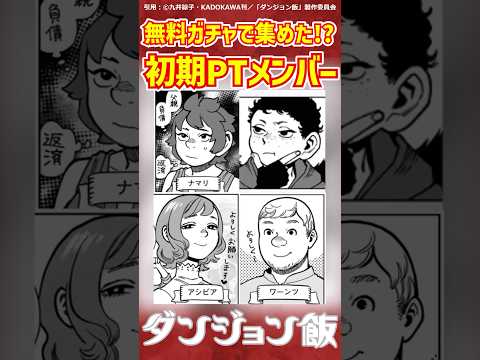
Dungeon Meshi has garnered significant viewer enthusiasm for its initial party composition featuring Laios, Marcille, Chilchuck, and Senshi. A reaction compilation video highlighting audience responses demonstrates the widespread appeal of these four characters and their interactions. The series presents a carefully constructed team where each member brings distinct abilities, backgrounds, and perspectives to their shared quest of dungeon exploration and monster consumption.
Why It Matters
In an era where fantasy anime and games frequently feature ensemble casts, Dungeon Meshi stands out for achieving something rare: a perfectly balanced party where role clarity and character chemistry coexist at the highest level. The series addresses contemporary themes of diversity and mutual understanding through its fantasy framework, demonstrating how individuals from different backgrounds can form genuine bonds while maintaining their distinct identities. This approach resonates with modern audiences seeking meaningful representation of collaboration across differences.
Background
Dungeon Meshi, adapted into anime in 2024, presents a unique take on the dungeon-crawling fantasy genre. Rather than relying on traditional supply chains, the party sustains itself by cooking and consuming monsters encountered during their descent. This premise serves as more than mere survival mechanics—it becomes the vehicle through which character relationships deepen and individual philosophies clash and harmonize. The four-member party structure, while simple in composition, demonstrates sophisticated character design that rewards careful analysis.
Key Points
- Party composition achieves rare balance: Laios (human warrior), Marcille (elf mage), Chilchuck (halfling rogue), and Senshi (dwarf cleric) represent distinct races, classes, and personality types that function as an organic unit rather than a collection of archetypes.
- Character motivation clarity: Each party member possesses clearly defined personal goals—Laios seeks to rescue his sister, Marcille pursues magical knowledge, Chilchuck thinks of his family, and Senshi carries his own mysterious purpose—yet these goals align sufficiently to maintain party cohesion.
- Monster consumption as narrative device: The act of cooking and eating monsters serves dual purposes: it addresses practical survival needs while simultaneously revealing character values, fears, and capacity for growth through their varied reactions to this necessity.
- Thematic universality: The series transcends typical fantasy tropes by exploring how individuals with different worldviews achieve mutual understanding—a theme with contemporary relevance beyond the fantasy genre.
- Audience emotional investment: Social media responses and comment sections reveal viewers experiencing genuine emotional connection to the party’s relationships, indicating successful character writing that transcends typical anime fandom enthusiasm.
- Structural superiority over comparable works: Compared to similar series like Sword Art Online and Re:Zero, Dungeon Meshi achieves higher marks in both role definition clarity and character interaction authenticity simultaneously.
Comparative Analysis: Party Composition Excellence
Analysis of comparable fantasy works reveals Dungeon Meshi’s structural advantages:
| Series | Party Size | Role Clarity | Character Chemistry | Background Complexity |
|---|---|---|---|---|
| Sword Art Online | Variable (2-4) | Moderate | Moderate | Low to Moderate |
| Re:Zero | Variable (3-5) | Low to Moderate | High | Very High |
| Dungeon Meshi | 4 (Fixed) | Very High | Very High | High |
This comparison demonstrates that Dungeon Meshi uniquely succeeds at maintaining both clear role differentiation and compelling interpersonal dynamics—a balance that other acclaimed series sacrifice in one direction or another.
Character Analysis: Individual Strengths
Laios: The Balanced Leader
Laios functions as party leader through a combination of genuine concern for his sister and scientific curiosity about dungeon mechanics. Unlike protagonists driven purely by emotional motivation, Laios approaches challenges with logical analysis, creating a leadership style that earns party trust through competence rather than charisma alone. His enthusiasm for monster biology, while played for comedy, reflects a genuine intellectual engagement that distinguishes him from typical fantasy protagonists.
Marcille: The Idealist in Conflict
Marcille presents the party’s most complex internal contradiction. Her desire to save her companion mirrors Laios’s motivation, yet her willingness to pursue dangerous magical solutions creates ongoing tension. Her character arc explores the danger of good intentions pursued through morally questionable means—a theme that elevates the narrative beyond simple adventure.
Chilchuck: Depth Beyond Comedy
While Chilchuck initially appears as comic relief, his character reveals surprising depth. His family concerns and halfling cultural background provide legitimate emotional weight beneath his humorous exterior. This combination of levity and genuine vulnerability creates a character that audiences find simultaneously entertaining and sympathetic.
Senshi: The Experienced Anchor
Senshi grounds the party in practical reality. His experience, knowledge, and calm demeanor provide stability that prevents the group from descending into chaos. His acceptance of monster consumption as natural, contrasting with Marcille’s resistance, illustrates how perspective shapes response to identical circumstances.
The Monster Consumption Motif
The series’ central premise—survival through cooking monsters—functions as sophisticated narrative machinery. This concept serves multiple purposes simultaneously: it creates practical survival stakes, provides comedic scenarios, and most importantly, becomes the primary vehicle for character development and relationship building. Each meal scene reveals character values, fears, and capacity for adaptation. Marcille’s disgust, Senshi’s expertise, Chilchuck’s pragmatism, and Laios’s scientific fascination all emerge naturally through their responses to this shared necessity.
This approach mirrors real-world relationship dynamics where shared experiences—particularly those involving vulnerability or discomfort—forge genuine bonds. The series recognizes that meaningful connection often emerges not from comfortable agreement but from navigating disagreement with mutual respect.
Thematic Significance: Diversity and Understanding
Contemporary fantasy media increasingly emphasizes diversity as aesthetic choice. Dungeon Meshi distinguishes itself by making diversity functionally central to its narrative. The party’s different races, classes, and personalities aren’t cosmetic variations—they create genuine philosophical differences that must be negotiated throughout the story. This approach models how diverse teams function in practice: not through eliminating differences but through learning to value them.
The series demonstrates that effective collaboration doesn’t require identical worldviews or backgrounds. Instead, it requires mutual respect, clear communication, and willingness to learn from perspectives different from one’s own. This message carries particular resonance in contemporary society where cross-cultural and cross-ideological cooperation remains challenging.
Audience Reception and Critical Response
Viewer responses across social media platforms reveal consistent appreciation for the party’s dynamics. Positive reactions frequently emphasize the natural way these four distinct personalities function as a cohesive unit. Some viewers express initial skepticism about Marcille’s character motivations, though this skepticism typically resolves as the narrative progresses and reveals deeper context for her choices.
The most enthusiastic responses focus on Chilchuck’s character—specifically how the series balances his comedic role with genuine emotional depth regarding his family. This response pattern indicates audiences recognize and appreciate complex characterization that resists simple categorization.
Structural Lessons for Fantasy Media
Dungeon Meshi’s success offers several lessons for fantasy storytelling:
- Fixed party size creates stronger dynamics: The unchanging four-member composition allows deeper character development than rotating rosters.
- Role clarity enhances rather than limits character depth: Clear functional roles don’t prevent complex personalities; they provide framework within which complexity can flourish.
- Shared necessity builds authentic bonds: Forced cooperation through survival needs creates more convincing relationships than voluntary association.
- Worldbuilding serves character development: The monster consumption premise exists primarily to develop character relationships, not as mere setting detail.
- Diversity functions best when consequential: Character differences create actual narrative tension and growth rather than serving as representation checkbox.
Anticipated Narrative Developments
Based on source material progression, several significant challenges likely await this initial party. The alignment between individual goals and collective objectives will face increasing strain. Marcille’s magical pursuits may diverge from Laios’s primary mission. Chilchuck’s family concerns could create conflicting priorities. Senshi’s mysterious motivations may eventually surface as complicating factors.
How the narrative resolves these tensions will determine whether Dungeon Meshi remains an excellent fantasy series or ascends to the status of genuine masterwork. The true test of this party’s quality lies not in their initial harmony but in their capacity to maintain bonds while navigating fundamental disagreements.
Insights: What Makes This Party Exceptional
Dungeon Meshi’s initial party achieves what many fantasy works attempt but few accomplish: a perfect synthesis of practical functionality and emotional authenticity. The party works as a team because each member performs necessary functions, but viewers care about them because they possess genuine personalities that extend beyond their roles.
The series demonstrates that “ideal teamwork” doesn’t mean eliminating conflict or requiring unanimous agreement. Instead, it means maintaining respect and commitment to shared goals while acknowledging and working through genuine differences. This nuanced understanding of collaboration resonates particularly strongly with contemporary audiences navigating increasingly diverse social and professional environments.
The monster consumption premise, while fantastical, ultimately explores universal human experiences: how we build trust, how we overcome initial resistance to unfamiliar ideas, and how shared vulnerability creates genuine connection. By embedding these themes within fantasy adventure, Dungeon Meshi achieves both entertainment value and thematic substance.
The enthusiastic audience response documented in reaction compilations reflects recognition of this achievement. Viewers respond not merely to competent storytelling but to genuine insight into human relationships expressed through fantasy framework. This combination—technical excellence in character writing combined with thematic depth—explains why Dungeon Meshi’s initial party has captured audience imagination so thoroughly.