▶ Watch the original YouTube video
How Hazard’s Rampage Form Redefined Anime’s Power-Up Trope: Fan Reactions and Critical Analysis
Hazard’s rampage form represents a revolutionary departure from traditional anime power-up sequences, replacing emotional outbursts with mechanical precision and calculated lethality. The form’s understated yet terrifying presentation sparked intense debate within fan communities, revealing how a single character transformation can challenge decades of established storytelling conventions.
What Happened
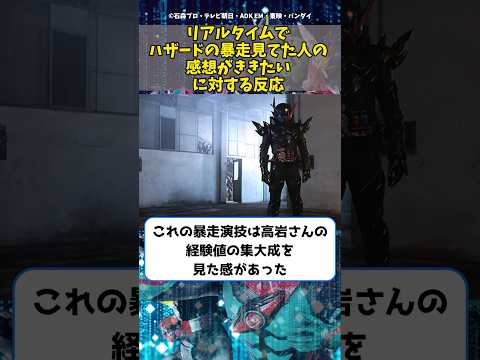
Hazard’s rampage form emerged as a pivotal moment in contemporary anime storytelling, fundamentally challenging how audiences perceive character transformations. Unlike traditional rampage sequences that emphasize emotional intensity—glowing eyes, distorted voices, and chaotic movements—Hazard’s transformation manifests as silent, methodical, and disturbingly precise. The form operates with mechanical efficiency, targeting vital points with calculated accuracy while maintaining an eerie absence of emotional expression.
The sequence generated substantial discussion across fan communities, with viewers initially expecting conventional power-up spectacle but instead encountering something far more unsettling. The form’s defining characteristic is not raw power, but rather the complete elimination of emotional chaos in favor of pure processing capability.
Why It Matters
This transformation represents a significant evolution in how anime portrays strength and danger. For decades, the rampage form archetype relied on visual and auditory spectacle to convey threat level—the more dramatic the display, the more powerful the character. Hazard’s form inverts this expectation entirely, suggesting that true danger emerges not from emotional volatility but from the absence of it.
The presentation taps into a primal fear: the threat posed by entities that operate without emotion or mercy. This psychological dimension elevates the sequence beyond mere action spectacle into commentary on the nature of power itself. The form’s success in generating genuine fear among viewers—rather than simple excitement—demonstrates the effectiveness of restraint in modern anime storytelling.
Background
Traditional rampage forms in anime have historically followed a consistent formula. Series like Attack on Titan and Jujutsu Kaisen employ visual transformation markers: expanded bodies, glowing features, and vocal distortion. These elements serve a narrative function—they signal to both characters and viewers that something catastrophic has occurred. The emotional explosion is the point; the loss of control is the defining feature.
Hazard’s rampage form breaks this mold entirely. Rather than representing a loss of control, it appears to represent the opposite: the activation of a higher-order processing system that transcends conventional emotional responses. The form operates with the precision of programmed artificial intelligence executing optimal attack patterns, stripped of hesitation or mercy.
This distinction becomes crucial when examining fan reactions. Viewers accustomed to the traditional formula initially anticipated conventional spectacle but instead encountered something fundamentally different—a presentation of power divorced from emotional expression.
Key Points
- Hazard’s rampage form abandons emotional display in favor of mechanical precision, representing a departure from established anime conventions
- The form’s defining feature is silent, methodical execution rather than dramatic visual or auditory spectacle
- Fan reactions progressed from initial excitement to genuine fear upon recognizing the form’s true nature
- The sequence demonstrates that restraint and understatement can generate more psychological impact than conventional power-up theatrics
- Despite stated indiscriminate targeting, the form visibly discriminates between allies and enemies, suggesting hidden intelligence beneath the mechanical exterior
- The form’s limited appearance (initial sequence only) preserves its impact through scarcity rather than repetition
Fan Reaction Categories
Analysis of community responses reveals three distinct viewer groups, each interpreting the form through different frameworks.
The Excitement Group responded with straightforward enthusiasm, celebrating the form’s raw power and new capabilities. Comments like “the rampage form is incredibly strong” and “this new form is devastating” reflect viewers focused on combat effectiveness and character progression.
The Analysis Group engaged with the presentation’s technical aspects, noting the rarity of understated rampage sequences and identifying the contradiction between stated indiscriminate targeting and actual selective engagement. These viewers recognized the deliberate nature of the creative choices.
The Fear Group articulated the most striking response: genuine psychological discomfort at the form’s mechanical, emotionless execution. Comments describing the “biological-to-mechanical processing” shift and the terror of witnessing “merciless, methodical elimination” indicate that the sequence successfully triggered primal fear responses.
The Mechanical Precision Paradox
A crucial observation emerged from fan analysis: the form allegedly attacks indiscriminately yet visibly targets enemies while sparing allies. This apparent contradiction likely represents intentional creative ambiguity. Rather than depicting pure destruction, the sequence suggests a higher-order intelligence operating beneath the mechanical exterior—a consciousness that transcends emotional chaos while maintaining strategic awareness.
This interpretation parallels the structure found in Neon Genesis Evangelion, where seemingly purposeless entities actually pursue specific objectives. The contradiction creates productive uncertainty: viewers cannot dismiss the form as simple destruction, nor can they fully comprehend its true nature. This ambiguity deepens psychological impact.
The Role of Restraint in Modern Anime
The decision to limit the form’s spectacular combo sequence to a single appearance reflects sophisticated creative strategy. Repetition would transform novelty into pattern, eventually diminishing impact through familiarity. By restricting the most visually impressive elements to an initial sequence, the production preserves the form’s psychological weight.
This approach mirrors successful strategies in Puella Magi Madoka Magica and Neon Genesis Evangelion, where powerful imagery gains significance precisely through limited deployment. Scarcity enhances value; overuse breeds indifference.
Evolution of Rampage Representation in Contemporary Anime
The past five years have witnessed a clear shift in how anime depicts power transformations. Earlier conventions (2000s-early 2010s) treated rampage forms as straightforward emotional explosions. Contemporary series increasingly present transformations as transitions into alternate states of being rather than mere power increases.
Attack on Titan‘s titan evolution, Jujutsu Kaisen‘s complex power systems, and Chainsaw Man‘s inhuman combat expressions all reflect this trend toward psychological complexity. Hazard’s form represents the cutting edge of this evolution—a transformation that questions what consciousness and control actually mean.
The Accumulated Experience Interpretation
One particularly insightful fan observation noted that the form’s precision reflects “accumulated experience made manifest.” This interpretation suggests the form represents not merely increased power but the crystallization of past struggles, defeats, and learned lessons. The mechanical efficiency emerges from countless iterations of combat experience compressed into pure execution.
This framework aligns with how series like Demon Slayer and JoJo’s Bizarre Adventure treat ability growth—as the embodiment of character history rather than arbitrary power increases. True strength manifests as knowledge efficiently applied, not raw force blindly deployed.
Insights
Hazard’s rampage form succeeds because it operates on multiple interpretive levels simultaneously. Viewers can appreciate it as straightforward power escalation, analyze it as technically sophisticated choreography, or experience it as psychological horror. This multivalent quality—the capacity to satisfy diverse interpretive frameworks—distinguishes genuinely innovative storytelling from conventional spectacle.
The form’s true innovation lies not in visual effects or combat choreography but in the deliberate absence of emotional expression. By removing the expected emotional component, the sequence forces viewers to confront uncomfortable questions about the nature of danger, consciousness, and control. A being that destroys without passion, hesitation, or mercy represents a category of threat that conventional emotional rampage forms cannot express.
The progression of fan reactions—from excitement to analysis to fear—mirrors a process of gradual recognition. Viewers initially expected conventional spectacle but gradually understood they were witnessing something fundamentally different. This psychological journey itself becomes part of the sequence’s impact.
The apparent contradiction between stated indiscriminate targeting and actual selective engagement remains productively unresolved, inviting ongoing interpretation and discussion. Whether this represents intentional ambiguity or narrative inconsistency, it generates the kind of engaged analysis that defines successful storytelling.
Ultimately, Hazard’s rampage form demonstrates that anime’s power-up conventions remain malleable. By inverting established expectations—replacing emotional chaos with mechanical precision, visual spectacle with understated lethality—the sequence reveals that true innovation emerges not from escalating existing formulas but from questioning their fundamental assumptions.