▶ Watch the original YouTube video
Why King Magnifico Fails as a Handsome Villain in Disney’s Wish
Disney’s latest film Wish features King Magnifico, a conventionally attractive antagonist whose character design contradicts his narrative role. A detailed analysis reveals fundamental inconsistencies in his motivations, behavior patterns, and relationship dynamics that undermine his effectiveness as a compelling villain—a problem that reflects broader issues in modern Disney storytelling.
What Happened
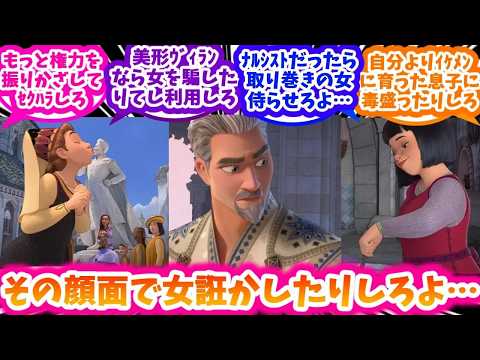
King Magnifico, the primary antagonist of Disney’s Wish, has become the subject of intense online criticism regarding his characterization as a villain. Viewers have pointed out that despite being designed as an attractive, charismatic character, his actions and motivations fail to align with his established personality traits. The disconnect has sparked widespread discussion about what makes a villain genuinely compelling versus merely visually appealing.
The core criticism centers on a fundamental question: if Magnifico is a narcissistic, power-hungry ruler with a handsome appearance, why does his behavior not reflect the logical extensions of such traits? Specifically, viewers have noted that a villain with his characteristics would logically leverage his physical attractiveness as a tool for manipulation and control—yet the film never explores this dimension.
Why It Matters
This analysis matters because it reveals how character consistency directly impacts narrative credibility. When a character’s external traits contradict their internal motivations, audiences instinctively sense the inconsistency, even if they cannot articulate why. This phenomenon affects viewer engagement and emotional investment in the story.
The Magnifico case also illuminates a broader trend in contemporary Disney productions: the apparent decline in the studio’s ability to craft psychologically complex, believable antagonists. Understanding why this character fails provides valuable lessons about what separates memorable villains from forgettable ones.
Background
Disney has historically excelled at creating compelling villains whose motivations are clear and whose actions remain consistent with their established character traits. Characters like Gaston from Beauty and the Beast and Hans from Frozen demonstrate how physical attractiveness can be weaponized as part of a villain’s strategy, making them more threatening rather than less.
King Magnifico is presented as a narcissistic ruler obsessed with his own glory and the admiration of his subjects. He possesses magical abilities that allow him to grant wishes, which he uses to control his kingdom’s population. However, the film never adequately explores how a character with these traits would realistically behave, particularly regarding his relationships with women and his exercise of power.
The character appears to have undergone significant changes during development. Evidence suggests he may have originally been conceived as part of a dual-villain structure alongside the queen, which would explain certain narrative inconsistencies present in the final film.
Key Points
- King Magnifico’s characterization contains fundamental contradictions between his narcissistic personality and his conservative approach to relationships and power dynamics
- Comparable Disney villains like Gaston and Hans demonstrate how attractive antagonists can be written with behavioral consistency by clearly linking their physical appeal to their strategic goals
- Magnifico’s stated objective—seeking “glory”—remains vague and poorly defined, making his actions appear unmotivated and arbitrary
- The character’s relationship with his wife is ambiguous, suggesting either emotional dependence or control, but the film fails to develop either interpretation coherently
- Evidence indicates the character may have been substantially revised during production, leaving narrative inconsistencies unresolved
- The film’s broader messaging about attractive characters being inherently untrustworthy reflects a form of appearance-based discrimination rather than genuine character critique
Comparative Character Analysis
Gaston (Beauty and the Beast): Gaston is a handsome villain whose physical attractiveness directly serves his goals. He uses his charm and appearance to manipulate the village women and pursue Belle. His narcissism is expressed through his constant need for admiration and his use of his beauty as a tool for dominance. His actions are entirely consistent with his character.
Hans (Frozen): Hans employs his attractive appearance and charming demeanor as deliberate weapons to seduce Anna and gain access to the throne. Every action he takes serves his ultimate goal of acquiring power. His character demonstrates perfect internal consistency.
King Magnifico (Wish): Despite being designed as attractive and charismatic, Magnifico’s behavior does not leverage these traits strategically. His stated goal of achieving glory remains undefined. His relationship with his wife is unclear—whether based on love, dependence, or control. His actions lack the logical coherence that would make him a believable antagonist.
The Narcissism Paradox
Narcissistic personality traits typically manifest through a consistent pattern of behavior: the narcissist seeks constant validation, uses others as tools for self-aggrandizement, and becomes threatened by anything that challenges their self-image. A truly narcissistic character would logically surround himself with admirers, maintain multiple sources of validation, and eliminate potential threats to his status.
King Magnifico’s apparent isolation from romantic entanglements contradicts this psychological profile. A narcissist with his resources and appearance would naturally cultivate a court of admirers. The film’s failure to explore this dimension suggests either incomplete character development or a fundamental misunderstanding of narcissistic psychology.
Furthermore, if Magnifico’s relationship with his wife is based on genuine love rather than control, this directly contradicts his narcissistic characterization. True narcissists are incapable of the empathy and selflessness that genuine love requires. The film never resolves this contradiction.
Production History and Character Evolution
Evidence suggests that King Magnifico may have originally been conceived as part of a dual-villain structure alongside the queen. This would explain several narrative elements: the queen’s elaborate jewelry and ornamentation, her apparent influence over the kingdom, and certain inconsistencies in Magnifico’s characterization.
If the original concept featured both characters as antagonists with distinct roles—the queen embodying vanity and superficiality while the king embodied authoritarian control—the final version’s decision to reduce the queen to a minor character would explain the resulting narrative gaps. The character revision appears to have been incomplete, leaving Magnifico’s motivations and behavior patterns poorly defined.
Perspectives
Viewer Interpretation: Online audiences have consistently identified the character’s inconsistencies, noting that a villain designed as handsome and charismatic should logically employ these traits as instruments of manipulation. The criticism is not that attractive villains cannot exist, but that Magnifico’s attractiveness appears decorative rather than functional to his character.
Character Design vs. Narrative Function: The disconnect between Magnifico’s visual presentation and his narrative role suggests a breakdown in communication between character design and story development. His appearance suggests a character who should be manipulative and seductive, but his actions suggest a character primarily motivated by abstract concepts of glory and control.
Broader Disney Trends: Some observers note that recent Disney productions have struggled with villain characterization, particularly regarding the relationship between physical appearance and moral character. The film’s suggestion that attractiveness correlates with untrustworthiness represents a form of appearance-based prejudice rather than genuine character analysis.
What Makes Villains Compelling
Effective antagonists require three essential elements: clearly defined objectives, behavior consistent with those objectives, and logical reasoning that explains their choices. King Magnifico fails to meet all three criteria.
Clear Objectives: Gaston wants to dominate Belle and the village through displays of strength and beauty. Hans wants to seize royal power. Magnifico wants “glory”—a vague concept never adequately defined. Does he seek worship? Recognition? Power over others? The film never clarifies.
Behavioral Consistency: Gaston’s every action serves his goal of dominance. Hans’s every action serves his goal of acquiring the throne. Magnifico’s actions appear arbitrary, sometimes serving his stated narcissism and sometimes contradicting it.
Logical Reasoning: Both Gaston and Hans make choices that logically follow from their established motivations. Magnifico’s choices—particularly regarding his wife and his approach to power—lack clear logical foundations.
The Wife Relationship Problem
One of the most significant unresolved elements of Magnifico’s characterization involves his relationship with his wife. The film suggests she has been with him since before the kingdom’s founding, yet she appears to have no understanding of his emotional instability or psychological vulnerabilities.
If she genuinely loves him, she would recognize and attempt to address his emotional fragility. If she is merely controlled by him, this would represent a form of abuse that the film never acknowledges. The ambiguity suggests incomplete character development rather than intentional complexity.
This relationship dynamic could have been developed into a genuinely tragic element—a narcissist so dependent on one person for validation that he becomes emotionally unstable without her, yet so incapable of genuine connection that he cannot truly love her in return. Instead, the film leaves this potential unexplored.
Insights
The failure of King Magnifico as a compelling villain reflects a broader challenge facing contemporary Disney: the difficulty of creating psychologically complex characters within the constraints of family entertainment. The studio that once produced Ursula, Maleficent, and Cruella appears to have lost the ability to craft antagonists whose internal contradictions make them more interesting rather than less.
Magnifico’s character suggests that Disney may be prioritizing visual design and surface-level characterization over psychological depth. A handsome villain is visually interesting, but only if his handsomeness serves a narrative function. When appearance and behavior contradict each other without intentional purpose, the result is a character that feels incomplete.
The online criticism of Magnifico, while sometimes crudely expressed, identifies a genuine creative problem: character consistency matters. Audiences instinctively recognize when a character’s actions fail to align with their established traits, and this recognition undermines narrative credibility.
For future character development, Disney would benefit from returning to first principles: define what your villain wants, ensure their actions logically serve that goal, and make sure their personality traits either advance or meaningfully complicate their objectives. King Magnifico demonstrates what happens when these fundamentals are neglected.