▶ Watch the original YouTube video
How Gundam Characters React to Great Zeong: A 15-Year Fan’s Deep Dive Into Mobile Suit Contradictions
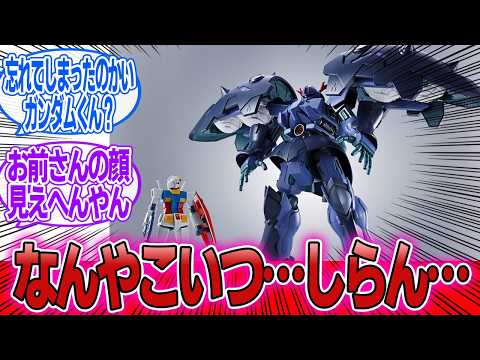
Great Zeong, a fusion of four powerful Zeon mobile armors, represents one of the most enigmatic and contradictory machines in the Gundam universe. Despite its formidable design, even protagonist Amuro Ray dismisses it with “I don’t know what that is,” revealing deeper inconsistencies in Gundam’s official canon that have sparked years of fan debate.
What Happened
A viral video showcasing Great Zeong—a composite mobile armor formed by merging Zeong, Acguy Type-3, Big Zam, and Big Ro—has reignited fan discussions about this mysterious machine’s place in Gundam lore. The video captures character reactions from various Gundam media, with Amuro’s bewildered response “Who is this… what is this… I don’t know” becoming emblematic of the machine’s ambiguous canonical status. The recent Robot Spirits toy line release, featuring full separation and recombination mechanics, has further elevated Great Zeong’s profile among collectors and enthusiasts.
Why It Matters
Great Zeong exemplifies a fundamental tension within the Gundam franchise: the gap between official canon and expanded universe creativity. For 15 years, Gundam fans have grappled with how spin-off games, manga, and merchandise introduce elements that contradict or exist outside the main narrative. Great Zeong’s existence forces fans and creators alike to confront questions about continuity, design philosophy, and what constitutes “official” Gundam canon. Understanding this machine reveals how fan communities engage with beloved franchises when canonical boundaries become blurred.
Background
Great Zeong first appeared in the SD Gundam Generation game series, not in the original Mobile Suit Gundam anime. The machine comprises four distinct mobile armors from different developmental periods: Zeong (Char’s final-stage mobile armor), Acguy Type-3 (an early-war design), Big Zam (Dozle Zabi’s personal superweapon), and Big Ro (the high-speed variant that repeatedly cornered Amuro). Each unit was designed with different technological philosophies and strategic purposes, making their forced combination conceptually problematic from a canonical perspective.
The machine stands approximately 280mm in height and represents an attempt to synthesize Zeon’s most powerful mobile armors into a single entity. However, unlike other Gundam fusion concepts such as Double Zeta Gundam’s modular systems or Graze Ein’s intentional design integration, Great Zeong’s combination appears arbitrary and lacks clear narrative justification within established Gundam continuity.
Key Points
- Canonical Ambiguity: Great Zeong never appears in the original Mobile Suit Gundam series, existing only in spin-off games and merchandise, creating uncertainty about its official status.
- Component Contradiction: The four constituent mobile armors were designed in different eras with conflicting technological approaches, making their merger logically inconsistent.
- Character Ignorance: Even Amuro Ray, who encountered numerous Zeon mobile armors during the One Year War, expresses complete unfamiliarity with Great Zeong.
- Fan Interpretation Divide: Community responses range from aesthetic appreciation (“it looks cool”) to critical analysis of design flaws, particularly regarding Acguy Type-3’s seemingly forced inclusion.
- Toy Line Legitimacy: The Robot Spirits release provides physical manifestation of Great Zeong’s design, complete with separation mechanisms that clarify its composite nature.
- Broader Franchise Implications: Great Zeong exemplifies how Gundam’s decentralized creative approach generates both richness and inconsistency across its extended universe.
Timeline
- Original Gundam Era (UC 0079): The One Year War occurs; Zeong, Big Zam, and Big Ro see combat; Acguy Type-3 serves in early operations.
- Game Development Period: SD Gundam Generation series introduces Great Zeong as a composite unit, establishing its presence in interactive media.
- Expanded Universe Growth: Multiple Gundam spin-offs reference or feature Great Zeong, gradually building its presence without official canonical clarification.
- Recent Toy Release: Robot Spirits manufactures Great Zeong with full separation mechanics, bringing the theoretical machine into physical collectible form.
- Current Fan Discourse: Video compilations and social media discussions amplify Great Zeong’s visibility, generating renewed analysis of its design and canonical status.
Perspectives
The Aesthetic Appreciation View: Many fans acknowledge Great Zeong’s visual appeal and imposing scale, recognizing it as a compelling design regardless of canonical justification. Comments like “it’s cool, I guess” reflect acceptance of the machine on purely aesthetic grounds.
The Canonical Criticism Perspective: Serious Gundam enthusiasts point out logical inconsistencies, particularly the seemingly arbitrary inclusion of Acguy Type-3 among three far more powerful mobile armors. This view emphasizes that Great Zeong’s existence creates more questions than answers about Zeon’s wartime manufacturing capabilities and strategic priorities.
The Hypothetical Combat Analysis: Some fans engage with Great Zeong through speculative scenarios—”If Char piloted this, would Amuro and Sayla have survived?” This perspective treats the machine as a thought experiment about pilot skill, mobile armor capability, and narrative possibility rather than strict canon.
The Design Integration Interpretation: Collectors and model enthusiasts view Great Zeong through the lens of engineering and modularity. The Robot Spirits separation mechanisms reveal intentional design philosophy, suggesting the composite nature is a feature rather than a flaw.
Insights
Great Zeong functions as a mirror reflecting the Gundam franchise’s fundamental nature: a sprawling, multi-authored universe where official canon and creative expansion exist in constant tension. The machine’s canonical ambiguity is not a flaw but rather an inevitable consequence of how Gundam evolved from Yoshiyuki Tomino’s original vision into a transmedia franchise spanning anime, games, manga, and collectibles.
The character reactions—particularly Amuro’s dismissal—reveal something profound about Gundam’s narrative structure. The original series established a closed, coherent world. When spin-off media introduces elements like Great Zeong, they implicitly acknowledge that the original narrative cannot contain all possibilities. Amuro’s “I don’t know” becomes not ignorance but honesty: this machine exists outside the world he inhabited.
Fan responses demonstrate sophisticated engagement with franchise boundaries. Rather than demanding canonical purity, most enthusiasts embrace the contradiction, simultaneously appreciating Great Zeong’s design while acknowledging its logical inconsistencies. This mature fandom perspective—accepting ambiguity while maintaining critical analysis—characterizes how modern fan communities navigate complex transmedia properties.
The Robot Spirits release transforms Great Zeong from abstract concept into tangible object, potentially resolving some ambiguity through physical design clarity. Yet the toy’s existence simultaneously reinforces the machine’s liminal status: it is real enough to hold and display, yet remains unreal within the original narrative universe.
Ultimately, Great Zeong represents Gundam’s greatest strength and most persistent challenge: the franchise’s capacity to inspire continued creative engagement. Whether through games, toys, or fan speculation, Great Zeong generates discussion precisely because it occupies the space between official canon and fan imagination—the productive gap where transmedia franchises achieve their deepest cultural resonance.