▶ Watch the original YouTube video
The Hidden Darkness of Mu La Flaga: A 15-Year Deep Dive into Mobile Suit Gundam SEED’s Most Complex Character
After 15 years of analyzing Mobile Suit Gundam SEED, one character stands out as the most psychologically complex and dangerous: Mu La Flaga. Beneath his cheerful demeanor lies a fractured psyche shaped by parental rejection, survivor’s guilt, and obsessive attachment—making him far more than just the protagonist’s reliable ally.
- What Happened
- Why It Matters
- Background
- Key Points
- Psychological Analysis: The Three-Stage Breakdown
- Comparative Character Analysis
- The Mendel Confrontation: Catastrophic Psychological Impact
- Predicted Future Behavioral Patterns
- The Survivor’s Guilt Archetype in Modern Anime
- Insights: The Broken Man Appearing Strong
- How to Experience Mu La Flaga’s Character Arc
- Fan Reception and Internet Discussion
- Conclusion: Understanding the Tragedy of Mu La Flaga
What Happened
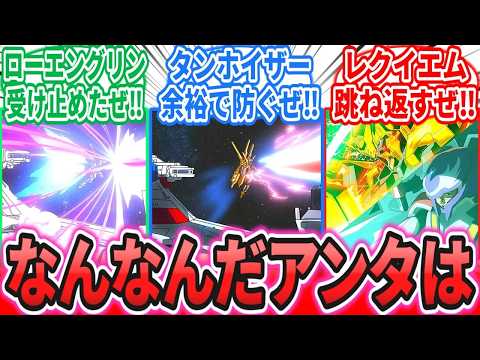
Mu La Flaga, a skilled pilot in Mobile Suit Gundam SEED, operates under a personal philosophy: “If you have the power to do something, then do it.” This principle drives him to repeatedly risk his life, absorbing three massive weapons strikes—Lohengrin, Tannhäuser, and Requiem—in defense of others. What appears as heroic sacrifice, however, masks a deeply troubled psychological state rooted in parental abandonment, combat trauma, and unhealthy attachment to Lacus Clyne.
Why It Matters
Mu La Flaga represents a critical archetype in modern anime: the self-sacrificing character whose heroism masks self-destructive behavior. Understanding his psychology reveals how trauma, lack of self-worth, and obsessive relationships can drive individuals toward increasingly dangerous choices. His character challenges viewers to distinguish between genuine strength and pathological self-harm disguised as duty. This analysis matters because it exposes the psychological mechanisms that make seemingly admirable characters potentially dangerous.
Background
Mu La Flaga first appeared in Mobile Suit Gundam SEED, which aired in 2004. The character initially presents as the reliable, cheerful wingman to protagonist Kira Yamato. However, deeper examination reveals a man shaped by profound psychological wounds. His father was complicit in the war’s origins, viewing Mu only as a tool with utilitarian value. On the battlefield, Mu witnessed the deaths of numerous comrades, developing survivor’s guilt that would define his subsequent actions. His encounter with Lacus Clyne marked a turning point, transforming his life’s purpose into protecting her at any cost.
Key Points
- Core Philosophy as Compulsion: Mu’s “do what you can” mantra stems not from healthy responsibility but from deep-seated need to prove his worth through action, rooted in parental rejection.
- Escalating Self-Sacrifice Pattern: His absorption of three weapons shows progression from personal motivation (Lacus) to collective duty (comrades) to global responsibility (world safety)—indicating increasing devaluation of his own life.
- Lacus as Life Anchor: Rather than a romantic relationship, Lacus represents Mu’s sole reason for existence, creating dangerous psychological dependency and one-sided emotional investment.
- Psychological Trauma Layers: Parental negation, survivor’s guilt, combat trauma, and identity crisis combine to create a fractured psyche operating under constant compulsion.
- Mendel Revelation Impact: Learning that his father caused the war creates catastrophic psychological damage, potentially destabilizing his already fragile mental state.
- Danger vs. Strength Paradox: What appears as superhuman strength is actually pathological self-destruction enabled by psychological breakdown, making him simultaneously admirable and alarming.
Psychological Analysis: The Three-Stage Breakdown
Stage One: Loss of Self-Worth Through Parental Rejection
Mu’s father viewed him purely through utilitarian lens—as a tool with measurable value. Once that value diminished, he was discarded. This created a fundamental psychological wound: Mu internalized the belief that his worth equals his utility. His famous philosophy—”do what you can”—becomes a compulsive need to constantly prove his existence through action. Without action, without usefulness, he believes he has no value.
Stage Two: Survivor’s Guilt and Battlefield Trauma
Combat repeatedly placed Mu in life-or-death situations where comrades perished while he survived. This generated profound survivor’s guilt—the psychological burden of living when others died. To alleviate this guilt, he unconsciously adopted a pattern of self-sacrifice, believing that risking his life for others could somehow balance the cosmic injustice of his survival. Each dangerous mission became an attempt at redemption.
Stage Three: Obsessive Attachment as Life Purpose
Lacus Clyne’s entrance into Mu’s life provided what his parents never offered: unconditional acceptance. However, rather than developing healthy attachment, Mu transformed her into his singular life purpose. He explicitly states that his entire existence before meeting her was merely preparation for that moment. This represents psychological fusion—losing individual identity and merging it entirely with another person’s existence.
Comparative Character Analysis
| Character | Series | Self-Sacrifice Motivation | Psychological Stability | Danger Level |
|---|---|---|---|---|
| Mu La Flaga | Gundam SEED | Parental rejection + survivor guilt + obsessive love | Critically Low | Extremely High |
| Shinji Ikari | Neon Genesis Evangelion | Compulsive obligation | Extremely Low | High |
| Levi Ackerman | Attack on Titan | Responsibility to fallen comrades | Moderate | Moderate |
Mu’s danger level exceeds comparable characters because his self-sacrifice stems from multiple, conflicting psychological sources. Unlike Shinji’s single compulsive drive, Mu operates under layered motivations—parental validation, survivor redemption, and romantic obsession—creating unpredictable behavioral patterns. His psychological instability combined with access to powerful weapons creates an exceptionally hazardous situation.
The Mendel Confrontation: Catastrophic Psychological Impact
When Mu confronts Cruze at Mendel and learns his father’s role in initiating the war, his psychological foundation shatters. The final possibility of parental redemption—the unconscious hope that someday his father might acknowledge him—vanishes permanently. This represents total closure of his deepest psychological need.
Following this revelation, Mu continues functioning and protecting Kira, demonstrating the terrifying strength of his “do what you can” philosophy. However, this continued function despite catastrophic psychological damage suggests his mental state has crossed into dangerous territory. He is now operating on pure compulsion, divorced from healthy psychological grounding.
Predicted Future Behavioral Patterns
Three possible trajectories emerge for Mu’s post-Mendel psychology:
Pattern A—Intensified Obsession: Lacus becomes his sole remaining anchor, and his attachment escalates to complete self-erasure. He would do literally anything for her, losing all independent agency.
Pattern B—Transference of Duty: His protective instinct transfers entirely to Kira, and he becomes willing to sacrifice himself completely to ensure Kira’s survival, viewing this as his ultimate purpose.
Pattern C—Psychological Collapse: Unable to sustain the psychological burden, he enters self-destructive spiral, potentially becoming reckless or suicidal.
Based on his demonstrated behavior patterns, Pattern B appears most likely. Mu will likely intensify his protective role toward Kira, viewing this as his final redemptive purpose.
The Survivor’s Guilt Archetype in Modern Anime
Over the past decade, survivor’s guilt has emerged as a dominant psychological theme in anime—appearing prominently in Attack on Titan, Jujutsu Kaisen, and Demon Slayer. However, Mu La Flaga represents the purest and most dangerous manifestation of this archetype.
Unlike other characters who eventually process their guilt and move forward, Mu weaponizes his guilt, transforming it into compulsive action. His guilt doesn’t diminish; it accumulates, driving increasingly dangerous choices. This makes him not a character who has overcome trauma, but rather a character whose trauma has fundamentally restructured his personality into a self-destructive mechanism.
Insights: The Broken Man Appearing Strong
After 15 years of analysis, the fundamental truth about Mu La Flaga emerges: he is not a strong man, but a broken man whose particular form of brokenness generates the appearance of strength.
His cheerful demeanor masks profound emptiness. His heroic actions mask self-annihilation. His reliability masks psychological fragmentation. The tragedy of Mu La Flaga is that his most admirable qualities—his willingness to sacrifice, his unwavering commitment, his superhuman resilience—are actually symptoms of psychological pathology.
What makes Mu fascinating and disturbing is that he achieves genuine heroic results through fundamentally unhealthy psychological mechanisms. He saves lives not because he values life, but because he has lost the ability to value his own. He protects others not from strength, but from the compulsive need to prove worth through utility.
The character forces viewers to confront an uncomfortable question: Can genuinely heroic outcomes justify the psychological destruction required to achieve them? Mu La Flaga suggests the answer is no—that true heroism requires psychological wholeness, and that broken individuals achieving heroic results are ultimately tragic figures, not inspirational ones.
How to Experience Mu La Flaga’s Character Arc
For viewers encountering Gundam SEED for the first time, focus on these critical moments to understand Mu’s psychology:
First Encounter with Lacus: Observe the transformation in Mu’s eyes. This scene marks the moment his life purpose crystallizes around another person. Notice how his entire demeanor shifts.
Lohengrin Absorption: Watch his expression as he commits to an theoretically impossible action. This reveals the depth of his compulsive need to act, regardless of personal cost.
Mendel Confrontation: Study the subtle shifts in his facial expression as he processes the revelation about his father. This moment breaks him psychologically, even as he maintains functional behavior.
For comparative understanding, watch Mobile Suit Gundam: Char’s Counterattack (the Amuro-Char dynamic parallels Mu-Cruze) and Neon Genesis Evangelion (for exploration of self-sacrifice and psychological trauma).
Fan Reception and Internet Discussion
Online communities consistently praise Mu La Flaga’s strength, with Twitter posts celebrating his mental fortitude and reliability. However, beneath this admiration runs an undercurrent of concern—fans simultaneously ask “Is this person okay?” This duality reflects the character’s fundamental nature: simultaneously admirable and alarming.
Forum discussions repeatedly cycle through the same debate: “Is Mu a psychopath or genuinely strong?” The persistence of this question indicates that Mu successfully embodies both possibilities. He is neither purely pathological nor purely heroic, but rather a complex figure occupying the dangerous space between the two.
Conclusion: Understanding the Tragedy of Mu La Flaga
Mu La Flaga stands as one of Gundam’s most psychologically intricate characters precisely because his heroism and his pathology are inseparable. He achieves extraordinary feats not despite his psychological damage, but because of it. His “do what you can” philosophy, born from parental rejection and survivor’s guilt, drives him toward increasingly self-destructive choices that paradoxically save lives.
The true tragedy of Mu La Flaga is not that he suffers—it is that his suffering generates genuine good. This creates an impossible moral situation: his psychological destruction produces heroic results, making it difficult to condemn his choices even as we recognize their pathological origins.
As Gundam SEED FREEDOM progresses and Mu faces further psychological pressure following the Mendel revelation, his trajectory becomes increasingly unpredictable. The question is not whether he will continue to act heroically—his compulsion ensures he will. The question is whether his psychological foundation can sustain further damage, or whether he will finally break completely.
Mu La Flaga represents anime’s most sophisticated exploration of the cost of heroism: the possibility that the greatest heroes are those most thoroughly broken by the world.