▶ Watch the original YouTube video
Since the release of Gundam SEED FREEDOM, the new mobile suit Dragoon Strike has sparked intense debate among fans, with many dismissing it as a simplified version of the Strike Freedom. However, a deeper analysis reveals that this assessment may overlook the machine’s distinct operational philosophy and design intent, suggesting instead that it represents a fundamentally different approach to mobile suit engineering within the SEED universe.
What Happened
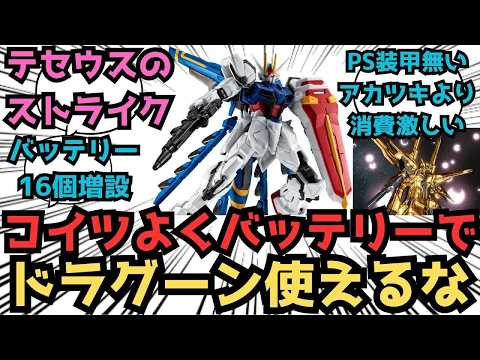
The release of Gundam SEED FREEDOM introduced the Dragoon Strike, a new mobile suit that has become the subject of considerable fan discussion online. The dominant narrative on social media platforms like Twitter, YouTube, and 5channel characterizes the Dragoon Strike as a “simplified version” of the Strike Freedom, primarily due to its streamlined weapon configuration and limited number of Dragoon units compared to its predecessor. This assessment has become the mainstream interpretation among the Gundam fan community, though alternative perspectives are beginning to emerge.
Why It Matters
The Dragoon Strike debate reflects broader patterns in how Gundam fans evaluate mobile suits and reveals important trends in recent Gundam film productions. Over the past several years, from Mobile Suit Gundam: Hathaway’s Flash (2019) to Gundam SEED FREEDOM (2023), new Gundam films have increasingly challenged the supremacy of previously established “ultimate” mobile suits. The Dragoon Strike exemplifies this trend by questioning whether raw firepower and weapon quantity truly define a mobile suit’s value. Understanding this machine’s actual role within the narrative helps illuminate the evolving philosophy of the Gundam franchise itself.
Background
The Strike Freedom has long been established as one of the most powerful mobile suits in the SEED universe, featuring an extensive arsenal and multiple Dragoon units. The original Mobile Suit Gundam SEED (2002-2003) and its sequel Mobile Suit Gundam SEED DESTINY (2004-2005) introduced the Strike Gundam and subsequent variants, establishing a lineage of increasingly advanced machines. The Strike Freedom represented the pinnacle of this evolution, combining overwhelming firepower with advanced autonomous weapon systems. The introduction of the Dragoon Strike in the new film presents a departure from this escalation pattern, featuring a more conservative design philosophy that has prompted reassessment of how mobile suit capability should be measured.
Key Points
- The Dragoon Strike features a simplified weapon configuration and fewer Dragoon units than the Strike Freedom, leading to widespread characterization as a “downgraded” variant
- The machine demonstrates exceptional design aesthetics and combat efficiency, suggesting a deliberate design philosophy rather than compromise
- Historical precedent exists for similar reassessment: the Strike Rouge was initially dismissed as inferior but later recognized as a distinct design with different operational goals
- Recent Gundam films show a trend of relativizing previously supreme mobile suits, suggesting a shift in franchise philosophy toward questioning spec-based hierarchies
- Fan discourse reveals underlying “spec supremacy” bias in how Gundam enthusiasts evaluate machines, potentially obscuring the actual design intent
- The Dragoon Strike may represent a design focused on practical deployment, pilot skill utilization, and tactical flexibility rather than raw power output
Timeline
- 2002-2003: Mobile Suit Gundam SEED introduces the Strike Gundam and establishes the foundation for SEED-era mobile suit design
- 2004-2005: Mobile Suit Gundam SEED DESTINY continues the lineage, introducing the Strike Freedom as the ultimate evolution
- 2006: Introduction of the Infinite Justice Gundam, which faced similar “inferior to Strike Freedom” criticism despite distinct design philosophy
- 2019: Mobile Suit Gundam: Hathaway’s Flash challenges the supremacy of the Nu Gundam with new mobile suit designs
- 2023: Gundam SEED FREEDOM releases, introducing the Dragoon Strike and reigniting debates about mobile suit evaluation methodology
Perspectives
The “Simplified Version” Interpretation: This mainstream view holds that the Dragoon Strike represents a downgrade from the Strike Freedom due to reduced firepower and fewer autonomous weapons. Proponents point to the machine’s streamlined weapon loadout as evidence of inferior capability, viewing it through a lens of raw specifications and destructive potential.
The “Distinct Design Philosophy” Interpretation: An emerging counterargument suggests the Dragoon Strike embodies a different operational concept entirely. Rather than attempting to match the Strike Freedom’s overwhelming force, this design prioritizes practical deployment, pilot skill utilization, and tactical flexibility. This perspective draws parallels to historical cases like the Strike Rouge, which was initially dismissed but later recognized as serving a distinct purpose within the SEED universe’s military doctrine.
The Quantity vs. Quality Debate: Some analysts propose that the Dragoon Strike’s limited Dragoon units may actually represent a more refined approach to autonomous weapon deployment, emphasizing precision and pilot control over sheer numerical superiority. This interpretation suggests that fewer, more effectively utilized systems could prove superior to greater quantities of less-coordinated weapons.
The Narrative Role Perspective: Additional analysis considers the Dragoon Strike’s position within the film’s story. Rather than serving as a direct competitor to the Strike Freedom, the machine may fulfill a specific narrative function that requires different capabilities and design priorities than raw power output.
Insights
The Dragoon Strike controversy illuminates a fundamental tension within Gundam fandom: the tendency to evaluate mobile suits primarily through specification sheets rather than operational context and design philosophy. This “spec supremacy” bias has deep roots in the franchise’s 40+ year history of publishing detailed technical specifications, conditioning fans to equate numerical superiority with actual capability.
However, the original Mobile Suit Gundam demonstrated that this equation is fundamentally flawed. The RX-78 Gundam was not dramatically superior to the Zaku in raw specifications, yet achieved dominance through pilot skill, tactical innovation, and operational flexibility. The Dragoon Strike appears designed to echo this principle, suggesting that the Gundam franchise is deliberately challenging fans to reconsider their evaluation methodology.
Recent Gundam films reveal a broader creative shift toward relativizing previously established “ultimate” mobile suits. This trend reflects a maturing approach to the franchise, moving beyond simple power escalation toward more nuanced exploration of how military technology actually functions. The Dragoon Strike serves as a focal point for this philosophical evolution, embodying the question: what truly makes a mobile suit valuable?
The machine’s elegant design and apparent combat effectiveness suggest that the production team intentionally created a mobile suit that would provoke exactly this kind of reassessment. Whether the Dragoon Strike ultimately proves to be a distinct design philosophy or merely a transitional design remains to be seen, but its existence has already accomplished its apparent goal: forcing the Gundam community to question its fundamental assumptions about mobile suit evaluation.
The emergence of more analytical commentary alongside the dominant “simplified version” narrative indicates that fan discourse is evolving. This healthy diversity of interpretation suggests that Gundam SEED FREEDOM has successfully created a machine that functions as both an engaging in-universe design and a meta-commentary on how fans engage with the franchise itself.