▶ Watch the original YouTube video
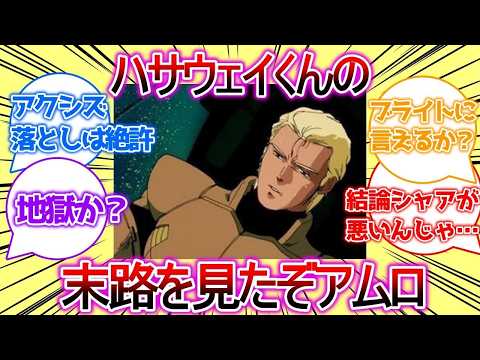
“I Saw Hathaway’s Fate, Amuro”: Fan Reactions and Deep Analysis of Gundam’s Most Pivotal Line
A single line from the 2021 film Mobile Suit Gundam: Hathaway’s Flash has captivated the Gundam fanbase worldwide: “I saw Hathaway’s fate, Amuro.” This cryptic statement, delivered in a universe where Amuro Ray has long since passed away, has sparked intense debate about Newtype abilities, temporal perception, and the nature of destiny itself across the Universal Century timeline.
- What Happened
- Why It Matters
- Background
- Key Points
- Timeline of Newtype Evolution in Gundam
- Perspectives
- Fan Reactions and Cultural Impact
- Production Context
- Comparative Analysis: Amuro’s Role Across Gundam Works
- The Evolution of Newtype Abilities
- Thematic Resonance: Idealism and Tragedy
- Insights and Broader Implications
- How to Experience Hathaway’s Flash Fully
- Conclusion: The Legacy of Amuro Ray
What Happened
In Mobile Suit Gundam: Hathaway’s Flash, set in Universal Century 105, a mysterious statement emerges: “I saw Hathaway’s fate, Amuro.” This line has become the focal point of extensive fan analysis and discussion. The statement is particularly striking because Amuro Ray, the protagonist of the original Mobile Suit Gundam series, is already deceased by this point in the timeline. Yet somehow, his consciousness or perception appears to transcend death itself, allowing him to witness the destiny of Hathaway Noah, the son of Bright Noah.
Hathaway, who appears as a young boy in Char’s Counterattack, has become the leader of an anti-Earth Federation organization called “Mafty Navue Erin” by the events of this film. His choice to pursue armed rebellion in pursuit of his ideals sets him on a collision course with fate—a path that Amuro, it seems, has already foreseen.
Why It Matters
This single line encapsulates over 40 years of Gundam storytelling and represents a fundamental evolution in how the series understands Newtype abilities. Rather than limiting Newtype powers to telepathy or precognition within a single timeline, this statement suggests that Amuro’s consciousness has transcended temporal boundaries entirely. For longtime fans, this recontextualizes every interaction between Amuro and other characters across the Universal Century, suggesting that his influence extends far beyond his physical lifetime.
The statement also raises profound philosophical questions about free will, destiny, and the role of enlightened beings in shaping human history. If Amuro could see Hathaway’s fate, why couldn’t he prevent it? This paradox has become central to fan discussions about the nature of Newtype consciousness and the limits of knowledge.
Background
Amuro Ray is the protagonist of the original Mobile Suit Gundam (1979) and has appeared throughout the Universal Century timeline. His final major appearance was in Char’s Counterattack (1988), where he confronted Char Aznable in a climactic battle. By the time of Hathaway’s Flash, set 105 years into the Universal Century, Amuro has been deceased for decades.
Hathaway Noah is the son of Bright Noah, a supporting character from the original series. In Char’s Counterattack, Hathaway appears as a young boy. By Hathaway’s Flash, he has matured into a revolutionary leader willing to use violence to achieve his vision of a better world—a path that mirrors Amuro’s own experiences with war and idealism.
The Universal Century is Gundam’s primary continuity, spanning from U.C. 0001 to U.C. 200+. Throughout this timeline, Newtype abilities—a form of human evolution granting enhanced perception and telepathic powers—have been central to the narrative. Previous works like Mobile Suit Gundam UC and Mobile Suit Gundam F91 have explored how Newtype powers might extend beyond conventional space-time perception.
Key Points
- The line “I saw Hathaway’s fate, Amuro” appears in a film where Amuro Ray is already deceased, suggesting Newtype consciousness transcends death and time
- Hathaway’s character arc mirrors Amuro’s own struggle between idealism and the brutal realities of warfare
- The statement implies that Newtype abilities have evolved from telepathy to temporal perception across the Universal Century
- Fan reactions have been overwhelmingly emotional, with viewers citing this as a pivotal moment that recontextualizes the entire Gundam saga
- The line raises philosophical questions about determinism, free will, and the nature of enlightened consciousness
- Director Tomino Yoshiyuki and screenwriter Isao Suzuki crafted this moment as the culmination of decades of character development for Amuro
Timeline of Newtype Evolution in Gundam
- U.C. 0079 (Original Mobile Suit Gundam): Newtype abilities first emerge as enhanced intuition and limited telepathy during combat
- U.C. 0088 (Gundam ZZ): Newtype powers expand to include sensing emotions and intentions across greater distances
- U.C. 0096 (Mobile Suit Gundam UC): Newtypes demonstrate ability to perceive past consciousness and historical echoes
- U.C. 0105 (Hathaway’s Flash): Newtype consciousness appears capable of transcending death and perceiving future events
Perspectives
The Literal Interpretation: Some fans argue that Amuro’s statement refers to a direct, physical observation—that through some mechanism (perhaps a Newtype network or psychic echo), Amuro witnessed Hathaway’s final moments before they occurred.
The Metaphysical Interpretation: Others suggest that Amuro’s consciousness, having evolved beyond physical constraints, exists in a state where past, present, and future are simultaneously perceptible. In this view, “seeing” Hathaway’s fate is not a supernatural event but rather the natural culmination of Newtype evolution.
The Narrative Interpretation: Some analysts propose that the line represents the voice of the Universal Century itself—that Amuro has become so integrated with the timeline that he speaks as its conscience, observing and commenting on the choices of those who follow.
The Thematic Interpretation: Many viewers see the line as expressing Amuro’s profound sadness and helplessness. He can perceive Hathaway’s tragic path but cannot prevent it, much like a parent watching a child repeat their mistakes. This reading emphasizes the emotional weight of knowledge without the power to change outcomes.
Fan Reactions and Cultural Impact
Social media platforms erupted with emotional responses following the film’s release. On Twitter, #HathawaysFate trended globally, with fans sharing their interpretations and emotional reactions. Common themes included:
- “This single line made me want to rewatch the entire Gundam series”
- “Amuro has transcended being a character—he’s become the conscience of the Universal Century”
- “The weight of knowing but being unable to prevent tragedy”
- “This is the ultimate expression of Newtype evolution”
On discussion forums and YouTube, viewers reported watching the film multiple times to fully grasp the implications of this statement. Many noted that the line’s meaning deepened with each viewing, revealing new layers of interpretation.
Production Context
Director Yoshiyuki Tomino, who created the original Gundam series in 1979, has consistently portrayed Amuro as more than a simple mobile suit pilot. In previous interviews, Tomino described Amuro as “a symbol of humanity’s future.” The line in Hathaway’s Flash appears to be the culmination of this long-standing vision.
Screenwriter Isao Suzuki, known for his psychological depth in character writing, crafted the phrase “I saw” rather than “I know” or “I predict.” This choice emphasizes direct perception over intellectual deduction, suggesting a form of consciousness that transcends conventional understanding.
Comparative Analysis: Amuro’s Role Across Gundam Works
| Work | Character | How Fate Is Portrayed | Perspective |
|---|---|---|---|
| Char’s Counterattack | Char Aznable | Direct confrontation and physical death | Amuro witnesses in real-time |
| Mobile Suit Gundam UC | Banagher Links | Newtype awakening and spiritual evolution | Multiple perspectives, including Newtype perception |
| Hathaway’s Flash | Hathaway Noah | Idealism colliding with reality and consequence | Amuro’s transcendent, post-mortem perception |
The Evolution of Newtype Abilities
Throughout the Universal Century, Newtype powers have progressively expanded in scope. In the original series, Newtypes could sense danger and read the thoughts of those nearby. By Gundam UC, Newtypes demonstrated the ability to perceive historical consciousness—the accumulated thoughts and emotions of the past.
Hathaway’s Flash appears to extend this further. If Amuro can perceive Hathaway’s fate despite being deceased, it suggests that Newtype consciousness operates across temporal dimensions, not merely spatial ones. This represents a fundamental shift in how the series understands human evolution and enlightenment.
This progression mirrors philosophical concepts of enlightenment in various traditions—the idea that higher consciousness transcends the limitations of individual existence and perceives reality from a more comprehensive perspective.
Thematic Resonance: Idealism and Tragedy
Hathaway’s choice to lead an armed rebellion mirrors Amuro’s own journey. Both men are driven by idealism—a desire to create a better world. Yet both discover that idealism, when pursued through violence, carries profound costs. Amuro’s statement suggests that he has watched Hathaway walk the same painful path he once traveled.
The tragedy of the line lies in its implication of helplessness. Amuro cannot prevent Hathaway’s fate because Hathaway must choose his own path. Knowledge of destiny does not grant the power to alter it—a theme that resonates across literature and philosophy.
Insights and Broader Implications
This single line represents a watershed moment in Gundam storytelling. It suggests that the series is moving beyond traditional narrative structures toward something more metaphysical—a meditation on consciousness, time, and the nature of human destiny.
For longtime fans, the statement recontextualizes their entire relationship with the Gundam universe. If Amuro’s consciousness persists and perceives beyond death, then his influence extends throughout the entire Universal Century. Every conflict, every choice, every tragedy might be observed by this transcendent consciousness.
The line also raises questions about the future direction of the Gundam franchise. If Newtype evolution continues along this trajectory, what will the next stage of human consciousness look like? Will future Newtypes transcend individual identity entirely, becoming something closer to a collective consciousness?
Ultimately, “I saw Hathaway’s fate, Amuro” is a statement about the burden of knowledge, the limits of power, and the tragic beauty of human choice. It suggests that enlightenment does not grant control over destiny but rather the painful clarity to perceive it.
How to Experience Hathaway’s Flash Fully
For viewers new to this film, watching Char’s Counterattack first is strongly recommended. Understanding Amuro’s final confrontation with Char provides essential context for appreciating his evolved consciousness in Hathaway’s Flash.
Second, pay close attention to Amuro’s absence throughout the film. Though he does not appear physically, his presence permeates the narrative. His perspective—his judgment, his sorrow, his understanding—shapes the entire story.
Third, consider viewing Mobile Suit Gundam UC to understand how Newtype abilities have evolved across the Universal Century. The connections between these works will deepen your appreciation of the film’s thematic resonance.
Finally, watch the film multiple times. The first viewing may feel emotionally overwhelming. Subsequent viewings reveal new layers of meaning and nuance in every scene.
Conclusion: The Legacy of Amuro Ray
Amuro Ray stands as one of anime’s most complex and enduring characters. From his introduction as a reluctant teenage pilot to his evolution into a symbol of human consciousness itself, his journey spans over 40 years of storytelling.
“I saw Hathaway’s fate, Amuro” represents the culmination of this journey. It is simultaneously a statement of profound sadness, philosophical insight, and transcendent understanding. It suggests that Amuro has evolved beyond the limitations of individual existence to become something closer to the conscience of the Universal Century itself.
For the Gundam franchise, this line opens new narrative possibilities. It raises questions about the nature of consciousness, the limits of free will, and humanity’s ultimate destiny. Whether future works will explore these themes remains to be seen, but this moment has already secured its place as one of anime’s most significant and thought-provoking statements.