▶ Watch the original YouTube video
Nijisanji Boys’ Idol Festival Predictions: VTuber Community Debates Potential Lineup
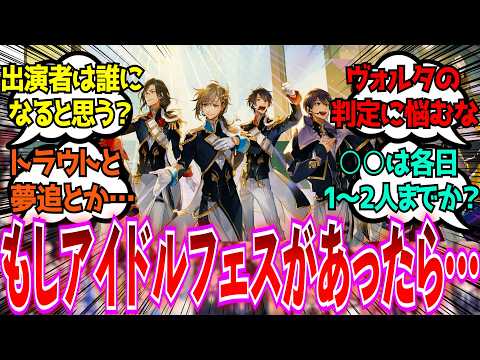
Following the success of Nijisanji’s Girls’ Idol Festival, the VTuber community is actively speculating about a potential boys’ edition. A recent video compilation reveals fan discussions about which male streamers would be ideal candidates, based on dance ability, idol activity experience, and genuine commitment to the project.
What Happened
A video compilation has surfaced featuring VTuber community members discussing potential lineups for a hypothetical Nijisanji Boys’ Idol Festival. The discussion centers on which male streamers from the agency would be suitable candidates, with fans analyzing factors such as dance proficiency, prior idol activity, and personal enthusiasm for the project. The conversation reflects broader industry trends and fan expectations for large-scale idol events within the VTuber space.
Why It Matters
The VTuber industry has undergone significant evolution over the past five years, transitioning from purely online content to large-scale live events and real-world performances. Idol festivals represent a major milestone in this maturation process, signaling the industry’s shift toward structured entertainment formats similar to traditional idol culture. The community’s serious engagement with lineup predictions demonstrates how invested fans have become in VTuber idol activities, while also revealing important insights about individual streamer identities and career trajectories within the agency.
Background
Nijisanji’s Girls’ Idol Festival, held in 2023, generated significant industry attention and established the idol festival format as a viable event type within VTuber entertainment. The success of this event naturally led to speculation about a male equivalent. Unlike traditional idol industries where participation is mandatory, the VTuber space presents unique considerations: some streamers actively embrace idol activities, while others deliberately distance themselves from the idol label to maintain their distinct streaming identities. This diversity of approaches creates complex selection criteria for potential events.
The VTuber industry’s evolution reflects broader entertainment trends observed in anime and gaming communities over the past 15 years. The transition from individual performances to unit-based activities mirrors similar developments in franchises like The Idolmaster and Love Live, where group dynamics and character synergy became central to audience engagement.
Key Points
- Spreaw’s Likely Participation: The established idol unit is widely expected to headline the festival, contingent on 3D model availability. Their existing idol-focused identity makes them natural candidates.
- Volta as the Performance Benchmark: Community discussion identifies Volta’s dance ability as a key reference point for evaluating other potential participants, establishing an implicit standard for selection.
- Unit-Based Selection Strategy: Drawing from the Girls’ Idol Festival’s 16-member format, predictions suggest a similar scale for the boys’ edition, with emphasis on unit cohesion rather than individual talent alone.
- Commitment Over Technical Perfection: Fan consensus emphasizes that genuine enthusiasm and full engagement matter more than flawless dance execution, valuing performers who commit wholeheartedly to the project.
- Respect for Individual Boundaries: Some streamers, notably Kenmochi, have explicitly stated they do not identify as idols. Community discussion acknowledges the importance of respecting these preferences rather than forcing participation.
- Live Experience as a Qualification Factor: Prior participation in live performances and streaming experience significantly influence community predictions about suitability for the festival.
Timeline
- 2023: Nijisanji Girls’ Idol Festival launches, establishing the idol festival format within the agency.
- Post-2023: Community begins speculating about a potential boys’ edition based on the girls’ festival’s success.
- Present: Video compilation captures active fan discussion and predictions about potential male streamer participants.
Perspectives
Community Perspective: Fans engage in sophisticated analysis of potential participants, considering multiple factors beyond simple popularity. Discussions reveal nuanced understanding of each streamer’s identity, capabilities, and career trajectory. The community demonstrates awareness that idol festival participation represents a significant commitment and should align with individual streamer preferences.
Industry Perspective: From a business standpoint, idol festivals serve multiple strategic purposes: they provide performance opportunities for established units like Spreaw, offer visibility and experience to developing talent, and attract female fans—a demographic showing increased engagement with male VTuber content. The format also allows the agency to showcase diverse streamer personalities within a structured entertainment context.
Individual Streamer Perspective: Not all streamers embrace idol categorization. Some maintain distinct identities as musicians, comedians, or gaming-focused content creators. The community recognizes that forced participation could undermine both individual streamer authenticity and overall event quality.
Proposed Selection Framework
Core Tier (5-6 Members): Spreaw members and Volta represent the foundation. These streamers have already established idol activity as central to their identity and possess the experience necessary for headlining roles.
Primary Candidates (5-7 Members): Streamers like Trout, Kanda, and Ouji demonstrate both idol activity enthusiasm and meaningful live performance experience. These members could credibly carry significant portions of the festival.
Opportunity Tier (3-5 Members): Streamers with limited live experience but demonstrated potential could benefit from festival participation as a platform for growth. This tier represents the agency’s investment in developing emerging talent.
Insights
The VTuber community’s serious engagement with idol festival speculation reflects the industry’s transition into a mature entertainment sector. The quality of fan discussion—analyzing dance ability, prior experience, unit dynamics, and individual preferences—demonstrates that VTuber audiences have developed sophisticated frameworks for evaluating content and events.
Critically, community consensus prioritizes authenticity and individual choice over comprehensive participation. Rather than expecting all male streamers to participate, fans recognize that selective participation based on genuine interest produces better outcomes. This perspective suggests the VTuber industry is developing its own distinct approach to idol entertainment, one that respects performer autonomy while maintaining entertainment quality.
The emphasis on commitment over technical perfection aligns with broader entertainment trends where audience connection to performer authenticity outweighs polished execution. For a boys’ idol festival to succeed, the key factor would be whether participants genuinely embrace the project, not whether they achieve flawless choreography.
The discussion also reveals how VTuber idol activities differ fundamentally from traditional idol industries. Age becomes irrelevant, individual identity remains paramount, and participation remains voluntary. These distinctions position VTuber idol events as a distinct entertainment category rather than a direct replication of existing idol formats.
If a Nijisanji Boys’ Idol Festival materializes, it would represent another significant milestone in VTuber industry evolution—evidence that the sector has matured from individual streaming performances to large-scale, professionally-produced entertainment events comparable to traditional media industries.