▶ Watch the original YouTube video
Disney’s Wish Faces Backlash Over One-Dimensional Villain Portrayal: A 15-Year Analysis of Disney’s Moral Decline
Disney’s centennial film Wish has drawn significant criticism for depicting the Rosas citizens as unambiguously evil antagonists without clear motivation or complexity. This criticism reveals a troubling shift in Disney’s approach to character development and moral storytelling—a departure from the studio’s 15-year tradition of creating nuanced, psychologically complex villains.
What Happened
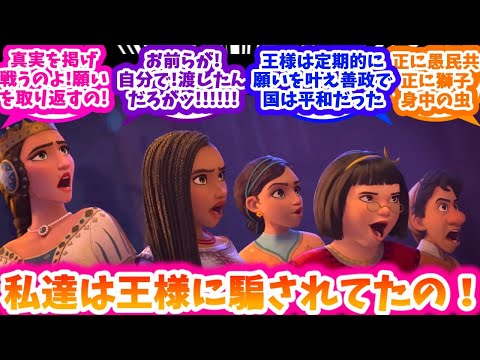
Disney’s 2023 centennial film Wish has become the subject of widespread viewer criticism, not for its animation or storytelling, but specifically for how it portrays the Rosas citizens. In the film, the citizens are depicted as obstacles to protagonist Asha’s wishes—consistently opposing her goals without any meaningful explanation or character development. Unlike previous Disney antagonists, the Rosas citizens lack clear motivation, personal conflict, or psychological depth. They function purely as plot devices rather than fully realized characters.
Why It Matters
This criticism signals a fundamental shift in Disney’s creative philosophy. For over a decade, Disney built its reputation on crafting morally complex villains who possessed understandable motivations and psychological depth. The Rosas citizens represent an abandonment of this principle in favor of simplistic, binary morality. This matters because it reflects broader concerns about whether Disney is sacrificing narrative sophistication for perceived accessibility—a trade-off that may ultimately alienate the studio’s most devoted fans who value thematic complexity.
Background
Disney’s approach to villain characterization evolved significantly between 2009 and 2023. The 2010 film Tangled introduced Mother Gothel, a villain motivated by vanity and the desire to preserve youth—a character whose actions, while reprehensible, stemmed from comprehensible psychological needs. Frozen (2013) presented Prince Hans as a character whose villainy emerged from feelings of inadequacy and rejection, making his betrayal narratively earned rather than arbitrary. Moana (2016) went further, revealing that Te Kā—initially presented as a destructive force—was actually a victim of exploitation, transforming the audience’s understanding of her motivations entirely.
This progression demonstrated Disney’s commitment to the principle that even antagonists deserve psychological complexity. However, Wish (2023) represents a departure from this established pattern. The Rosas citizens’ opposition to Asha’s wishes is never adequately explained within the narrative. Viewers are left uncertain whether they oppose her for ideological reasons, fear of change, self-interest, or some other motivation. This ambiguity is not intentional complexity—it is narrative incompleteness.
Key Points
- The Rosas citizens in Wish are portrayed as unambiguously antagonistic without clear motivation or character development
- Previous Disney films (Tangled, Frozen, Moana) established a tradition of depicting villains with understandable psychological motivations and internal conflict
- Wish represents a shift toward “moral clarity” at the expense of narrative complexity, potentially reflecting Disney’s heightened concern with social responsibility messaging
- Viewer criticism centers on the perception that Wish abandons Disney’s core principle of depicting human complexity in favor of simplistic good-versus-evil framing
- Disney’s animation leadership has publicly emphasized “socially responsible storytelling” since 2019, which may have inadvertently encouraged the suppression of morally ambiguous characters
- Fan communities on Twitter, YouTube, and Reddit consistently noted that Wish feels “un-Disney-like” in its moral simplicity
Timeline
- 2009: The Princess and the Frog introduces a new era of Disney villain complexity
- 2010: Tangled presents Mother Gothel as a psychologically motivated antagonist
- 2013: Frozen reveals Prince Hans’s inferiority complex as the root of his villainy
- 2016: Moana recontextualizes Te Kā as a victim, deepening audience empathy
- 2019-2021: Disney animation leadership publicly commits to “socially responsible storytelling”
- 2023: Wish releases with one-dimensional Rosas citizens, sparking widespread criticism
Perspectives
Critic Perspective: Viewers and analysts argue that Wish represents a troubling regression in Disney’s storytelling sophistication. They contend that the studio has prioritized moral clarity over narrative depth, sacrificing the psychological complexity that made previous Disney villains memorable and thematically resonant. This perspective emphasizes that depicting a villain’s motivations does not justify their actions—it simply acknowledges human complexity.
Production Perspective (Inferred): Disney’s creative leadership likely intended to create a more accessible narrative with unambiguous moral stakes. The shift toward emphasizing social responsibility in storytelling may have led producers to view morally gray characters as potentially problematic. This approach prioritizes clarity of message over psychological nuance, assuming that broader audiences prefer straightforward narratives.
Fan Community Perspective: Across social media platforms, Disney enthusiasts expressed disappointment that Wish diverged from the studio’s established tradition. Comments frequently referenced the phrase “this doesn’t feel like Disney,” suggesting that fans view moral complexity as central to the brand’s identity. This perspective values the studio’s historical commitment to depicting “light and shadow” in all characters.
Comparative Analysis: Why Moana Succeeded Where Wish Failed
The contrast between Moana (2016) and Wish (2023) illuminates the specific creative choices that generate viewer criticism. Both films feature ocean-based adventures with supernatural antagonists. However, Moana provides Te Kā with a complete backstory: she was once a goddess of creation, exploited by humans, whose trauma transformed her into a destructive force. This explanation allows viewers to understand her actions as a response to genuine victimization rather than arbitrary malevolence.
Wish offers no equivalent context for the Rosas citizens. The film never explains whether they fear change, prioritize stability, harbor selfish interests, or operate under different moral frameworks. This absence of explanation is the core of viewer frustration. Moana demonstrates that Disney can address serious themes—exploitation, environmental destruction, cultural responsibility—while maintaining character complexity. Wish suggests the studio has concluded that such complexity is incompatible with clear messaging.
Industry Context: Disney’s Stated Creative Shift
Between 2019 and 2021, Disney’s animation division leadership publicly articulated a commitment to “socially responsible storytelling.” While this intention appears constructive, it may have inadvertently created pressure to eliminate morally ambiguous characters. The logic appears to be: if a character’s motivations are complex or sympathetic, audiences might perceive the narrative as endorsing problematic behavior.
However, this reasoning conflates understanding with endorsement. A character can be psychologically comprehensible and morally wrong simultaneously. Depicting this distinction is precisely what sophisticated storytelling accomplishes. By eliminating complexity to ensure moral clarity, Disney may have sacrificed the very quality that elevated its previous work.
Villain Comparison Table
| Film | Antagonist | Motivation Clarity | Psychological Complexity | Viewer Empathy |
|---|---|---|---|---|
| Tangled (2010) | Mother Gothel | Very High | High | Moderate |
| Frozen (2013) | Prince Hans | High | Very High | High |
| Moana (2016) | Te Kā/Te Fiti | High | Very High | Very High |
| Wish (2023) | Rosas Citizens | Low | Low | Low |
Social Media Response Analysis
Twitter: Users consistently noted that “the Rosas citizens are portrayed too one-sidedly as villains” and questioned why their opposition to Asha’s wishes was never adequately explained. The phrase “this doesn’t feel like Disney” appeared repeatedly across discussions.
YouTube Comments: Viewers frequently compared Wish to previous Disney films, explicitly noting the absence of complexity. Many commenters referenced specific examples from Tangled, Frozen, and Moana to illustrate how those films provided villains with understandable motivations.
Reddit: In Disney-focused communities, detailed analysis emerged suggesting that “the production prioritized clarity over depth, resulting in a loss of narrative sophistication.” Users theorized that corporate risk-aversion drove the creative decision to eliminate moral ambiguity.
Insights
The Wish criticism reveals a fundamental tension in contemporary entertainment production: the desire to communicate clear moral messages versus the artistic value of depicting human complexity. Disney built its reputation on the principle that all characters—heroes and villains alike—possess psychological depth and understandable motivations. This principle, articulated by Walt Disney himself, rested on the belief that “all humans contain both light and shadow.”
The Rosas citizens represent a departure from this foundational philosophy. By eliminating their complexity, Wish sacrifices narrative sophistication in pursuit of moral unambiguity. Whether this trade-off was intentional or accidental, it signals a concerning direction for the studio.
The broader implication is that Disney may be responding to perceived cultural pressure by simplifying its moral frameworks. However, this approach risks alienating the audience segment most invested in Disney’s work—viewers who value thematic complexity and psychological realism. Ironically, the studio’s attempt to broaden appeal through simplification may ultimately narrow its audience by abandoning the sophistication that distinguished it from competitors.
For Disney’s future, the challenge is to balance social responsibility with narrative complexity. Moana demonstrates this is achievable: the film addresses serious themes of exploitation and environmental destruction while maintaining character depth. Wish suggests the studio has concluded this balance is impossible, opting instead for moral clarity at the expense of artistic nuance. Whether this represents a permanent creative direction or a temporary misstep remains to be seen.