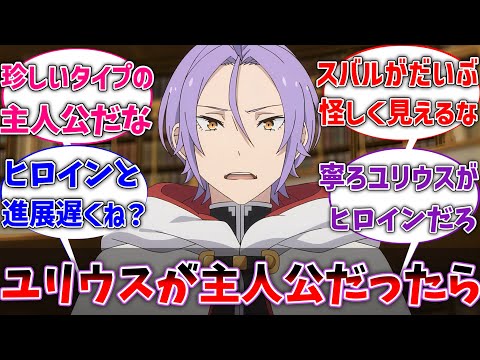
▶ Watch the original YouTube video
What If Julius Were the Protagonist of Re:Zero? A Deep Analysis of Fan Theories
A viral fan theory has sparked widespread discussion about how Re:Zero would fundamentally change if Julius, rather than Subaru, were the main character. Drawing on 15 years of anime analysis, this article explores why this hypothetical scenario captivates audiences and what it reveals about the series’ narrative structure.
What Happened
Online anime communities have been actively discussing a thought experiment: what if Julius Jukulius, the noble knight character in Re:Zero, were reimagined as the protagonist instead of Subaru? This hypothetical scenario has generated substantial fan engagement, with viewers exploring how the narrative, character relationships, and thematic elements would shift under Julius’s perspective. The discussion extends beyond simple role-swapping, examining how Julius’s worldview would reframe other characters, particularly Subaru, whose mysterious abilities would appear far more sinister from an outside perspective.
Why It Matters
This fan theory reveals important truths about Re:Zero’s narrative construction and character design. The fact that such a compelling alternative story emerges from changing the protagonist demonstrates the series’ structural depth. It also highlights how anime storytelling relies heavily on perspective—the same events can generate entirely different emotional and thematic resonance depending on whose eyes we view them through. For creators and fans alike, this discussion illustrates why Re:Zero has maintained cultural relevance years after its initial broadcast, and why certain supporting characters can rival the appeal of the official protagonist.
Background
Re:Zero from the Beginning (Re:ゼロから始める異世界生活) premiered in 2016 and became a landmark series in the isekai genre. The story follows Subaru Natsuki, an ordinary Japanese teenager transported to a fantasy world who discovers he possesses the ability to rewind time. Julius Jukulius is a skilled knight and member of the Kingdom’s military, initially positioned as a rival to Subaru but gradually revealed to be a complex character with significant depth. The series’ original creator, Tappei Nagatsuki, has stated in interviews that the core appeal lies in experiencing the fantasy world through Subaru’s perspective as an outsider, which establishes why Subaru remains the narrative anchor. However, the supporting cast—particularly Julius and Anastasia—possess sufficient character development and thematic weight to sustain alternative narrative frameworks.
Key Points
- Subaru’s Mystery Amplified: From Julius’s perspective, Subaru’s inexplicable knowledge of future events and sudden behavioral shifts would appear deeply suspicious rather than explicable, transforming him into an enigmatic threat rather than a sympathetic protagonist.
- Anastasia’s Prominence: Julius’s protective feelings toward Anastasia would become central to the narrative. The series hints at Julius viewing her as fragile yet precious, a dynamic that would reshape the entire romantic subplot structure.
- The “Perfect Knight” Paradox: Julius is portrayed as exceptionally capable but lacks a defining weakness or unique strength. As protagonist, his internal struggles with perfectionism and isolation would become the emotional core of the story.
- Perspective Shift Creates New Tension: Multiple fan responses highlight how Julius would interpret Subaru’s actions as those of a madman or conspirator, similar to how characters in Steins;Gate perceive the protagonist’s seemingly irrational behavior.
- Character Relationship Inversion: Subaru would transition from protagonist to supporting character, potentially becoming a “heroine-like” figure who supports Julius during critical moments, inverting traditional narrative roles.
- Thematic Reframing: The story would shift from exploring an outsider’s growth in a new world to examining duty, protection, and the burden of competence within an established social hierarchy.
Timeline
- 2016: Re:Zero original anime broadcast; viewers first encounter Julius as a supporting character.
- 2019: Release of Re:Zero Memory Snow and The Frozen Bond (氷結の絆), an external narrative that provides Julius-focused perspective scenes, hinting at his potential as a protagonist.
- 2021 onwards: Fan communities begin systematic “protagonist swap” thought experiments across multiple anime series, with Re:Zero becoming a primary focus due to its narrative structure.
- Recent: The Julius-as-protagonist theory gains viral traction on social media, with detailed fan analyses examining how the narrative would fundamentally restructure.
Perspectives
Fan Group 1: Relationship-Focused Interpretation This segment emphasizes Julius and Anastasia’s dynamic. They cite the series’ description of Julius viewing Anastasia as “so fragile he fears she might break if held,” arguing this emotional depth deserves narrative centrality. This group seeks deeper exploration of their bond beyond what the main narrative provides.
Fan Group 2: Narrative Perspective Analysis These viewers focus on how Julius would interpret Subaru’s behavior. They highlight scenes where Subaru suddenly becomes pale and implements countermeasures for future events—actions that appear rational from the audience’s omniscient viewpoint but would seem completely irrational and threatening from Julius’s limited perspective. This group appreciates the structural irony of perspective-dependent interpretation.
Fan Group 3: Character Complexity Advocates This group emphasizes how Julius’s apparent perfection masks internal struggles. They argue that repositioning him as protagonist would expose his vulnerabilities and create a more nuanced exploration of what it means to be exceptionally capable yet fundamentally human. They draw parallels to characters like Levi from Attack on Titan, whose competence masks deeper emotional complexity.
Comparative Analysis with Other Anime
Fate/Zero Parallel: The character Lancer occupies a similar narrative position—a skilled warrior relegated to supporting status despite possessing sufficient depth for protagonist-level storytelling. A Lancer-centered retelling would fundamentally alter the series’ emotional landscape, much as a Julius-centered Re:Zero would.
Code Geass Comparison: Suzaku Kururugi functions as a quasi-protagonist whose perspective on Lelouch mirrors how Julius might view Subaru. Both see the official protagonist as suspicious and incomprehensible, creating dramatic irony that could sustain an entire narrative.
Attack on Titan Precedent: An Armin or Levi-centered version of Attack on Titan would present Eren as an uncontrollable force rather than a sympathetic hero—precisely the transformation that would occur in a Julius-centered Re:Zero.
Production and Creative Insights
Creator Tappei Nagatsuki deliberately constructed Re:Zero around Subaru’s perspective to capture the appeal of isekai narratives—the fantasy world experienced through an outsider’s eyes. However, this creative choice inadvertently granted supporting characters like Julius sufficient depth and agency that alternative narrative frameworks become viable. The 2019 external narrative The Frozen Bond demonstrates that the production team recognizes Julius’s potential, allocating significant screen time and character development to him.
Voice actor Konishi Katsuyuki, who performs Julius, is known for portraying psychologically complex characters (Reiner Braun in Attack on Titan, Gojo Satoru in Jujutsu Kaisen). His performance subtly conveys internal conflict beneath Julius’s composed exterior, suggesting the character was designed with greater depth than his supporting role fully utilizes.
Hypothetical Narrative Structure
Act One: Origins A Julius-centered narrative would likely begin with his backstory—his meeting with Reinhardt, his contract with spirits, and the “blank period” before encountering Anastasia. This structure parallels how Fate/Zero and Attack on Titan reveal their supporting characters’ formative experiences.
Act Two: The Subaru Problem The central conflict would revolve around Julius’s inability to comprehend Subaru. His inexplicable knowledge, emotional volatility, and apparent foreknowledge of events would create mounting tension. Simultaneously, Julius’s relationship with Anastasia would deepen, revealing emotional dimensions absent from the original narrative.
Act Three: Revelation and Reconciliation The climax would involve Julius discovering Subaru’s true nature and abilities. This revelation would force Julius to reassess his entire understanding of events, potentially transforming Subaru from antagonist to ally. The resolution would emphasize how perspective shapes interpretation and that understanding requires transcending initial assumptions.
Insights
The Julius-as-protagonist thought experiment reveals that Re:Zero’s greatest achievement may not be the creation of Subaru, but rather the construction of a supporting cast so compelling that alternative narratives become not merely possible but genuinely appealing. This demonstrates sophisticated character design and world-building that transcends single-perspective storytelling.
The theory also illuminates a fundamental principle of narrative structure: the same events generate entirely different meanings depending on perspective. Subaru’s time-rewinding ability appears heroic from his viewpoint but would appear deeply sinister from Julius’s limited perspective. This relativity of interpretation suggests that Re:Zero’s narrative depth extends far beyond what any single viewing angle can capture.
Furthermore, the fan engagement with this theory indicates audience sophistication. Viewers are no longer passively consuming narratives but actively theorizing about structural alternatives, demonstrating how modern anime fandom engages in genuine literary analysis.
Recommendations for Deeper Engagement
First Viewing: Experience Re:Zero through Subaru’s perspective to establish the foundational narrative and emotional beats.
Second Viewing: Focus specifically on Julius’s scenes, observing his expressions, dialogue, and reactions to other characters. Notice how his apparent composure masks deeper reactions.
External Content: Watch The Frozen Bond, which emphasizes Julius’s perspective and provides additional context for his character motivations.
Source Material: Read Tappei Nagatsuki’s original light novels, which contain internal monologues and character perspectives not fully represented in the anime adaptation.
Comparative Study: Examine Fate/Zero, Attack on Titan, and Code Geass to understand how different anime handle supporting character depth and perspective-dependent storytelling.