▶ Watch the original YouTube video
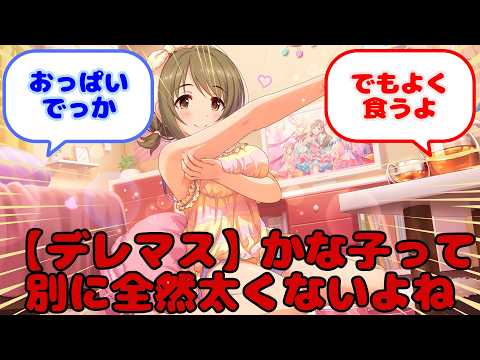
Is Kanako Really That Heavy? How Cinderella Girls Fans Are Reinterpreting a Character Through 13 Years of Evolution
A growing segment of The Idolmaster: Cinderella Girls fans is challenging the long-held perception that character Kanako is overweight, arguing that official artwork and character development suggest a more nuanced interpretation. This phenomenon reveals deeper patterns about fan community maturation, character design flexibility, and how beloved characters evolve through collective fan engagement over time.
What Happened
Within the Cinderella Girls fanbase, a notable discussion has emerged questioning whether Kanako, a character traditionally characterized as “chubby” or “plump,” actually fits that description. Fans have begun examining years of official illustrations and character stories, pointing out that different artists have rendered her body type inconsistently, and that her character development suggests a more complex identity than a single physical stereotype.
This reinterpretation has gained traction on social media platforms including Twitter, YouTube, and forum communities, with the hashtag #KanakoIsNotFat trending multiple times. The discussion represents a broader shift in how the fanbase engages with character interpretation and design.
Why It Matters
This phenomenon illustrates how fan communities mature and deepen their understanding of fictional characters over extended periods. Rather than accepting initial character descriptions at face value, experienced fans are conducting detailed visual and narrative analysis, demonstrating sophisticated media literacy. The discussion also highlights the gap between character “settings” (official descriptions) and character “expression” (how artists actually depict them)—a distinction that matters significantly in games featuring multiple illustrators.
More broadly, this reflects industry-wide trends toward depicting characters with greater dimensional complexity rather than relying on single defining traits. The Kanako reinterpretation mirrors similar phenomena in other franchises, suggesting this is a meaningful pattern in how fan communities engage with serialized media.
Background
The Idolmaster: Cinderella Girls launched in 2011 and has operated for 13 years with continuous character development, story events, and artwork from numerous illustrators. Kanako was introduced with a “plump” character archetype, which became a defining trait in early fan discussions and community jokes. However, the game’s extensive narrative content—particularly story events like “Welcome to Your New Self” (2016) and “Toward Your Dreams” (2018)—has explored her character depth, insecurities, and personal growth in ways that transcend physical appearance.
The game employs a multi-artist approach where different illustrators contribute character artwork while maintaining core design elements. This creates natural variation in how characters are visually represented across different pieces, a standard industry practice in large-scale game production.
Key Points
- Visual Inconsistency Across Artists: Kanako has been illustrated by 15+ different artists over 13 years, each with distinct styles. Some emphasize roundness; others depict her as healthy or athletic, creating legitimate visual ambiguity about her actual body type.
- Narrative Complexity: Character story events reveal Kanako grappling with self-image and personal growth, suggesting her identity extends far beyond a physical stereotype.
- Fan Community Maturation: After 13 years, the fanbase has evolved from passively accepting official character descriptions to actively analyzing and reinterpreting characters through their own critical lens.
- Industry Design Separation: In games like Cinderella Girls, character “settings” (official descriptions) are often separated from “expression” (artistic interpretation), allowing flexibility in visual representation.
- Positive Community Response: The majority of fan reactions have been supportive, viewing this reinterpretation as evidence of deepening character appreciation rather than character denial.
- Broader Pattern: Similar reinterpretations have occurred in other franchises (K-On!, Love Live!, Girls und Panzer), suggesting this is a recurring phenomenon in fan culture.
Timeline
- 2011: Cinderella Girls launches; Kanako introduced with “plump” character archetype
- 2009–2011: Similar character reinterpretation discussions emerge in K-On! fanbase regarding character body types
- 2016: “Welcome to Your New Self” event provides significant character depth for Kanako
- 2018: “Toward Your Dreams” event depicts Kanako’s personal growth and development
- 2019 onward: Industry trend toward multi-dimensional character portrayal accelerates
- 2020–2024: Kanako’s official depictions become increasingly multi-faceted; fan reinterpretation gains momentum
- 2024: “Kanako is not fat” discussion trends on social media; widespread fan engagement
Perspectives
Supportive Interpretation: Many fans argue that examining Kanako’s visual representation across multiple artists reveals she is not consistently depicted as overweight. They point to specific illustrations where she appears healthy or athletic, and note that her character development emphasizes her humanity and complexity rather than physical appearance. This group views the reinterpretation as evidence of deepening character appreciation and fan community sophistication.
Traditional View: Some fans maintain that Kanako’s “plump” designation is an important part of her character identity and should not be dismissed. They argue that this trait contributes to her individuality and that the character’s appeal partly derives from subverting typical idol appearance standards. However, even these critics acknowledge that the character possesses significant depth beyond this single characteristic.
Neutral Analysis: Industry observers note that both perspectives reflect genuine engagement with the character. The debate itself demonstrates fan community maturity, as it involves detailed visual analysis, narrative interpretation, and respectful disagreement about character identity.
Insights
The Kanako reinterpretation reveals several important patterns about how fan communities engage with serialized media:
Fan Community Evolution: After sufficient time (13+ years in this case), fan communities transition from passive consumption to active analysis. They develop the context, visual literacy, and collective memory necessary to challenge initial character descriptions and propose alternative interpretations.
The Separation of Setting and Expression: This discussion highlights a crucial distinction in character design: official character “settings” (written descriptions) can diverge significantly from character “expression” (how artists actually depict them). In multi-artist projects, this gap is inevitable and creates space for legitimate reinterpretation.
Character Depth as Antidote to Stereotyping: As characters receive more narrative development, fans naturally resist reducing them to single defining traits. Kanako’s story events, which explore her insecurities, growth, and humanity, naturally encourage fans to see her as a complete person rather than an archetype.
Mutual Evolution of Creator and Fan Community: The phenomenon suggests that official content creators and fan communities influence each other. As fans develop more sophisticated interpretations, creators may respond by deepening character portrayal, which in turn enables further fan analysis. This creates a virtuous cycle of character development.
Broader Industry Trend: The Kanako discussion aligns with post-2019 industry trends emphasizing character multidimensionality over single-trait archetypes. This suggests the reinterpretation reflects not just fan preference but also evolving creative philosophy in game and anime production.
Ultimately, this discussion demonstrates that beloved fictional characters are not static entities but living interpretations that evolve through the sustained engagement of fan communities. The Kanako reinterpretation is not a rejection of her original character design but rather evidence of how fan appreciation deepens, becomes more nuanced, and ultimately enriches the character’s legacy.