▶ Watch the original YouTube video
A viral video exploring how Minions would react to the Pokémon world has sparked discussion about character psychology and cross-media fan content. Drawing on 15 years of anime and gaming experience, this analysis examines the creative potential of merging characters from entirely different fictional universes.
What Happened
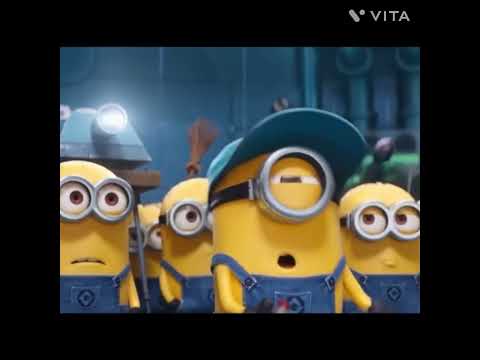
A character fusion video imagining how Minions would react to encountering Pokémon has gained attention for its creative exploration of cross-media character interaction. The video presents a hypothetical scenario where characters from the Despicable Me franchise meet creatures and trainers from the Pokémon universe, creating unexpected comedic and thematic contrasts.
Why It Matters
This type of fan content represents an evolution in how audiences engage with beloved fictional universes. Rather than existing in isolation, characters are being reimagined in new contexts that test their fundamental psychological traits and reveal deeper aspects of their original characterization. Such fusion videos also demonstrate how different narrative worlds operate under distinct rules and value systems, making the contrasts between them intellectually interesting as well as entertaining.
Background
Character comparison and fusion videos emerged prominently during the early era of Niconico Douga around 12 years ago, when creators began combining anime and game characters in hypothetical scenarios. The format has evolved significantly, moving from simple “what if” mashups to more sophisticated psychological analyses of how characters would logically behave in unfamiliar environments. Minions, introduced in the 2010 film “Despicable Me,” have become iconic for their childlike curiosity, unintelligible communication style, and unpredictable group behavior. Pokémon, as a franchise spanning three decades, has established a highly structured world with clear hierarchies, growth systems, and battle mechanics.
Key Points
- Minions are characterized by pure curiosity, lack of complex communication, and behavior driven by immediate desires rather than long-term goals
- The Pokémon world operates on principles of hierarchy, systematic growth, and structured competition—fundamentally opposite to Minion chaos
- Character fusion videos work by creating tension between established character traits and new environmental contexts, revealing what remains constant about a character’s psychology
- This type of fan content has evolved from simple mashups to sophisticated analyses of character behavior patterns and psychological consistency
- Viewer engagement with such videos stems from the pleasure of seeing established character expectations challenged and subverted
- Cross-media fusion content can enhance appreciation for original works by highlighting their unique world-building and value systems
Character Analysis: Minions in the Pokémon Universe
The Essential Nature of Minions
Minions possess three core psychological characteristics. First, they embody pure curiosity and innocence—they encounter new things with the unfiltered wonder of a child seeing the world for the first time, unburdened by preconceptions. Second, their communication barrier paradoxically creates universal emotional expression; their incomprehensible language is compensated by physical gestures and facial expressions that transcend cultural boundaries. Third, their behavior is fundamentally collective; individual Minions are incomplete, but groups of them generate unpredictable action patterns through the interplay between personal desires and group dynamics.
The Pokémon World Structure
Pokémon operates within a clearly defined system of hierarchy and progression. Creatures have measurable strength levels, trainers possess skill tiers, and battles determine winners and losers. This structured, goal-oriented world stands in sharp contrast to Minion behavior, which prioritizes immediate gratification and resists systematic organization. When Minions encounter Pokémon, this fundamental incompatibility creates the video’s primary source of humor and interest.
Predicted Reaction Patterns
Three distinct behavioral responses can be anticipated when Minions encounter the Pokémon world. First, they would likely perceive Pokémon as novel toys rather than battle partners, driven by their innate desire to interact with new objects without understanding their purpose. Second, they would struggle to comprehend Pokémon battles, which represent growth and goal achievement—concepts foreign to their moment-focused existence. Third, the presence of multiple Minions would create unpredictable cascading effects as individual impulses interact with group dynamics, generating outcomes that defy logical prediction.
Comparative Framework
Character fusion videos can be categorized into three types: same-media fusion (characters within a single franchise meeting), cross-media fusion (characters from different franchises interacting), and world-fusion scenarios (entire fictional universes merging). The Minions-Pokémon video represents cross-media fusion, which generates greater creative potential because it requires characters to maintain their essential traits while adapting to unfamiliar environmental rules. This format effectively tests the depth and consistency of character design by observing how personalities respond to contexts their creators never anticipated.
The Psychology of Viewer Engagement
Audiences engage with these videos through expectation management. Viewers arrive with established mental models of both Minions and Pokémon, then experience pleasure when the video either confirms or subverts those expectations. The core appeal lies in the collision between two distinct value systems: Minion chaos versus Pokémon order. Social media responses reveal that viewers appreciate seeing established world-building challenged, though some fans express protective feelings toward original franchises, fearing their integrity might be compromised by fan reinterpretation.
Cultural Significance
Character fusion videos represent a maturing form of fan engagement that extends beyond passive consumption. Rather than simply enjoying original content, fans actively explore its boundaries by testing characters against new contexts. This creative practice serves multiple functions: it provides fresh perspectives on beloved characters, strengthens fan communities through shared interpretation, and paradoxically deepens appreciation for original works by highlighting what makes their world-building distinctive. The Minions-Pokémon fusion exemplifies how fan content can be intellectually substantive while remaining entertaining.
How to Maximize Enjoyment
Understand both universes first: Familiarity with Minion behavior patterns from the Despicable Me franchise and Pokémon’s systematic world-building enhances appreciation for the contrasts the video creates.
Pay attention to details: Minion facial expressions, physical gestures, and interactions with each other contain the video’s most sophisticated humor. These subtle elements reveal the creator’s understanding of character psychology.
Compare with similar content: Watching other cross-media fusion videos—such as Super Mario characters in anime worlds or Disney characters in game universes—clarifies what makes the Minions-Pokémon fusion unique.
Explore related works: The Despicable Me franchise (particularly the first film and the Minions spin-off) demonstrates Minion psychology in various contexts. Early Pokémon anime episodes establish the franchise’s core values of growth, partnership, and structured competition.
Online Reception
Twitter responses emphasize the appeal of watching Minion chaos disrupt Pokémon’s orderly world. YouTube comments frequently feature predictions about how Minions would treat Pokémon, with viewers enjoying the gap between their expectations and actual video content. Some criticism exists from protective Pokémon fans concerned about world-building integrity, though this represents a minority position. The overwhelming consensus treats fusion videos as legitimate fan expression that enhances rather than diminishes appreciation for original works.
Insights and Future Implications
Character fusion videos represent an evolution in fan culture toward more sophisticated psychological analysis. Early examples relied on simple novelty; contemporary versions demonstrate deep understanding of character consistency and behavioral logic. This progression suggests that fan communities are developing increasingly nuanced interpretive frameworks.
The Minions-Pokémon video illustrates a broader principle: character psychology possesses a kind of universality that transcends original context. When Minions are placed in the Pokémon world, their essential traits remain constant, but their expression adapts to new environmental constraints. This principle mirrors how characters behave differently across alternate narrative routes in complex stories—they maintain core identity while making contextually appropriate choices.
The video’s value extends beyond entertainment. By forcing viewers to consider how established characters would function in unfamiliar systems, it implicitly highlights what makes each original universe distinctive. Pokémon’s emphasis on hierarchy and growth becomes more visible when contrasted with Minion immediacy and chaos. This comparative analysis strengthens understanding of both franchises.
As fan communities continue developing more sophisticated creative practices, cross-media fusion content will likely become increasingly prominent. Such videos serve important cultural functions: they keep franchises culturally relevant through active reinterpretation, they strengthen community bonds through shared creative engagement, and they demonstrate that fictional universes possess enough depth to sustain meaningful exploration beyond their original boundaries.