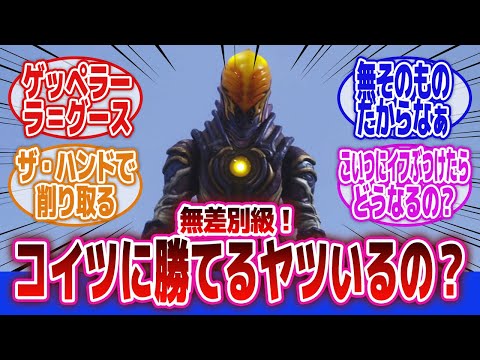
▶ Watch the original YouTube video
Greeza’s Overwhelming Power: How Ultraman’s Most Absolute Threat Sparked a New Era of Fan Debate
The emergence of Greeza, a void monster introduced in Ultraman X’s theatrical film, fundamentally changed how fans discuss power scaling and threats within the Ultraman universe. This article explores the internet’s reaction to the question “Who can fight Greeza as an equal?” and examines what this character reveals about the franchise’s evolution.
- What Happened
- Why It Matters
- Background
- Key Points
- Timeline
- Perspectives
- Comparative Analysis: Greeza and Other “Absolute Enemies”
- The Void Monster Concept: Innovation in Ultraman Mythology
- Ultraman Z: The Narrative Response
- Fan Psychology: Why “Who Can Fight Greeza?” Resonates
- Internet Reactions Across Platforms
- Insights
What Happened
Greeza, classified as a void monster, made its debut in the Ultraman X theatrical film in 2015. Unlike traditional Ultraman adversaries, Greeza demonstrated the ability to overwhelm multiple Ultramen simultaneously, a feat rarely seen in the franchise’s history. This unprecedented display of power sparked widespread online discussion, with fans debating which characters—from Ultraman Z to Getter Emperor—could potentially match Greeza in combat.
The phrase “who can fight Greeza as an equal” became a rallying point for fan discourse across Twitter, YouTube, and internet forums. The debate extended beyond the Ultraman franchise, drawing comparisons to powerful entities from other series and creating cross-franchise “strongest character” discussions.
Why It Matters
Greeza represents a watershed moment in Ultraman storytelling. For decades, the franchise operated under an implicit understanding that any Ultraman could ultimately achieve victory through effort and ingenuity. Greeza challenged this foundational narrative by introducing a threat that transcends conventional power dynamics.
The void monster concept introduced a new category of threat—one that exists outside normal spatial and physical laws. This shift forced both creators and fans to reconsider what “strength” means within the Ultraman universe. Subsequent series, including Ultraman Z, appear to have been designed with Greeza’s precedent in mind, suggesting the character’s influence extends far beyond its initial appearance.
Background
The Ultraman franchise, which began in 1966, has evolved through numerous iterations and increasingly complex antagonists. Early series featured straightforward monsters that heroes could defeat through determination and strategy. Over decades, enemy designs became more sophisticated and powerful.
Greeza’s introduction marked a qualitative shift. The void monster designation suggested an entity fundamentally different from previous adversaries—not merely stronger, but operating under different rules entirely. This conceptual innovation parallels similar narrative devices in other long-running franchises, such as the Colossal Titan in Attack on Titan or the upper-tier demons in Demon Slayer.
The theatrical release of Ultraman X featuring Greeza achieved strong box office performance, indicating genuine audience interest in this new threat paradigm. This commercial success validated the creative decision to introduce an “absolute enemy” concept.
Key Points
- Greeza is a void monster capable of simultaneously overwhelming multiple Ultramen—a rare achievement in franchise history
- The phrase “who can fight Greeza as an equal” became a dominant topic in fan communities across multiple platforms
- Ultraman Z and Getter Emperor emerged as the primary candidates in fan discussions about potential Greeza counterparts
- Greeza’s existence appears to have directly influenced subsequent Ultraman series design, particularly regarding power scaling and threat hierarchy
- The void monster classification represents a fundamental departure from traditional Ultraman enemy archetypes
- Cross-franchise comparisons emerged, with fans debating how characters from other series would fare against Greeza
Timeline
- 2015: Greeza debuts in Ultraman X theatrical film, introducing the void monster concept
- 2015–2023: Fan discourse evolves around Greeza’s power level and potential counters
- Post-2015: Ultraman Z and subsequent series incorporate design elements suggesting response to Greeza’s precedent
- Ongoing: Internet communities continue debating which characters could match Greeza in combat
Perspectives
Optimistic Fan Perspective: Many fans view Greeza as a positive evolution, arguing that introducing an “absolute threat” raises narrative stakes and demonstrates franchise maturity. The possibility of defeat, while remote, creates genuine tension absent from earlier series where victory was virtually guaranteed.
Ultraman Z as Counter-Narrative: The introduction of Ultraman Z, capable of fusing multiple monster powers, is interpreted by some fans as a direct response to Greeza. This new Ultraman’s design philosophy suggests creators acknowledged the need for fundamentally different power sources to challenge void-level threats.
Cross-Franchise Comparison: Fans drawing parallels to Getter Emperor and other series’ ultimate entities view Greeza as part of a broader pattern in anime and tokusatsu where “final form” antagonists represent the absolute ceiling of destructive capability.
Critical Perspective: Some fans criticize Greeza’s power scaling as ambiguous, arguing that the void monster’s exact capabilities remain insufficiently defined. This ambiguity, while sparking imagination, leaves questions about whether Greeza’s threat level is truly insurmountable or merely presented as such.
Comparative Analysis: Greeza and Other “Absolute Enemies”
Greeza’s significance becomes clearer when compared to similar antagonists across media:
Attack on Titan’s Founding Titan: Like Greeza, the Founding Titan represents a world-dominating force that conventional opposition struggles against. Both exist in a different category than standard enemies, though both ultimately prove defeatable.
Dragon Ball’s Jiren: This character overwhelms multiple warriors simultaneously, paralleling Greeza’s ability to dominate multiple Ultramen. However, Jiren’s defeat remains narratively possible through protagonist effort.
One Punch Man’s Boros: Possesses star-destroying power but ultimately falls to the protagonist. Like Greeza, Boros represents overwhelming force tempered by narrative possibility.
Getter Emperor: The final form of Getter Robo operates on principles of cosmic energy manipulation fundamentally different from physical force. Fan speculation about Getter Emperor versus Greeza reflects uncertainty about whether different power systems can be meaningfully compared.
The Void Monster Concept: Innovation in Ultraman Mythology
The void monster classification represents Greeza’s most significant contribution to Ultraman lore. Traditional enemies—whether kaiju or aliens—operate within recognizable physical frameworks. Greeza’s void origin suggests existence outside normal spatial and physical laws.
This conceptual framework echoes earlier Ultraman innovations like Ultraman Tiga’s light-based powers and Ultraman Ginga’s darkness manipulation, but extends these ideas further. Rather than possessing special abilities within normal space, Greeza exists in a fundamentally different dimensional context.
The implications are profound: if Greeza operates under different physical laws, conventional Ultraman powers may be inherently inadequate. This explains why multiple Ultramen fighting together still cannot overcome the threat—they’re applying normal-space solutions to a void-space problem.
Ultraman Z: The Narrative Response
Ultraman Z’s introduction appears directly influenced by Greeza’s precedent. Rather than possessing a single power source, Ultraman Z fuses multiple monster abilities to create novel capabilities. This design philosophy suggests creators recognized that defeating void-level threats requires fundamentally different approaches than traditional Ultraman power systems.
The fusion mechanic represents a departure from Ultraman convention. Earlier series featured single-form heroes or limited transformation options. Ultraman Z’s capacity to combine diverse powers hints at a response to Greeza’s challenge: perhaps only through synthesis of multiple power sources can void-level threats be addressed.
Fan speculation that “Ultraman Z could counter Greeza” reflects this design philosophy. The new Ultraman’s very existence suggests narrative acknowledgment that previous power systems proved insufficient.
Fan Psychology: Why “Who Can Fight Greeza?” Resonates
Curiosity and Speculation: Introduction of an unprecedented threat naturally prompts fans to imagine potential counters. This imaginative engagement deepens investment in the franchise.
Hope and Tension Balance: Greeza is overwhelmingly powerful yet not presented as completely invincible. This balance—”extremely difficult but not impossible to defeat”—creates psychological tension that drives discussion.
Cross-Franchise Engagement: Greeza’s power level transcends Ultraman boundaries, prompting fans of other series to consider their favorite characters’ hypothetical matchups. This generates broader media engagement and community interaction.
Narrative Maturity: Fans appreciate that Greeza challenges the franchise’s foundational assumption that heroes always prevail. This complexity appeals to long-term viewers seeking evolved storytelling.
Internet Reactions Across Platforms
Twitter: Dominated by speculation about Ultraman Z’s potential to counter Greeza, with many fans expressing hope that new Ultramen could bridge the power gap.
YouTube Comments: Frequently featured cross-franchise comparisons, particularly regarding Getter Emperor’s cosmic energy manipulation versus Greeza’s void nature.
4chan/5ch Ultraman Threads: Hosted more detailed analytical discussions, with users exploring whether void-space physics would render conventional attacks ineffective and debating the metaphysical implications of Greeza’s existence.
Critical Voices: Some fans criticized Greeza’s power scaling as insufficiently defined, arguing that ambiguity, while imaginatively stimulating, leaves the threat level unclear.
Insights
Greeza’s emergence signals a fundamental evolution in how the Ultraman franchise conceptualizes threat and power. Rather than merely introducing a stronger enemy, creators presented a categorically different type of adversary—one that challenges not just individual Ultramen but the entire narrative framework of the series.
The void monster concept proves more innovative than simple power escalation. By positioning Greeza outside normal physical laws, creators preserved the franchise’s core value—that effort and ingenuity enable victory—while introducing genuine uncertainty about whether traditional approaches suffice.
The sustained fan engagement with “who can fight Greeza” questions demonstrates that audiences crave meaningful stakes. For decades, Ultraman victory was narratively assured; Greeza reintroduced the possibility of genuine defeat, revitalizing fan interest through uncertainty.
Looking forward, Greeza’s influence appears embedded in subsequent series design. Ultraman Z’s fusion mechanics, new threat hierarchies, and dimensional concepts all seem to acknowledge Greeza’s precedent. Whether future series will introduce enemies surpassing Greeza or position it as the franchise’s ultimate threat remains unanswered—and that ambiguity itself sustains ongoing discussion.
Ultimately, Greeza represents more than a powerful antagonist; it marks the point where Ultraman transitioned from a franchise about guaranteed heroic triumph to one exploring genuine existential threat. This shift, subtle yet profound, may prove as significant to the series’ evolution as any character or power system introduced in its 60-year history.