▶ Watch the original YouTube video
Why JoJo’s Part 3 Team Composition Sparks Endless Fan Debate: A 15-Year Analysis
JoJo’s Bizarre Adventure Part 3: Stardust Crusaders has become the subject of intense fan discussion regarding whether its core team members are truly capable of defeating the ultimate enemy, DIO. This analysis explores how creator Hirohiko Araki deliberately embedded uncertainty into the narrative structure, transforming viewer anxiety into the story’s greatest strength.
What Happened
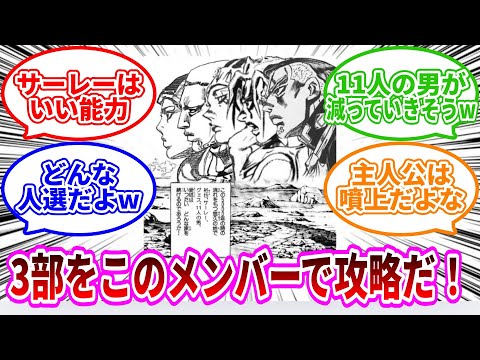
The phrase “We’ll conquer Part 3 with this team!” has become a focal point for JoJo fan communities, triggering widespread debate about the viability of the Stardust Crusaders’ roster. Across social media platforms including Twitter, Reddit, and YouTube, viewers—both new and veteran—consistently question whether Jotaro, Joseph, Avdol, Kakaoin, Okuyasu, and Polnareff possess sufficient combined strength to challenge DIO’s overwhelming power. This recurring discussion reveals a deliberate narrative strategy embedded in the original manga and its anime adaptation.
Why It Matters
Understanding the intentional design behind Part 3’s team composition offers insight into how modern storytelling uses perceived weakness as a narrative tool. Rather than assembling an overpowered roster, Araki created a deliberately limited team, forcing viewers to experience the same uncertainty as the characters themselves. This approach challenges conventional shonen manga tropes where protagonists typically possess clear advantages over antagonists. The resulting tension between doubt and determination has sustained fan engagement for decades, demonstrating how uncertainty can enhance rather than diminish narrative impact.
Background
JoJo’s Bizarre Adventure Part 3: Stardust Crusaders debuted in manga form during the 1980s and received its anime adaptation in 2014. The story follows six warriors as they journey across the globe to confront DIO, an antagonist presented as overwhelmingly powerful. Unlike typical shonen narratives where the protagonist grows stronger throughout the story, Part 3 emphasizes the team’s inherent limitations. Each member possesses a Stand ability with specific constraints: Avdol’s Magician’s Red controls fire but struggles against water; Kakaoin’s Hierophant Green offers ranged support with limited range; Okuyasu’s Bad Company excels in group combat but lacks individual power; Polnareff relies on sword technique; Joseph brings strategic knowledge and experience; and Jotaro commands raw power tempered by inexperience.
Key Points
- The Stardust Crusaders roster was deliberately designed with individual limitations that force team coordination and creative problem-solving
- Viewer anxiety about team viability mirrors the characters’ internal doubt, creating emotional investment in their success
- Each Stand ability features specific weaknesses that prevent any single member from dominating encounters
- The narrative structure transforms initial uncertainty into growing confidence as the story progresses, rewarding viewer faith
- Fan communities actively debate team composition across multiple platforms, proving the design’s effectiveness at generating engagement
- The phrase “We’ll conquer Part 3 with this team” represents character resolve rather than objective assessment of power levels
Timeline
- 1980s: JoJo Part 3 debuts in manga form with deliberately limited team composition
- 2009: Renewed interest in the series as the anime industry enters a golden age of adaptation
- 2014: Official anime adaptation of Part 3 launches, introducing the team to new audiences
- 2015-Present: Sustained fan discussion about team viability across social media platforms
- 2020s: Video game adaptations like Eyes of Heaven demonstrate how team synergy functions mechanically
Perspectives
Fan Perspective: New viewers consistently express genuine concern about whether the team can succeed, while veteran fans reassure them with cryptic encouragement. This dynamic creates a welcoming community where experienced viewers guide newcomers through the narrative journey without spoiling key moments.
Narrative Design Perspective: Araki’s choice to create a limited roster reflects a deliberate artistic decision prioritizing character individuality over power scaling. By constraining each member’s abilities, the creator ensures that every character remains relevant and essential to the team’s function. This contrasts sharply with contemporary anime trends like Sword Art Online and Is It Wrong to Try to Pick Up Girls in a Dungeon?, which often feature power-scaling hierarchies that marginalize weaker party members.
Critical Perspective: Some viewers argue the team composition is unnecessarily weak and that stronger members should have been included. However, this criticism inadvertently validates Araki’s design success—the fact that viewers seriously debate team strength indicates they have emotionally invested in the characters’ survival prospects.
Comparative Analysis: When examined alongside works like Berserk, which features a party repeatedly decimated by overwhelming enemies, Part 3 distinguishes itself through a different approach. Rather than depicting team member loss as the central narrative focus, Part 3 emphasizes creative adaptation within a stable roster. This structural choice creates a different emotional experience: viewers watch characters overcome limitations through ingenuity rather than witness their tragic elimination.
Insights
The persistent fan debate about Part 3’s team composition reveals how uncertainty functions as a core narrative mechanism rather than a flaw. Araki deliberately embedded doubt into the story’s foundation, creating a framework where viewer anxiety mirrors character vulnerability. This design choice transforms what could be perceived as weakness into the story’s greatest strength.
The team’s limited individual capabilities force each member to specialize and coordinate, creating a synergy that transcends simple power addition. This approach teaches a broader lesson about teamwork: individual insufficiency becomes collective strength through cooperation and mutual reliance. The phrase “We’ll conquer Part 3 with this team” thus represents not naive optimism but hard-won determination born from accepting limitations and working within them.
The sustained fan engagement across multiple decades and platforms demonstrates that uncertainty and stakes matter more to long-term narrative satisfaction than power scaling. Viewers return to Part 3 not despite the team’s limitations but because of them. The journey from “Will they succeed?” to “They did succeed” creates a narrative arc that extends beyond individual episodes into the viewer’s personal experience of the story.
Furthermore, the game adaptation Eyes of Heaven mechanically validates this design philosophy. Players discover that team synergy—combining different Stand abilities strategically—proves more effective than relying on individual power. This interactive experience confirms what the narrative has suggested all along: the team’s composition is not a limitation but an elegant solution to the challenge of defeating an overwhelmingly powerful enemy.
The broader implication extends beyond JoJo fandom. In an era of power-scaling hierarchies and protagonist-centered narratives, Part 3 offers an alternative model where ensemble casts function through complementary weakness rather than hierarchical strength. This approach remains relevant to contemporary storytelling, suggesting that uncertainty and limitation can generate deeper engagement than predetermined victory.