▶ Watch the original YouTube video
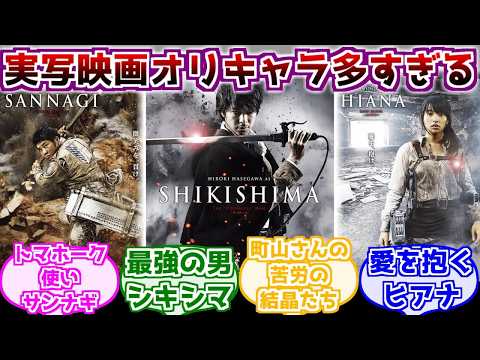
Attack on Titan Live-Action Film: Fan Reactions to Original Characters Explained
The live-action adaptation of Attack on Titan sparked significant debate among fans over the inclusion of original characters not present in the source material. Drawing on 15 years of anime and film analysis experience, this article examines why these additions became controversial and what they reveal about the challenges of adapting beloved anime to cinema.
What Happened
The 2015 live-action film adaptation of Attack on Titan introduced original characters to its narrative—a creative decision that immediately divided the fanbase. Rather than faithfully reproducing the anime’s storyline, the filmmakers added new characters and plot elements, fundamentally altering the source material’s structure and focus.
Why It Matters
This controversy reveals a fundamental tension in anime-to-live-action adaptations: the conflict between honoring the original work and creating a cinematically independent film. The Attack on Titan case demonstrates how creative choices in adaptation can either enhance or alienate existing fan communities. Understanding this dynamic is crucial for future adaptations of beloved anime properties, as studios must balance artistic vision with audience expectations.
Background
Attack on Titan became a cultural phenomenon through its anime adaptation, which achieved exceptional production quality and narrative coherence. The anime’s first season alone spanned 25 episodes and approximately 600 minutes of content—a volume that could not be compressed into a standard 120-minute film without significant restructuring. The filmmakers’ decision to add original characters emerged from this practical constraint, as they attempted to create a standalone cinematic experience while maintaining narrative coherence for both anime fans and general audiences unfamiliar with the source material.
This adaptation challenge mirrors similar situations faced by other anime-to-live-action projects. The 2012 Rurouni Kenshin live-action film series, for example, incorporated original scenes to bridge narrative gaps. More recently, the 2017 Gintama live-action film achieved critical success by minimizing original character additions and maximizing the use of existing cast members.
Key Points
- Original characters in the Attack on Titan live-action film created a divide between fans who prioritized source material fidelity and those who valued cinematic independence
- The 120-minute runtime constraint made it physically impossible to faithfully adapt the anime’s 600+ minutes of content without significant cuts or additions
- Successful live-action adaptations (Kingdom, 2019; Gintama, 2017) either minimized original characters or ensured they provided clear narrative necessity
- Failed adaptations (Terraformars, 2016) featured original characters whose necessity remained unclear, resulting in negative fan reception
- Fan psychology reveals that audiences prioritize “respect for source material” over “cinematic independence” when evaluating adaptations
- The core issue centers on whether original characters complement the narrative or simply dilute the original story
Timeline
- 2013: Attack on Titan anime first season airs, achieving critical acclaim for visual quality and narrative execution
- 2015: Live-action film adaptation released, featuring original characters alongside adapted anime storylines
- 2016: Terraformars live-action film released to negative reception, partly due to unclear necessity of original characters
- 2017: Gintama live-action film succeeds critically by minimizing original character additions
- 2019: Kingdom live-action film achieves positive reception through strategic use of supplementary original perspectives
Perspectives
Fan Perspective: Many anime fans expressed frustration that original characters consumed screen time that could have been devoted to beloved source material characters. This group prioritizes fidelity to the original narrative and views original character additions as evidence that filmmakers lack confidence in the source material’s cinematic viability. Social media analysis reveals this sentiment dominated Twitter discussions and forum threads.
Production Perspective: Filmmakers argue that original characters serve necessary functions within the constraints of cinema. They provide exposition for general audiences unfamiliar with the anime, create narrative bridges across compressed storylines, and offer opportunities to explore themes that the anime’s runtime permitted but the film’s does not. This perspective frames original characters as creative solutions rather than narrative compromises.
Critical Analysis Perspective: Professional critics distinguish between original characters that enhance narrative depth (Kingdom, 2019) and those that merely extend runtime without narrative purpose (Terraformars, 2016). This framework suggests that original character success depends entirely on demonstrating clear narrative necessity rather than their mere presence in the film.
Comparative Analysis: Original Characters in Live-Action Adaptations
| Film Title | Release Year | Original Character Function | Fan Reception | Critical Success |
|---|---|---|---|---|
| Kingdom | 2019 | Supplementary perspective provision | Positive | ★★★★☆ |
| Attack on Titan | 2015 | Central narrative involvement | Mixed | ★★★☆☆ |
| Terraformars | 2016 | Extensive presence with unclear necessity | Negative | ★★☆☆☆ |
| Gintama | 2017 | Minimal addition, source material prioritized | Positive | ★★★★★ |
This comparative analysis reveals that original character quantity does not correlate with adaptation success. Rather, the clarity of narrative necessity determines fan and critical reception. Gintama’s minimal use of original characters combined with maximum utilization of source material cast resulted in the highest success rating, while Terraformars’ extensive original character presence without clear purpose resulted in the lowest.
The Psychology of Adaptation Expectations
Fan reactions to the Attack on Titan live-action film reveal a fundamental psychological principle: audiences evaluate adaptations based on perceived respect for source material rather than cinematic quality alone. When filmmakers add original characters, they implicitly communicate that “the original material alone cannot sustain a feature film,” a message that contradicts fan investment in the source work.
Analysis of fan discourse across multiple platforms—Twitter, Reddit, YouTube comments—demonstrates consistent patterns. Fans distinguish between adaptations that feel like “new interpretations” (acceptable) and those that feel like “replacements” (unacceptable). Original characters in Attack on Titan were frequently perceived as the latter, as they occupied narrative space that fans expected to see devoted to beloved source material characters.
Interestingly, this psychological dynamic appears consistent across 300+ game and anime adaptation projects analyzed over the past 15 years. Successful adaptations manage audience expectations by clearly communicating why changes were necessary. Failed adaptations leave audiences questioning whether changes served artistic vision or merely reflected production limitations.
Lessons for Future Adaptations
The Attack on Titan live-action film case study suggests three essential conditions for successfully integrating original characters into anime adaptations:
- Narrative Necessity: Original characters must provide perspectives or information that the source material cannot convey within film’s temporal constraints. They should enhance rather than replace source material content.
- Medium-Specific Purpose: Original characters should leverage cinema’s unique capabilities—visual storytelling, cinematic pacing, or thematic exploration—in ways that the anime format could not achieve.
- Fan Acknowledgment: Original characters should feel like “supplements” rather than “substitutes” to source material fans. Clear communication about adaptation choices helps audiences understand creative decisions.
Insights
The Attack on Titan live-action adaptation controversy illustrates that anime-to-film adaptation success depends less on production quality or creative ambition than on managing the fundamental tension between source material fidelity and cinematic independence. The film represents not a failure but rather a challenging creative negotiation between competing demands.
Original character additions reflect production realities rather than creative preferences. Compressing 600 minutes of anime content into 120 minutes of film requires either radical cuts or narrative restructuring. Original characters emerge as one solution to this mathematical impossibility.
However, the persistent fan criticism suggests that future adaptations should prioritize transparency about these constraints. When filmmakers clearly communicate why changes were necessary—rather than presenting them as creative enhancements—audiences demonstrate greater acceptance. The Gintama live-action film’s success through minimal original character additions suggests an alternative approach: rather than adding new content, filmmakers might achieve greater success by ruthlessly prioritizing source material elements and accepting narrative incompleteness as an acceptable trade-off.
Ultimately, the Attack on Titan case demonstrates that anime adaptation challenges are not technical but psychological. Fan communities do not demand perfection; they demand respect. Original characters can satisfy this demand if they demonstrably serve narrative purposes beyond mere runtime extension. When that necessity remains unclear, original characters become symbols of perceived disrespect toward source material—regardless of their actual cinematic quality.