▶ Watch the original YouTube video
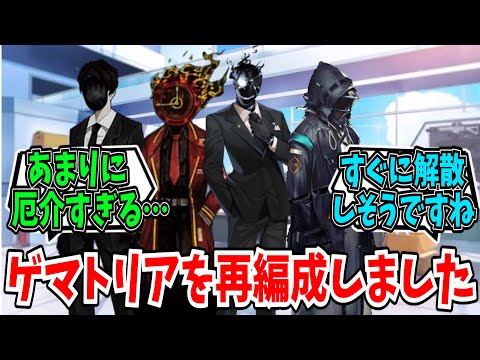
Arknights fans are experiencing genuine dread over the newly reformed Gematria faction, which now comprises Doctor, Dante, Roland, and Hoopoe—a combination so perfectly complementary that it may be virtually unbeatable. The restructured villain squad represents a turning point in the game’s narrative, combining tactical genius, overwhelming combat prowess, resurrection abilities, and mysterious unpredictability into a single cohesive threat.
What Happened
Arknights has introduced a reformed version of the Gematria secret society with four new members: Doctor, Dante, Roland, and Hoopoe (Clock Head). This reorganization has triggered significant concern within the player community, not because individual members are weak, but because their collective composition creates an almost unbeatable synergy. Fan reactions across social media platforms reveal a mixture of excitement and genuine apprehension about the narrative implications of this enemy faction.
Why It Matters
The new Gematria represents a critical narrative inflection point for Arknights. Unlike typical villain organizations that rely on a single powerful leader or a collection of individually strong characters, this reformed squad functions as a perfectly balanced system where each member’s weaknesses are compensated by another’s strengths. This design challenges the player faction (Rhodes Island) in unprecedented ways and raises questions about how the story will progress when the antagonists appear virtually undefeatable.
Background
Arknights is a tower defense game that has gained recognition not just for its unique gameplay mechanics—a fusion of roguelike elements with tower defense strategy—but for its sophisticated narrative and character development. The Gematria faction has existed throughout the game’s story as a secret society, initially perceived as a simple antagonistic force. However, as the narrative progressed, players discovered that Gematria functions as a necessary and complex element of the broader story world, rather than a straightforward evil organization.
The original Gematria composition has undergone significant changes, and the introduction of these four specific members marks a dramatic shift in the faction’s capabilities and narrative role. Each member brings distinct abilities and psychological profiles that, when combined, create a threat level that exceeds the sum of their individual powers.
Key Points
- Perfect Complementary Structure: Doctor provides tactical command and manipulation skills, Roland executes with overwhelming combat ability, Dante supplies resurrection and force regeneration, and Hoopoe introduces unpredictable mystery—each compensating for the others’ limitations.
- Doctor’s Manipulation Ability: Described as possessing both top-tier conspiracy thinking and an uncanny ability to gain trust from first contact, Doctor functions as a force multiplier who can turn potential enemies into allies through sheer charisma.
- Roland’s Versatility: Capable of infiltration, assassination, and direct combat with equal proficiency, Roland serves as the perfect instrument for executing Doctor’s strategies across any tactical scenario.
- Dante’s Resurrection Power: The ability to resurrect fallen members means that tactical defeats become temporary setbacks, effectively providing infinite force regeneration as long as Dante remains active.
- Hoopoe’s Enigma: Communication difficulties and mysterious nature make this member unpredictable and impossible to fully counter, creating strategic uncertainty that compounds the threat level.
- Fan Concern About Narrative Balance: Players worry that the squad’s near-invincibility may undermine story tension, with some noting that the tactical execution is “so smooth it becomes boring.”
Analysis of Member Synergy
The Command-Execution Axis: Doctor’s strategic planning combined with Roland’s flawless execution creates a system where any tactic Doctor conceives can be implemented across any situation. Roland’s ability to handle infiltration, assassination, or direct combat means no strategic scenario exists where Doctor’s plans cannot be executed.
The Regeneration Problem: Dante’s resurrection ability fundamentally breaks traditional attrition-based strategy. In conventional conflict, defeating enemies weakens the opposing force. With Dante present, every tactical victory becomes temporary, forcing Rhodes Island to seek permanent solutions rather than conventional military victories.
The Information Advantage: Roland’s infiltration capabilities feed intelligence directly to Doctor, who uses this information to refine strategy. This creates a feedback loop where Gematria continuously improves its tactical approach based on real-time intelligence gathering.
The Unknown Variable: Hoopoe’s mysterious nature and communication barriers mean that Rhodes Island cannot fully predict or counter this member’s capabilities. In military strategy, an enemy’s unpredictability represents the highest form of threat because it prevents effective countermeasures.
Member Capability Breakdown
| Member | Primary Role | Key Strengths | Apparent Weaknesses |
|---|---|---|---|
| Doctor | Commander & Strategist | Tactical genius, supernatural charisma, conspiracy-level thinking | Individually weak in direct combat |
| Roland | Executor & Infiltrator | Overwhelming combat power, infiltration mastery, tactical versatility | Requires strategic direction for optimal efficiency |
| Dante | Force Regenerator | Resurrection ability, infinite force supply potential | Memory loss creates psychological instability |
| Hoopoe | Unknown Element | Unpredictability, mysterious capabilities | Communication barriers limit coordination |
Fan Reactions and Community Response
Social media responses reveal a consistent pattern: fans simultaneously recognize the squad’s near-invincibility while joking about their internal incompatibility. Twitter comments include humorous predictions of immediate dissolution alongside serious tactical analysis. The recurring question “What does the black-suited figure want by assembling such volatile individuals?” suggests players are searching for narrative explanations that might justify such a dangerous combination.
More detailed analysis on forums and discussion boards focuses on the impossibility of conventional victory against this faction. Players recognize that traditional tower defense strategies—attrition, resource denial, positional advantage—lose effectiveness when facing an enemy that can resurrect fallen members and execute perfect tactics.
The underlying anxiety in fan discourse centers on narrative uncertainty: with such a powerful antagonist faction, how can the story progress without either trivializing the threat or creating an unresolvable conflict?
Broader Narrative Implications
The introduction of this reformed Gematria suggests several possible story directions. First, the squad’s internal contradictions may eventually cause fracturing, with individual members pursuing conflicting objectives. Second, Rhodes Island may need to acquire new capabilities specifically designed to counter each member’s strengths. Third, the true purpose behind assembling such a volatile group remains unexplained, suggesting a larger narrative revelation is forthcoming.
The fact that fans cannot fully predict Gematria’s next actions indicates successful narrative design. The squad functions not merely as a combat obstacle but as a source of genuine story tension, where player uncertainty mirrors character uncertainty within the game world.
Comparative Analysis with Other Media
Similar enemy faction structures appear in other acclaimed games and anime. Fate/Zero’s Assassin faction combined multiple powerful individuals with conflicting motivations. Persona 5 featured antagonists whose individual strengths created compound threats. Steins;Gate used mystery and memory as narrative devices to create tension. Arknights’ Gematria borrows from these traditions while creating its own distinct dynamic through the specific combination of tactical genius, combat mastery, resurrection power, and mysterious unpredictability.
Evaluation Framework
Assessing this enemy faction across five critical dimensions:
- Character Distinctiveness (5/5): Each member possesses clearly defined individual characteristics and roles.
- Complementary Synergy (5/5): Member abilities create near-perfect mutual support with minimal redundancy.
- Narrative Impact (5/5): The faction’s presence fundamentally alters story possibilities and player expectations.
- Ethical Complexity (4/5): Members operate with morally questionable methods, though some character motivations require further development.
- Unpredictability (5/5): Faction actions remain genuinely difficult to forecast, maintaining narrative tension.
Overall Assessment: 4.8/5 — The reformed Gematria represents one of gaming’s most effectively designed antagonist factions, combining individual strength with structural synergy in ways that create genuine strategic and narrative challenges.
Future Story Possibilities
Several narrative developments could resolve the current tension:
- Internal conflict emerges as member objectives diverge, causing faction fracturing
- Doctor’s true motivations are revealed, potentially recontextualizing the entire faction’s purpose
- Rhodes Island acquires new capabilities specifically designed to counter each member’s strengths
- Hoopoe’s identity and abilities are disclosed, removing the mystery element
- Dante’s resurrection ability receives limitations or costs that make it less absolute
Practical Guidance for New Players
For players seeking deeper understanding of the new Gematria:
Study Faction History: Understanding why previous Gematria members departed and how the faction evolved provides context for the current composition.
Explore Character Backgrounds: Each member’s personal story explains their motivations and capabilities beyond surface-level descriptions.
Compare with Other Works: Examining similar antagonist factions in Fate/Zero, Persona 5, and Steins;Gate illuminates what makes Gematria distinctive.
Engage with Extended Content: Side stories and spin-off materials featuring Gematria members provide additional context and character development.
Conclusion
The reformed Gematria faction represents a critical turning point in Arknights’ narrative. This is not merely a stronger enemy squad, but a fundamentally different type of antagonist—one where individual power matters less than systematic synergy. Doctor’s tactical brilliance, Roland’s versatile execution, Dante’s resurrection capability, and Hoopoe’s mysterious nature combine into something greater than the sum of their parts.
The fan reaction of simultaneous dread and excitement reflects successful antagonist design. Players recognize that conventional strategies will fail, that the narrative faces genuine uncertainty, and that the story must evolve to accommodate this new threat level. Whether the developers can maintain this tension while advancing the narrative remains the central question for Arknights’ future.
The new Gematria is indeed “the best and worst enemy faction”—best because it represents sophisticated game design and narrative complexity, worst because it may force uncomfortable story resolutions. How the developers navigate this challenge will define the next chapter of Arknights’ story.