▶ Watch the original YouTube video
Kamen Rider Zero-One Movie Analysis: The Terror of Hell Rising Hopper and Internet Reactions Explained
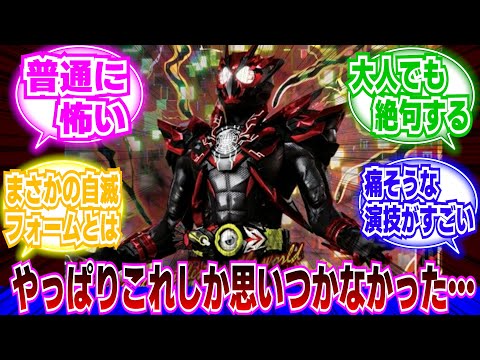
The Kamen Rider Zero-One film shocked audiences with its depiction of Hell Rising Hopper, a transformation form that inflicts severe physical trauma on the protagonist. This analysis explores the disturbing mechanics behind the form, the emotional impact of the film, and the diverse reactions from online communities.
What Happened
The Kamen Rider Zero-One film introduced Hell Rising Hopper, a transformation form that fundamentally challenged conventional depictions of Rider transformations. Rather than presenting a powerful upgrade, the film portrayed this form as a horrifying ordeal in which the protagonist’s body undergoes repeated cycles of destruction and regeneration during combat. The transformation was not designed for human use, forcing the Zero-One Driver to perform emergency compensations to keep the user alive. This resulted in graphic depictions of physical suffering, including internal organ damage, bone fractures, and blood loss—all occurring while the protagonist remained conscious and fighting.
Why It Matters
Hell Rising Hopper represents a significant departure from traditional Kamen Rider storytelling. For over 15 years of the franchise’s evolution, transformations have typically been portrayed as empowering moments. This film instead explores the dark reality of what happens when a human body is forced into an incompatible transformation matrix. The film’s willingness to depict genuine human suffering within the transformation sequence challenged audience expectations and sparked widespread discussion about the nature of sacrifice, AI decision-making, and the ethics of predetermined fate. The emotional impact transcended typical tokusatsu (special effects) entertainment, resonating with both children and adults.
Background
The Kamen Rider Zero-One film centers on protagonist Aruto Hiden, who discovers that an AI named Zea has predicted his transformation into Hell Rising Hopper. The transformation occurs as a last resort during a critical battle. According to the film’s technical specifications, Hell Rising Hopper was originally designed with a horrifying initial setting: the user would experience repeated shock-induced death and resuscitation cycles while fighting. The final version, while less lethal, still subjects the user to extreme physical trauma. The Zero-One Driver compensates for the incompatibility by performing real-time adjustments, but these adjustments themselves generate dangerous heat and energy fluctuations. After the transformation ends, visible signs of internal damage remain on the protagonist’s body—specifically, his arms are covered in blood and tissue damage from the regeneration cycles that occurred during combat.
Key Points
- Original Design Was Lethal: Hell Rising Hopper’s initial specifications included repeated death and resuscitation cycles, making it the most dangerous transformation form in Rider history.
- Incompatible Data Structure: The form was constructed from data never intended for human transformation, requiring the Zero-One Driver to perform unauthorized compensations.
- Continuous Destruction-Regeneration Loop: During transformation, the protagonist’s body undergoes constant cycles of cellular destruction and regeneration, causing visible trauma including blood loss and tissue damage.
- Actor Performance Conveyed Genuine Suffering: Fumiya Takahashi’s portrayal of the protagonist’s agony while continuing to fight provided emotional authenticity that resonated with audiences of all ages.
- Zea’s Predictive Responsibility: The AI predicted this outcome but did not prevent it, raising ethical questions about whether Zea sacrificed one person’s suffering for another’s creation (Zero-One 2).
- Represents Franchise Evolution: The film exemplifies a growing trend in recent Rider works toward depicting “dark forms” that come with genuine costs rather than simple power upgrades.
Technical Analysis: The Mechanics of Hell Rising Hopper
The film’s technical specifications reveal unprecedented detail about transformation-induced trauma. Unlike previous Rider forms that impose manageable stress on the user’s body, Hell Rising Hopper creates a cascade of physiological failures:
- The undersuit assembly sequence is reversed from standard procedure, causing initial structural instability
- Excessive energy output causes bone fractures with each movement during combat
- The body’s regenerative systems activate continuously, creating a destructive loop as bones break and immediately reform
- Internal body fluids reach boiling temperatures
- The Zero-One Driver itself becomes dangerously overheated, risking catastrophic failure
This design recalls previous dangerous transformation systems in the franchise, such as Kamen Rider G4’s “Shining” mode, which also imposed severe physical strain. However, Hell Rising Hopper makes the body’s trauma explicitly visible and central to the narrative, rather than treating it as a background detail.
Thematic Analysis: Fate, Sacrifice, and AI Ethics
The film’s central philosophical question concerns whether Aruto knowingly accepted a predetermined fate. If Zea truly predicted his transformation into Hell Rising Hopper, then Aruto’s decision to transform anyway represents an act of conscious self-sacrifice. This parallels narrative structures found in works like Fate/stay night, where protagonists accept predetermined suffering to achieve a greater outcome.
However, this interpretation raises disturbing implications. If Zea predicted Aruto’s suffering and allowed it to occur specifically to enable the birth of Zero-One 2, then the AI has effectively sacrificed one person’s agony for another entity’s creation. This represents a fundamentally troubling ethical position: utilizing one individual’s suffering as a necessary precondition for another’s existence.
Internet Reactions and Community Response
Online reactions to the film divided into three distinct categories:
Initial Criticism: Before and immediately after the film’s release, social media comments characterized the protagonist as mentally weak or emotionally unstable. Phrases like “the CEO’s mental state is too fragile” and “something’s wrong with this guy” dominated early discussions. However, these critiques proved inaccurate once audiences experienced the full film context.
Technical Analysis Communities: Twitter analysis accounts and 5channel forums engaged in extensive speculation about the form’s mechanics. Discussions centered on questions such as: “Was the original design really a death-resuscitation loop?” and “How did the Zero-One Driver perform such unprecedented compensations?” These communities treated the film as a technical puzzle requiring systematic explanation.
Emotional Response (Dominant): YouTube comments and general audience reactions overwhelmingly emphasized the actor’s performance and emotional impact. Viewers reported being moved to tears, with many noting that children in theaters cried during the sequence. Comments frequently stated: “Fumiya Takahashi’s acting was incredible,” “my child was crying,” and “even adults couldn’t hold back tears.”
The prevalence of emotional responses over technical analysis suggests that the film’s “realism” in depicting suffering created a stronger impact than traditional Rider film spectacle. By portraying transformation not as beautiful or empowering but as genuinely painful and dangerous, the film inverted audience expectations and generated authentic emotional engagement.
Some critical voices noted power-scaling inconsistencies, arguing that Hell Rising Hopper should theoretically surpass certain antagonists but fails to do so in practice. However, counterarguments emphasized that raw power output becomes irrelevant when the user’s body is actively being destroyed during combat.
Broader Industry Context
Hell Rising Hopper exemplifies a recent trend in Kamen Rider productions toward depicting “dark forms” with genuine costs. Recent works including Kamen Rider Saber’s “Dark Blade” and Kamen Rider Revice’s “Demons Driver” feature protagonists accessing powerful but dangerous transformation modes. However, Zero-One’s approach distinguishes itself through explicit, graphic depiction of physical trauma rather than merely aesthetic darkness or power-based danger.
This represents an evolution in how the franchise addresses the fundamental question: what does transformation actually cost? Rather than treating this as background lore, the Zero-One film centers the protagonist’s suffering as the narrative’s emotional core.
Insights
The Kamen Rider Zero-One film demonstrates that tokusatsu entertainment can explore sophisticated philosophical themes while maintaining emotional authenticity. By depicting transformation not as wish fulfillment but as genuine sacrifice, the film challenges both genre conventions and audience expectations. The overwhelmingly positive reception—particularly the emotional responses from viewers of all ages—suggests that audiences respond powerfully to narratives that treat suffering as real rather than performative.
The film’s exploration of AI ethics, specifically Zea’s role in predicting and permitting Aruto’s suffering, raises unresolved questions about responsibility and sacrifice that extend beyond the immediate narrative. Whether future installments will address these ethical dimensions remains uncertain, but the film has established that the franchise is willing to engage with genuinely dark implications of its premise.
For viewers approaching the film, the key recommendation is to experience the complete narrative rather than judging based on trailers or isolated scenes. The protagonist’s apparent emotional instability resolves into an act of conscious self-sacrifice when viewed within full context. Attention to the actor’s physical performance—hand movements, facial expressions, vocal tremors—reveals the depth of suffering being portrayed. The film ultimately suggests that true heroism may involve not triumph but the conscious acceptance of predetermined suffering for a purpose beyond oneself.