▶ Watch the original YouTube video
The Turning Point: How Lowe Guele’s Encounter with Aegis Defines Mobile Suit Gundam SEED ASTRAY
A pivotal scene in Mobile Suit Gundam SEED ASTRAY depicts protagonist Lowe Guele confronting the brutal reality of war when he witnesses an enemy pilot’s self-destruct attack. This moment serves as a critical psychological turning point that transforms the young junk dealer into a soldier forced to grapple with the true cost of combat.
What Happened
In a defining scene from Mobile Suit Gundam SEED ASTRAY, protagonist Lowe Guele encounters the Aegis mobile suit piloted by a young soldier who initiates a self-destruct sequence. The explosion occurs at close range, with the blast center directly facing Lowe’s cockpit. Despite the apparent lethality of the situation, Lowe survives—a fact that has sparked extensive fan debate regarding the narrative’s internal logic and the production team’s creative choices.
This scene marks a significant departure from Lowe’s previous combat experiences. Before acquiring the Red Frame mobile suit, Lowe worked as a junk dealer, viewing mobile suits as commodities rather than instruments of warfare. The Aegis self-destruct attack forces him to confront the psychological reality of combat: his opponent was willing to sacrifice his own life to achieve his objective.
Why It Matters
This scene represents far more than a conventional action sequence. It functions as a narrative catalyst that fundamentally alters Lowe’s trajectory throughout the series. The moment illustrates how young soldiers in the SEED universe are forced to mature rapidly when confronted with the existential stakes of warfare.
The scene’s significance extends beyond character development. It demonstrates how SEED ASTRAY operates not merely as a side story to the main SEED narrative, but as a complementary exploration of the war’s impact on individuals outside the primary conflict’s central figures. By presenting the war through Lowe’s perspective—a character who stumbles into combat rather than being born into it—the series offers a distinct commentary on the psychological cost of militarization.
Background
Mobile Suit Gundam SEED ASTRAY is a manga and anime spin-off that explores the Cosmic Era timeline from alternative viewpoints. The series follows Lowe Guele, a young member of a junk dealer crew who acquires the Red Frame mobile suit and becomes an unwilling participant in the ongoing conflict between the Earth Alliance and ZAFT.
Lowe’s character arc differs significantly from protagonists like Kira Yamato in the main SEED series. While Kira is thrust into combat as a trained pilot, Lowe transitions from civilian salvage work to active warfare. This distinction proves crucial to understanding why the Aegis encounter carries such psychological weight. For Lowe, the self-destruct attack represents his first genuine confrontation with an opponent’s absolute commitment to their cause—a realization that transcends tactical combat experience.
The scene also references Rau Le Creuset, a significant antagonist from the main SEED narrative. The connection between the Aegis pilot and this broader conflict context adds layers of meaning to Lowe’s traumatic experience.
Key Points
- Psychological Turning Point: The Aegis self-destruct attack represents Lowe’s first direct confrontation with an opponent’s willingness to die for their cause, fundamentally altering his understanding of warfare.
- Narrative Catalyst: This scene precipitates Lowe’s journey to Morgenroete and subsequently to Lacus, marking a historical shift in his story trajectory.
- Survival Mechanism Debate: Lowe’s survival despite the blast’s proximity to his cockpit has generated extensive fan discussion regarding the Safety Shutter system and production choices.
- Manga-to-Anime Adaptation Differences: The anime version handles this scene differently from the original manga, suggesting deliberate creative decisions by the production team.
- Thematic Resonance: The scene echoes similar moments in other anime featuring young soldiers (Mobile Suit Gundam 0080, Attack on Titan, Code Geass) but distinguishes itself through its focus on understanding an enemy’s resolve rather than witnessing allied casualties.
- Intentional Ambiguity: The lack of explicit explanation regarding Lowe’s survival may represent a deliberate production choice to maintain narrative mystery and encourage viewer interpretation.
The Safety Shutter Controversy
The most debated aspect of this scene concerns the explanation—or lack thereof—for Lowe’s survival. The Safety Shutter system is referenced as a protective mechanism, yet the anime provides minimal detail about how it functioned during the explosion.
Fan analysis reveals two interpretations of this ambiguity. The first views it as a production oversight or constraint—the anime team may have simplified or obscured the explanation to avoid contradicting established continuity. The second interpretation suggests intentional artistic choice: by leaving the survival mechanism unexplained, the production team invites viewers to experience Lowe’s own confusion and disorientation, creating emotional synchronization between character and audience.
This approach parallels techniques employed in other acclaimed anime series. Hideaki Anno’s Neon Genesis Evangelion similarly uses narrative ambiguity to provoke deeper viewer engagement. The deliberate withholding of complete explanation can function as a storytelling device that extends the work’s thematic resonance beyond the initial viewing.
Comparative Analysis: Young Soldiers in Anime
Lowe’s psychological confrontation with warfare shares thematic ground with other anime protagonists, yet maintains distinct characteristics:
| Series | Protagonist | Psychological Crisis | Shared Element with ASTRAY |
|---|---|---|---|
| Mobile Suit Gundam 0080: War in My Pocket | Al Akaki | Witnessing a friend’s death | Confronting war’s human cost |
| Attack on Titan | Eren Yeager | Mother’s death | Trauma catalyzing military commitment |
| Code Geass | Lelouch | Sister’s death | Understanding war’s true nature |
| SEED ASTRAY | Lowe Guele | Enemy pilot’s self-sacrifice | Recognizing opponent’s resolve |
Lowe’s experience distinguishes itself through its focus on understanding an adversary’s commitment rather than processing loss of allies. This perspective offers a unique examination of warfare: the realization that one’s enemies possess equal conviction and willingness to sacrifice.
Production and Adaptation Choices
The differences between the manga and anime versions of this scene reveal deliberate production decisions. The anime’s handling—what some fans describe as a “mysterious warp” effect—suggests the animation team made conscious choices regarding pacing, visual clarity, and narrative ambiguity.
This approach reflects a broader trend in anime production over the past decade. Series such as Jujutsu Kaisen and Attack on Titan: The Final Season similarly employ narrative techniques that withhold complete explanation, trusting viewers’ interpretive capabilities. By the time SEED ASTRAY was produced, this methodology represented a forward-thinking approach to audience engagement.
The production team’s decision to maintain ambiguity around Lowe’s survival demonstrates confidence in the audience’s willingness to engage with unresolved questions. Rather than providing definitive answers, the scene invites ongoing interpretation and discussion within fan communities.
Fan Reception and Online Discussion
Community response to this scene has been notably diverse, reflecting different interpretive frameworks among viewers.
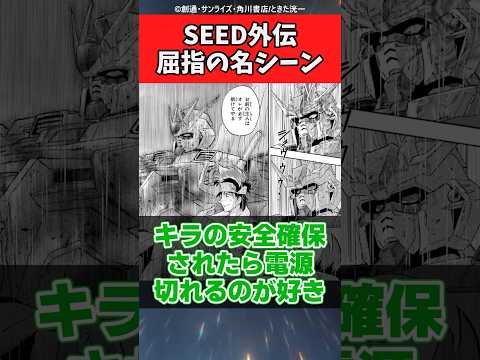
Positive Reception: Many fans emphasize the emotional authenticity of the sequence. Comments highlight perceived details such as “Strike appears to be shedding tears” and appreciation for subtle directorial choices like “Kira cutting power once safety is secured.” These observations reflect viewers’ engagement with the scene’s human drama and technical execution.
Critical Analysis: Other fans focus on narrative consistency, questioning the Safety Shutter explanation and the plausibility of survival given the blast’s proximity. Repeated comments note: “The explosion’s center was directly in front of the cockpit, yet he survived without explanation.” This criticism addresses legitimate continuity concerns while acknowledging the scene’s dramatic impact.
Production Speculation: Thoughtful fan commentary suggests: “Perhaps the manga version forced the anime team to handle this differently, resulting in the mysterious warp effect.” This observation demonstrates viewers’ understanding of adaptation constraints and creative problem-solving.
Insights and Broader Implications
This scene’s enduring significance within the SEED ASTRAY narrative reflects its function as more than isolated action sequence. It represents a fundamental shift in Lowe’s understanding of warfare and his place within the conflict.
The Aegis encounter demonstrates that SEED ASTRAY operates as a substantive exploration of the Cosmic Era’s impact on ordinary individuals. Rather than focusing exclusively on elite pilots or political machinations, the series examines how average people become soldiers and how that transformation affects their psychological development.
The scene’s ambiguities—particularly regarding Lowe’s survival—should not be dismissed as production failures. Instead, they function as narrative devices that maintain thematic coherence. By leaving certain details unexplained, the production team ensures viewers experience something analogous to Lowe’s own confusion and disorientation. This technique transforms potential plot holes into opportunities for deeper engagement.
The active fan discussion surrounding this scene—spanning technical analysis, thematic interpretation, and production speculation—validates the sequence’s artistic success. Works that provoke sustained community engagement demonstrate lasting cultural resonance. The fact that viewers continue debating the Safety Shutter mechanism and survival mechanics years after initial broadcast suggests the scene achieved its intended impact.
Viewing Recommendations
For viewers encountering this scene for the first time, understanding Lowe’s pre-combat background proves essential. The psychological impact depends entirely on recognizing his transition from civilian junk dealer to reluctant soldier. Without this context, the scene functions merely as action spectacle rather than character transformation.
Key elements to observe during viewing:
- Lowe’s Facial Expression: Pay particular attention to his eyes and expression before and after the Aegis self-destruct. The animation conveys psychological shift through subtle visual cues.
- Sound Design: The contrast between silence and explosive sound reflects Lowe’s internal state. The audio engineering deliberately emphasizes the psychological impact rather than pure destructive force.
- Comparative Reading: Consulting the original manga version provides insight into production choices and adaptation decisions.
- SEED Context: Familiarity with the main SEED series and Rau Le Creuset’s character adds thematic depth to understanding the Aegis pilot’s motivations.
- Related Works: Viewing Mobile Suit Gundam 0080: War in My Pocket offers comparative perspective on how different Gundam productions handle young soldiers’ psychological development.
Conclusion: ASTRAY as Essential Canon
Mobile Suit Gundam SEED ASTRAY deserves recognition not as supplementary side story but as essential exploration of the Cosmic Era from alternative perspectives. The Aegis encounter exemplifies this distinction. While Kira Yamato and Athrun Zala navigate warfare as trained pilots with clear ideological positions, Lowe Guele stumbles into combat as an ordinary person forced to confront extraordinary circumstances.
This scene represents the beginning of Lowe’s extended psychological journey rather than its conclusion. The trauma of witnessing an opponent’s self-sacrifice initiates a process of maturation that continues throughout the series. Understanding warfare’s true cost—that enemies possess equal conviction and willingness to die—fundamentally reshapes how Lowe engages with subsequent conflicts.
The production team’s handling of this sequence, including its deliberate ambiguities and narrative choices, demonstrates sophisticated understanding of how anime can engage audiences through mystery and interpretation. Rather than providing complete answers, the scene invites ongoing analysis and discussion, ensuring its relevance extends far beyond initial broadcast.
For fans of the Gundam franchise and anime storytelling more broadly, this scene merits careful examination as exemplary character-driven narrative design.