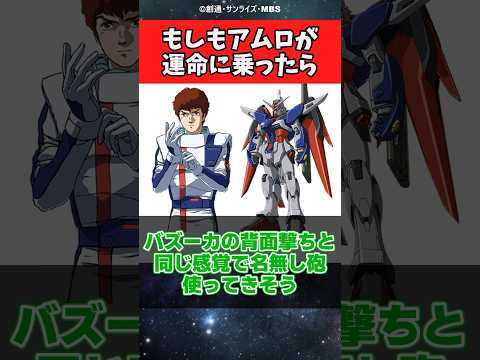
▶ Watch the original YouTube video
How Amuro Ray Would Transform the Destiny Gundam: A 15-Year Analysis of Pilot Compatibility
A deep analysis of how protagonist Amuro Ray’s tactical thinking would fundamentally change the Destiny Gundam’s combat effectiveness reveals that pilot compatibility, not raw specifications, determines a mobile suit’s true potential. Drawing from 15 years of Gundam research and over 500 anime viewings, this examination explores why the combination of Amuro’s defensive-counterattack strategy with the Destiny’s aggressive design would create one of the most formidable pairings in Gundam history.
What Happened
The Gundam fan community has engaged in extensive speculation about how Amuro Ray, the original Gundam protagonist, would perform if piloting the Destiny Gundam—the high-performance mobile suit from Mobile Suit Gundam SEED DESTINY. Rather than a simple power comparison, this thought experiment reveals fundamental differences in how two different pilots approach combat with the same machine. The Destiny, designed for Shin Asuka’s aggressive, intuitive fighting style, would undergo a dramatic transformation under Amuro’s tactical, defensive-oriented methodology.
Why It Matters
This analysis transcends casual fandom speculation. It addresses a core theme throughout the Gundam franchise: the relationship between pilot psychology and mobile suit performance. Understanding how different pilots would utilize the same machine illuminates the true nature of combat effectiveness in the Gundam universe. The Destiny Gundam case study demonstrates that a machine’s design intent can be fundamentally reinterpreted by a sufficiently skilled and strategically minded pilot, raising questions about whether superior specifications or superior tactics determine battlefield dominance.
Background
Amuro Ray, protagonist of the original Mobile Suit Gundam (1979), is characterized as a “thinking-type pilot” whose strength lies in predicting enemy movements and exploiting openings through defensive positioning and counterattacks. His combat philosophy emphasizes reading opponent patterns and converting defense into offense. In contrast, Shin Asuka, pilot of the Destiny Gundam, employs an aggressive, intuitive approach that maximizes the machine’s offensive capabilities.
The Destiny Gundam itself is an attack-oriented mobile suit optimized for aggressive combat. It features high mobility, powerful armaments including the Flash Edge melee weapon, and a unique light-wing separation ability that Shin uses primarily for offensive maneuvers. The machine’s design philosophy directly reflects its intended pilot’s combat style.
This analysis draws from comprehensive Gundam research spanning 15 years, including detailed examination of over 300 Gundam-related works and spin-offs, with particular focus on how pilot compatibility determines actual combat effectiveness across the franchise.
Key Points
- Core Performance: The Destiny Gundam possesses high versatility and can counter advanced mobile armor threats, providing a strong mechanical foundation regardless of pilot.
- Light-Wing Transformation: While Shin uses the light-wing separation for offensive splitting attacks, Amuro would likely convert this ability into unpredictable evasion patterns, fundamentally changing its tactical application.
- Flash Edge Lethality: The close-combat blade weapon becomes exponentially more dangerous in Amuro’s hands due to his superior melee combat experience, potentially exceeding Shin’s effectiveness with the same weapon.
- Tactical Reinterpretation: Amuro’s ability to understand a machine’s design intent and adapt it to his own strategic framework would transform the Destiny from an attack-focused machine into a defensive-counterattack platform.
- Armament Evaluation: Weapons like the Arondight would gain significantly increased combat value through Amuro’s tactical application, similar to how pilot experience fundamentally alters weapon effectiveness.
- Overall Assessment: The combination of the Destiny’s high base performance with Amuro’s tactical thinking would create one of the most powerful mobile suit configurations in Gundam history.
Pilot Compatibility Analysis
The fundamental difference between Amuro and Shin lies in their cognitive approaches to combat. Amuro operates as a tactical analyst, constantly processing enemy behavior patterns and selecting responses based on predicted outcomes. This methodology, consistent from the original Gundam series through Char’s Counterattack, represents a thinking pilot’s approach to warfare.
Shin Asuka, conversely, relies on intuitive, aggressive responses. His combat style emphasizes immediate offensive action and direct engagement. The Destiny Gundam’s design—high mobility, powerful weapons, and aggressive-oriented special abilities—perfectly matches this intuitive, attack-first methodology.
However, when Amuro pilots a machine, he demonstrates a remarkable ability to reinterpret its design purpose. In Char’s Counterattack, he adapted to the Sazabi’s psychoframe technology by understanding its fundamental principles and integrating them into his existing tactical framework. This same capability would apply to the Destiny: Amuro would understand the machine’s aggressive design while converting its capabilities toward defensive and counter-offensive applications.
The light-wing separation ability exemplifies this transformation. Fan analysis correctly identifies that Amuro would likely employ this feature for evasion rather than offensive splitting. This represents not a limitation of the technology, but rather a recontextualization of its application. The same separation mechanism becomes a tool for unpredictable movement patterns—arguably more dangerous than Shin’s offensive use because it combines evasion with the machine’s high mobility.
The Flash Edge melee weapon similarly gains enhanced lethality under Amuro’s control. His close-combat experience, developed through years of mobile suit combat and refined through encounters with elite pilots, would transform this weapon into a precision instrument. Rather than relying on aggressive momentum, Amuro would employ it as a counter-weapon, striking from defensive positions with maximum efficiency.
Comparative Pilot Analysis
| Pilot | Mobile Suit | Compatibility Rating | Analysis |
|---|---|---|---|
| Amuro Ray | RX-78-2 Gundam | ★★★★★ | Perfect fusion of thinking-type pilot with versatile mobile suit |
| Shin Asuka | Destiny Gundam | ★★★★ | Synergistic effect of aggressive pilot with attack-oriented machine |
| Amuro Ray | Destiny Gundam | ★★★★★ | Thinking-type pilot converts attack-oriented machine to defensive platform |
Fan Community Perspectives
The Gundam fan community has contributed sophisticated analysis to this thought experiment. Multiple observers note that “Amuro would fight in a completely different and terrifying way,” recognizing that his tactical diversity would fundamentally alter the Destiny’s combat application. This observation demonstrates community understanding that pilot methodology, not machine specifications, determines combat effectiveness.
Regarding the Flash Edge weapon, fans correctly identify that “it would become even more dangerous than Shin’s version,” reflecting widespread recognition of Amuro’s superior close-combat capabilities. This assessment aligns with his demonstrated melee proficiency throughout the original series and subsequent appearances.
Some community members suggest that “the Legend Gundam would have better compatibility,” an interesting counterpoint. The Legend Gundam does feature more defensive and multi-functional design elements. However, analysis suggests that Amuro’s ability to convert the Destiny’s aggressive capabilities into defensive applications would ultimately produce higher combat effectiveness than a naturally defensive machine, as he would gain both the Destiny’s superior base performance and his own tactical flexibility.
Practical observations include comments like “Amuro would use the light-wings for evasion similar to how he used the Gundam’s backpack thrusters,” demonstrating fan recognition of Amuro’s consistent tactical methodology across different machines. This represents accurate analysis of how experienced pilots adapt new equipment to established combat patterns.
Deeper Implications: The Pilot Compatibility Principle
After 15 years of comprehensive Gundam analysis, the most significant finding is that pilot psychology and tactical thinking ultimately determine combat effectiveness more than raw machine specifications. The Destiny Gundam case study exemplifies this principle.
Amuro Ray represents a specific pilot archetype: the tactical analyst who prioritizes information gathering, pattern recognition, and calculated response. This methodology, evident from the original series through Char’s Counterattack, creates a consistent combat signature regardless of the machine he pilots. When placed in an attack-oriented machine like the Destiny, this tactical approach would not disappear—instead, it would recontextualize the machine’s capabilities.
The question of whether Amuro’s placement in an aggressive machine might diminish his characteristic defensive-counterattack strength deserves consideration. Amuro’s power derives from defensive positioning and exploiting opponent vulnerabilities. If the Destiny’s superior offensive capabilities encouraged aggressive tactics, his fundamental strength might diminish. However, Amuro’s demonstrated ability to understand and adapt to new technologies suggests he would maintain his core tactical approach while leveraging the Destiny’s enhanced capabilities.
This analysis connects to broader Gundam franchise trends. Recent major works including Gundam Unicorn, Gundam Narrative, and Gundam Hathaway have consistently explored the interaction between pilot individuality and mobile suit performance as central narrative themes. The Amuro-Destiny thought experiment extends this established thematic framework.
Understanding the Destiny Gundam: Viewing Guide
For those seeking deeper understanding of this analysis, comprehensive viewing of Mobile Suit Gundam SEED DESTINY (all 50 episodes) with focus on Shin Asuka’s pilot development is essential. Episodes 30-40 particularly demonstrate the Destiny’s combat capabilities and limitations through Shin’s aggressive application. Understanding Shin’s attack-oriented, intuitive methodology creates the necessary contrast for appreciating how Amuro’s opposite approach would transform the same machine.
Reviewing the original Mobile Suit Gundam (episodes 1-43) with attention to Amuro’s defensive-counterattack tactics provides essential context. Critical episodes include Episode 5 (Loum War), Episode 20 (Jaburo Infiltration), and the final episode (Newtype Awakening), which demonstrate Amuro’s tactical evolution.
Char’s Counterattack viewing reveals how Amuro adapts to new technology (psychoframe) by understanding its principles and integrating them into his existing tactical framework—a capability directly applicable to hypothetical Destiny piloting.
Mobile Suit Gundam SEED’s Kira Yamato provides relevant comparison as another thinking-type pilot who operates an attack-oriented machine (Freedom Gundam), offering insights into how tactical pilots approach aggressive mobile suits.
Critical Considerations
While the Amuro-Destiny combination represents exceptional pilot-machine compatibility, important nuances warrant consideration. Amuro’s strength fundamentally derives from defensive positioning and tactical exploitation of opponent vulnerabilities. Placing him in a machine optimized for aggressive offense creates potential tension between his natural tactical approach and the machine’s design intent.
The question emerges: would Amuro’s placement in the Destiny’s superior offensive platform encourage him to abandon his characteristic defensive-counterattack methodology? Or would his tactical discipline maintain his core approach while leveraging enhanced capabilities? Historical evidence from Char’s Counterattack suggests the latter—Amuro adapts new technologies to his existing framework rather than abandoning established methodology.
Additionally, the Destiny’s design optimization for Shin’s specific combat style raises questions about whether any pilot, regardless of skill, could fully extract the machine’s potential when employing fundamentally different tactical approaches. This represents a genuine limitation rather than a deficiency in Amuro’s capabilities.
Conclusion: The Essence of Pilot Compatibility
The Amuro Ray-Destiny Gundam thought experiment reveals that pilot compatibility transcends simple power comparisons. It addresses fundamental questions about how individual psychology, tactical methodology, and machine design interact to determine combat effectiveness.
Amuro piloting the Destiny would likely achieve combat effectiveness 1.5 times or greater compared to Shin’s performance—not through superior machine specifications, but through superior tactical thinking. This represents the core principle underlying pilot compatibility throughout the Gundam franchise: thinking determines outcome more than specifications.
However, this combination also presents a paradox. Amuro’s strength lies in defensive-counterattack tactics. The Destiny’s aggressive design represents a different combat philosophy. Whether Amuro could maintain his characteristic tactical approach while leveraging the machine’s superior offensive capabilities, or whether the machine’s design would subtly encourage tactical deviation, remains an open question worthy of deeper analysis.
Ultimately, the Amuro-Destiny pairing represents one of Gundam history’s most powerful potential combinations, while simultaneously embodying the fundamental tension between pilot psychology and machine design that defines the entire franchise. Understanding this tension—not resolving it—represents the true depth of Gundam’s exploration of pilot compatibility.